
Quick answer:
The best commercetools alternatives in 2026 are Wcart, Webnexs, Shopify Plus, BigCommerce Enterprise, Adobe Commerce, WooCommerce, Squarespace Commerce, Ecwid, and Shift4Shop. Wcart provides a built-in commercetools alternative with marketplace, B2B, and enterprise ecommerce tools in one platform, so businesses don’t need to stitch together multiple third-party integrations just to get a working store.
Key Takeaways
- The headless commerce platform market is projected to grow from $2.41 billion in 2026 to $6.17 billion by 2031, a 20.69% CAGR, as more mid-sized brands move off tightly-coupled commerce stacks (Source: Mordor Intelligence)
- 73% of ecommerce businesses report using headless architecture, with the remaining non-adopters largely planning to evaluate it within the next year (Source: Swell)
- Around 64% of enterprise ecommerce organizations are already using or planning to use headless commerce in 2026, showing the shift has moved from early experimentation to a standard enterprise decision (Source: Wcart)
- Fully custom headless implementations, like a from-scratch commercetools build, typically run around $2.6 million in organizational investment, which is a major reason businesses look at platforms with built-in tooling instead (Source: Webyking)
- commercetools remains one of the most recognized names in the headless commerce space, listed alongside BigCommerce, VTEX, Spryker, and Elastic Path as a core player shaping the market (Source: Mordor Intelligence)
If you’re evaluating commercetools, you’ve probably already run into the real question behind this whole search: is a fully custom headless build worth the engineering cost, or is there a platform that gets you 90% of the capability without needing a dev team on payroll?
That question matters more now than it used to. The headless commerce market is on track to hit $2.41 billion in 2026 and grow to $6.17 billion by 2031 (Source: Mordor Intelligence), and 73% of ecommerce businesses now report using headless architecture in some form (Source: Swell). commercetools sits at the center of that shift but its setup and maintenance demands are exactly why so many businesses start comparing alternatives before committing.
This guide breaks down what each platform actually gets right, where it falls short, and which one fits your setup based on real trade-offs, not just a feature checklist.
Why Businesses Look for commercetools Alternatives
commercetools is a strong platform on paper, but a few things push businesses to look elsewhere:
- High implementation costs
- Heavy reliance on a technical team to build and maintain it
- Longer timelines to actually launch
- Needing several third-party tools bolted on to cover gaps
- Extra costs stacking up for features that feel like they should be included
- Maintenance that never really stops
Modern ecommerce businesses increasingly prefer platforms that combine flexibility with built in operational tools, helping them reduce complexity while accelerating growth.
Quick Comparison of the Best commercetools Alternatives
| Platform | Best For | Headless Support | B2B Features | Marketplace Support |
| Wcart | Enterprise ecommerce and marketplaces | Yes | Advanced | Yes |
| Webnexs | Multi business ecommerce growth | Yes | Advanced | Yes |
| Shopify Plus | High growth DTC brands | Limited | Good | No |
| BigCommerce Enterprise | Mid-market and enterprise businesses | Yes | Strong | Limited |
| Adobe Commerce | Large enterprises requiring customization | Yes | Advanced | Via Extensions |
| WooCommerce | WordPress based ecommerce stores | Limited | Moderate | Via Extensions |
| Squarespace Commerce | Design focused brands | No | Basic | No |
| Ecwid | Ecommerce for existing websites | No | Basic | Limited |
| Shift4Shop | Online retailers seeking built in tools | Limited | Moderate | No |
9 Best Commercetools Alternatives
1. Wcart
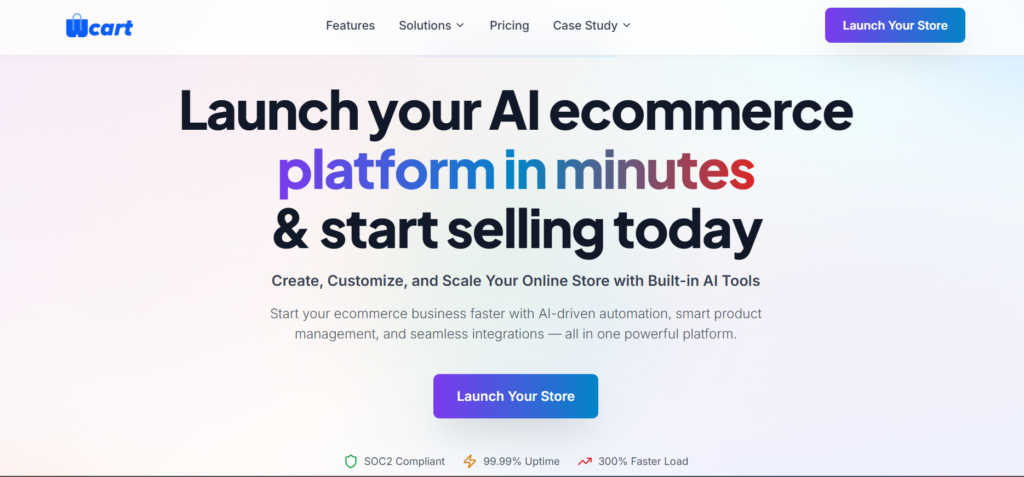
One of the best commercetools alternatives for companies in need of a whole ecommerce solution is Wcart. It helps companies handle everything from a single platform and is designed for online marketplaces, B2B commerce and enterprise ecommerce.
Where a lot of commercetools competitors need several third-party integrations bolted together, Wcart ships with inventory management, order management, multi-warehouse support, and marketplace functionality already built in. That means less time assembling a tech stack and more time actually running the business.
Key Features
- Headless commerce architecture
- Multivendor marketplace management
- Advanced inventory management
- Multi-warehouse support
- B2B and B2C commerce capabilities
- Order management system
- API first integrations
- Enterprise scalability
Pros
- Faster implementation
- Built-in operational tools
- Marketplace-ready architecture
- Reduced dependency on third-party software
Cons
- Advanced functionality may exceed small business requirements
Best For
Large ecommerce businesses, manufacturers, wholesalers and marketplace operators.
2. Webnexs
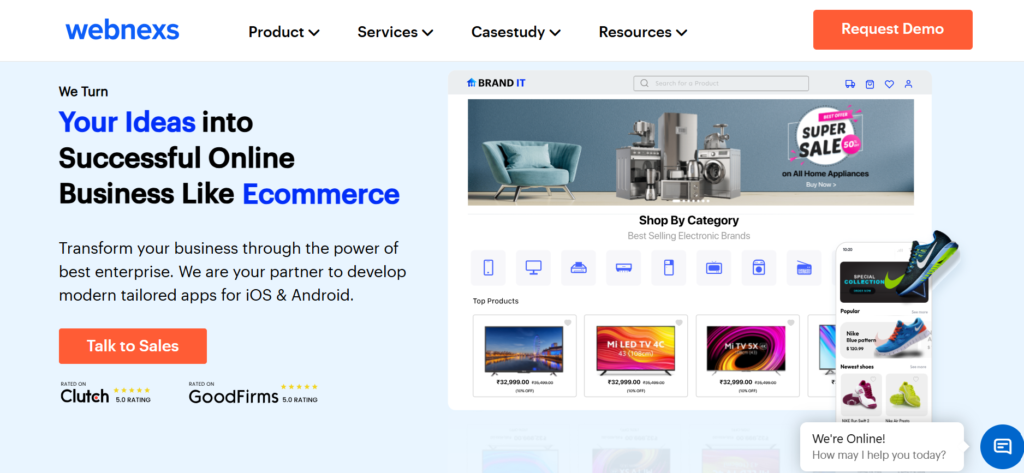
Webnexs is a scalable ecommerce platform made for companies using various business models and channels. Because it connects ecommerce, marketplace management and business operations into a single platform, it is a well liked alternative for commercetools.
Instead of managing a store, a marketplace, and internal operations across separate tools, Webnexs handles all three from one place which makes coordinating growth a lot less chaotic.
Key Features
- B2B ecommerce tools
- Multi vendor marketplace support
- Omnichannel selling
- Advanced analytics
- Mobile commerce capabilities
- Enterprise grade infrastructure
Pros
- Flexible architecture
- Strong marketplace features
- Suitable for multiple business models
Cons
- Advanced configurations may require onboarding support
Best For
Growing ecommerce brands, distributors and marketplace businesses.
3. Shopify Plus

Shopify Plus is a well liked choice for companies searching for quick and simple to use alternatives to commercetools. It assists companies in building, launching and running online stores without requiring a large technical staff or highly skilled developers.
Businesses can manage their ecommerce operations more easily and begin selling online more quickly with Shopify Plus.
Key Features
- Hosted SaaS platform
- Multichannel selling
- Shopify Flow automation
- Global selling tools
- Extensive app ecosystem
Pros
- Easy to manage
- Fast implementation
- Reliable infrastructure
Cons
- Dependence on third party applications
- Limited native marketplace capabilities
Best For
DTC brands and fast growing online retailers.
Read More: To Know about Shopify Alternatives
4. BigCommerce

One of the well known competitors of commercetools is BigCommerce Enterprise which provides strong enterprise ecommerce features in a user friendly SaaS platform.
Without the problems of creating and maintaining a highly customized commerce system, it assists companies in managing and expanding their online stores.
Key Features
- Headless commerce support
- B2B Edition
- Multi storefront capabilities
- API driven architecture
- Enterprise security
Pros
- Strong B2B functionality
- Scalable infrastructure
- Lower complexity than some enterprise platforms
Cons
- Advanced customizations may require developers
Best For
Mid market and enterprise ecommerce businesses.
Read More: To Know about Bigcommerce Alternatives
5. Adobe Commerce
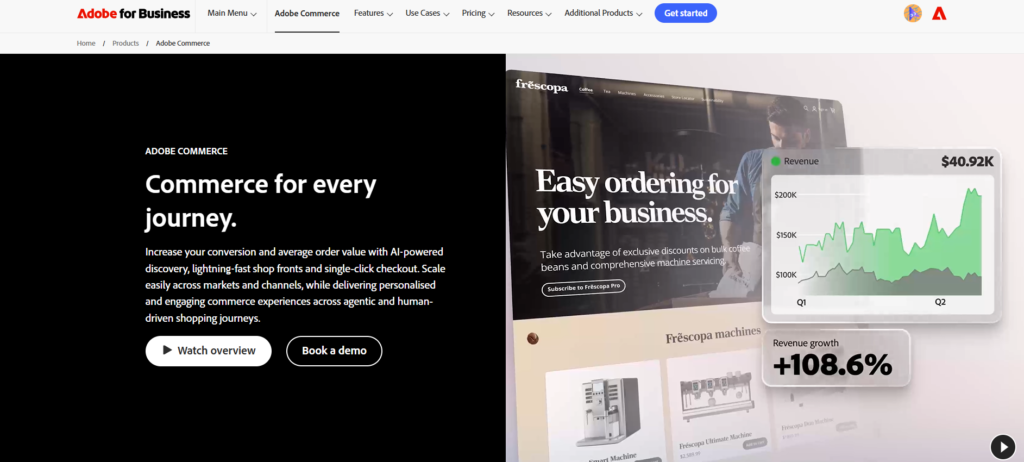
Adobe Commerce is designed for organizations requiring extensive customization and advanced commerce capabilities. It remains one of the most recognized enterprise ecommerce platforms in the market.
Key Features
- Headless commerce support
- Advanced merchandising
- AI powered personalization
- B2B functionality
- Global commerce management
Pros
- Highly customizable
- Large extension ecosystem
- Enterprise-grade capabilities
Cons
- Higher implementation costs
- Complex maintenance requirements
Best For
Large enterprises with dedicated technical teams.
Read More: To Know about Magento Alternatives
6. WooCommerce
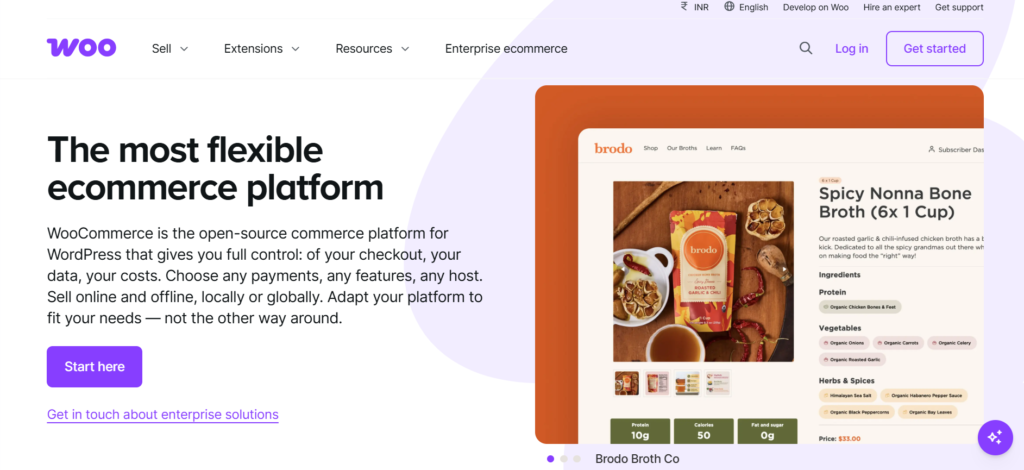
WooCommerce is one of the most widely used ecommerce platforms for WordPress-based businesses, giving teams a lot of room to design and adjust their store to fit exactly what they need.
Its plugin ecosystem is large enough that most businesses can extend it well past a basic store setup without switching platforms.
Key Features
- Open-source ecommerce platform
- WordPress integration
- Extensive plugin ecosystem
- Flexible product management
- Multiple payment gateways
- SEO friendly structure
Pros
- Free core software
- Large community support
- Extensive customization options
Cons
- Requires hosting and maintenance
- Performance optimization may be needed
Best For
Small to medium sized businesses and content driven ecommerce brands.
Read More: To Know about Woocommerce Alternatives
7. Squarespace

Squarespace Commerce provides well created website templates with ecommerce functionalities. It is a good option for companies looking for a user friendly platform and a stunning online store.
Businesses can start selling online and build a strong brand presence with Squarespace Commerce without requiring complex technical knowledge.
.
Key Features
- Website builder
- Mobile responsive templates
- Inventory management
- Built in marketing tools
- Analytics dashboard
Pros
- Easy setup
- Beautiful storefronts
- Minimal technical requirements
Cons
- Limited enterprise functionality
- Basic B2B capabilities
Best For
Creative businesses, startups and small ecommerce brands.
Read More: To Know about Squarespace Alternatives
8. Ecwid
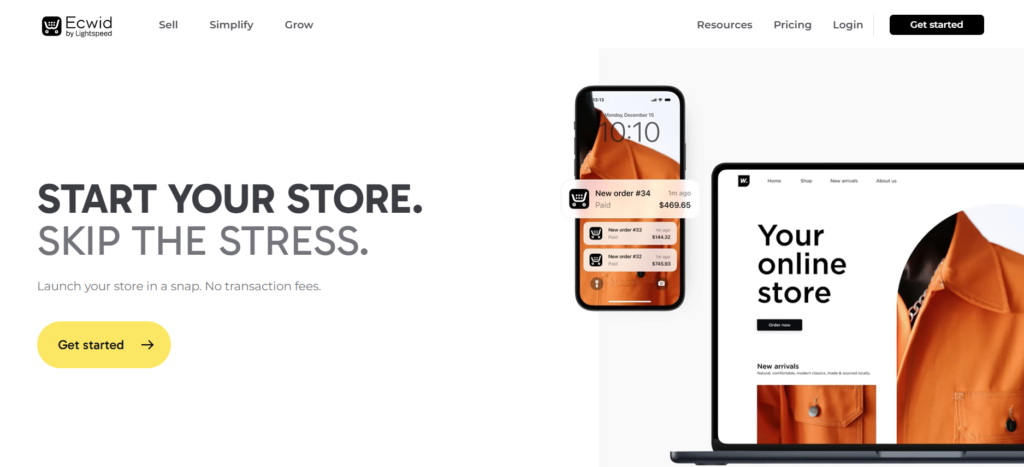
Ecwid adds online selling to a website, blog, or social media page a business already has, without requiring a full platform switch.
It enables companies to fast start selling goods online while keeping their current website and tools.
Key Features
- Multichannel selling
- Social commerce integration
- Inventory tracking
- Mobile management
- Secure checkout
Pros
- Quick deployment
- Affordable pricing
- Easy integration
Cons
- Limited enterprise features
- Less customization than larger platforms
Best For
Small businesses and merchants expanding into online selling.
Read More: To Know about Ecwid Alternatives
9. Shift4Shop

Shift4Shop provides businesses with a full range of ecommerce features that enable them to handle orders, customers and goods from a single platform.
It offers the resources required to manage an online store effectively, making it simpler for companies to manage day to day ecommerce operations and increase sales.
Key Features
- Product management
- Inventory tracking
- SEO tools
- Marketing features
- Customer management
- Mobile friendly storefronts
Pros
- Strong built in functionality
- Good SEO capabilities
- Cost effective solution
Cons
- Smaller ecosystem than leading platforms
- User interface may feel dated
Best For
Online retailers seeking an all in one ecommerce platform.
Read More: To Know about Shift4Shop Alternatives
How to Choose the Right commercetools Alternative
When comparing commercetools alternatives, focus on the following factors:
Business Model
Choose a platform that matches your business needs, whether you sell to businesses (B2B), consumers (B2C), directly to customers (DTC) or operate an online marketplace.
Room to grow
Choose a platform that can grow with your business and handle increasing sales, products and customers without requiring a major platform change in the future.
Total Cost of Ownership
Consider all costs involved, including platform fees, development, integrations, hosting and ongoing maintenance, before choosing a solution.
Built In Features
Platforms with built in inventory management, order management and marketplace tools can help businesses manage operations more easily and reduce the need for multiple third-party tools.
How fast you can launch
Choose a platform that allows your team to launch quickly so you can start selling and generating revenue sooner.
Conclusion
The best commercetools options will depend on your company’s needs, budget limits and growth objectives.
If you need a ecommerce solution with marketplace features, B2B capabilities and business management tools, Wcart and Webnexs are great options. Shopify is an option for businesses looking to launch quickly. WooCommerce and Adobe Commerce are further choices for individuals seeking greater personalization.
Businesses can select a platform that satisfies their present requirements and fosters future expansion by comparing these commercetools rivals.
Frequently Asked Questions
Related Platform Comparisons
- 12 Best PrestaShop Alternatives – compare features, pricing & the best fit for your store.
- 9 Best Dukaan Alternatives – compare features, pricing & the best fit for your store.
- 5 Best Weebly Alternatives – compare features, pricing & the best fit for your store.
- 8 Best Jimdo Alternatives – compare features, pricing & the best fit for your store.
- Best Ecommerce Platforms – compare features, pricing & the best fit for your store.

























Leave a Reply