

Quick answer:
There’s no shortage of Magento alternatives out there, but Wcart stands out for a simple reason it’s a no-code, headless commerce platform, so you get real ecommerce power without needing a developer on standby for every change. That combination is why it works for businesses at pretty much any size, from a store just getting serious about growth to one already running enterprise-level operations.
Key Takeaways
- Magento (Adobe Commerce) generates an estimated $173 billion in annual GMV in 2026, remaining the top platform for large-scale B2B ecommerce despite falling store count (Source: MageComp)
- Active Magento stores dropped from roughly 162,000 in 2021 to about 111,500 by Q1 2026, driven largely by small and mid-sized merchants migrating to lower-complexity platforms (Source: MGT Commerce)
- Adobe Commerce enterprise pricing runs $80,000 to $300,000+ per year, which prices out most mid-market businesses before they even evaluate features (Source: MGT Commerce)
- Magento still powers about 20% of the top 1,000 US retailers, showing it remains dominant specifically in large enterprise and complex B2B catalogs — not in the broader ecommerce market (Source: MGT Commerce)
- 60% of new Magento development in 2026 uses headless architecture, meaning even businesses staying on Magento are moving toward the same API-first approach most alternatives are built on natively (Source: WiserReview)
Magento is a powerful platform ,many businesses choose Magento for its powerful Magento earned its reputation for good reason it’s a genuinely powerful platform, and plenty of businesses still choose it for exactly that. But that power comes with a cost.
The numbers back this up. Active Magento stores have dropped from roughly 162,000 in 2021 to about 111,500 by early 2026 (Source: MGT Commerce), and the reasons tend to repeat across ecommerce businesses we’ve looked at: rising development costs, performance strain under traffic, and maintenance that starts eating more time than it should.
To choosing the right alternative is Very important.This guide breaks down the best Magento alternatives in 2026, judged against what actually matters: performance, room to grow, and real cost.
Case Study: How MPCollections Improved Their Online Store
MPCollections is a growing online business. As they grew, they had problems with website speed, scaling and managing their store.
After switching to a better ecommerce platform, they improved performance, made operations easier and supported business growth.
Read the full case study:https://wcart.io/mpcollections-case-study
Why Enterprises Are Moving Away from Magento
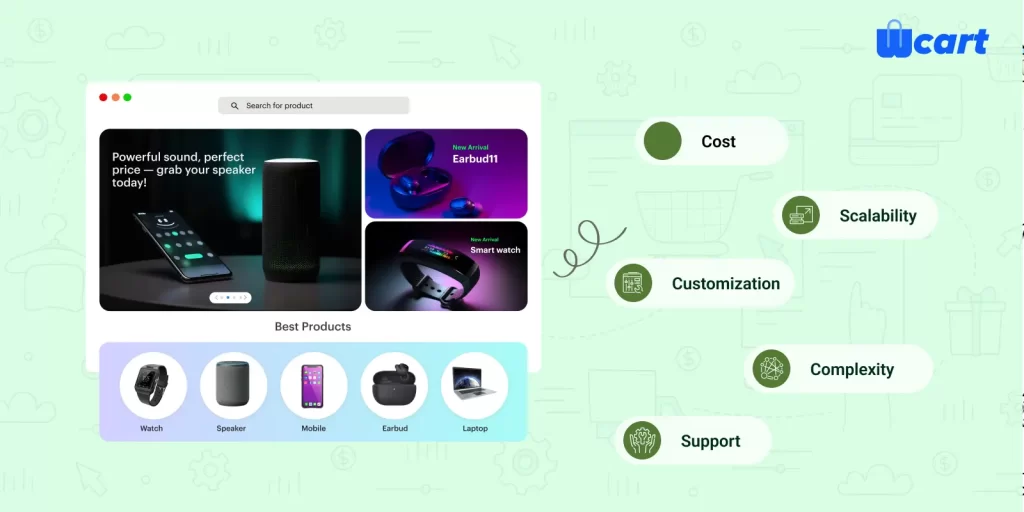
Many businesses don’t leave Magento because it is bad. They leave because it becomes difficult to manage and scale as the business grows. Magento is still a powerful platform but the needs of modern ecommerce businesses have changed a lot.
Today many companies prefer platforms that are easier to manage faster to scale and require less development and maintenance.
1. High Total Cost of Ownership
Magento requires:
- Dedicated hosting infrastructure
- Developer maintenance
- Security patch management
- Performance optimization
2. Technical Complexity
- Many updates or design changes in Magento require a developer.For businesses that need to move fast this can slow down progress and increase costs.
3. Performance Challenges
- Without strong server optimization Magento stores can become slow when many people visit the site at the same time.
- Performance issues directly impact:
- conversion rates
- SEO rankings
- customer experience
4. Security and Maintenance Overhead
- Magento stores need regular updates and security patches to stay safe.
- Many companies need a dedicated team just to manage and maintain the platform.
5. Long Development Timelines
- Launching or redesigning a Magento store can take a long time because of complex customization and integrations.
Read More: To Know about Top Platform for Magento Alternatives.
Featured Snippet: Best Magento Alternatives

Some of the best Magento alternatives in 2026 include Shopify Plus BigCommerce Enterprise WooCommerce Salesforce Commerce Cloud Wcart and Webnexs.
These platforms offer cloud hosting built in business features and lower maintenance costs compared to Magento. Because of this many growing ecommerce businesses are choosing them.
Explore More: To Choose Right Ecommerce Solutions
Enterprise Ecommerce Platform Comparison
| Platform | Hosting | Scalability | Enterprise Features | Developer Dependency |
| Wcart | Cloud | High | Strong | Low |
| Webnexs | Cloud | Very High | Advanced | Medium |
| Shopify Plus | Cloud | Very High | Strong | Low |
| BigCommerce | Cloud | Very High | Strong | Low |
| WooCommerce | Self Hosted | High | Moderate | High |
| Salesforce Commerce Cloud | Cloud | Extremely High | Advanced | Medium |
| Wix | Cloud | Moderate | Basic | Low |
| Squarespace | Cloud | Moderate | Basic | Low |
8 Best Magento Alternatives for Enterprise Ecommerce
1.Wcart – Enterprise Ecommerce Without the Complexity
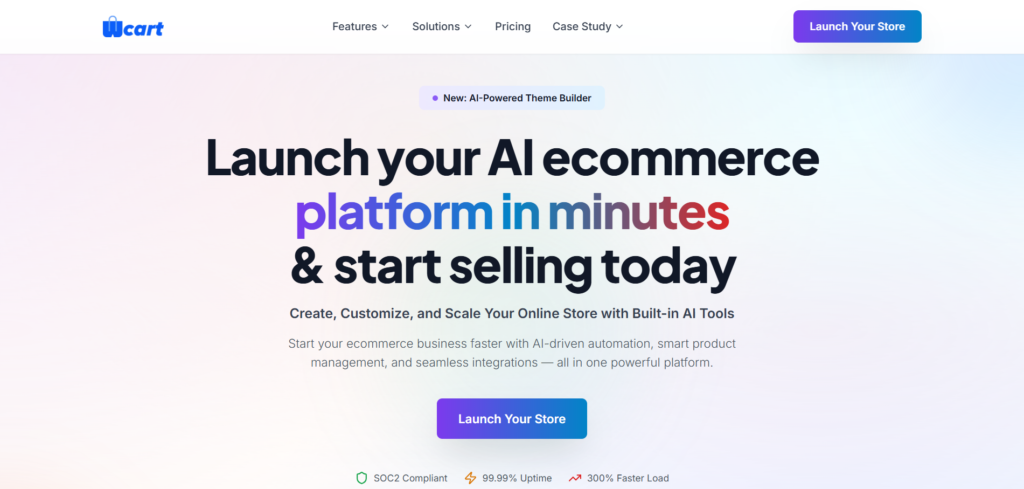
Wcart is a modern cloud ecommerce platform designed to provide enterprise level capabilities without Magento’s technical overhead.
Key Enterprise Features:
- API driven architecture
- Multi store support
- Multi currency checkout
- Advanced inventory management
- Built in payment integrations
Why Enterprises Choose Wcart:
- Lower development costs
- Faster store deployment
- Cloud scalability
- Minimal maintenance
Who should choose this:
- Growing ecommerce businesses
- Brands that want an easy to manage platform
- Businesses that want to scale without heavy development
- Companies looking for built in ecommerce features
Best for: growing enterprises needing flexibility and faster launch timelines.
2.Webnexs – Multi Channel Enterprise Commerce Platform
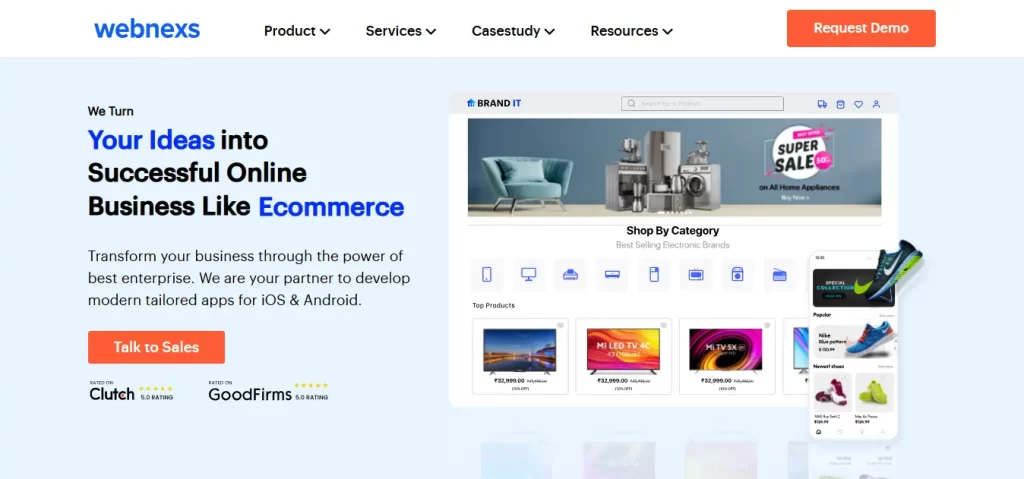
Webnexs is designed for enterprises operating across multiple marketplaces and regions.
Enterprise Features:
- Multi vendor marketplace functionality
- Omnichannel commerce
- Advanced analytics dashboard
- Marketing automation tools
- Custom workflow management
Who should choose this:
- Large businesses selling on multiple channels
- Marketplace and B2B businesses
- Brands that need advanced backend control
- Companies managing multiple stores
Best for: brands with marketplace or B2B commerce models.
3.WooCommerce – Flexible Open Source Option
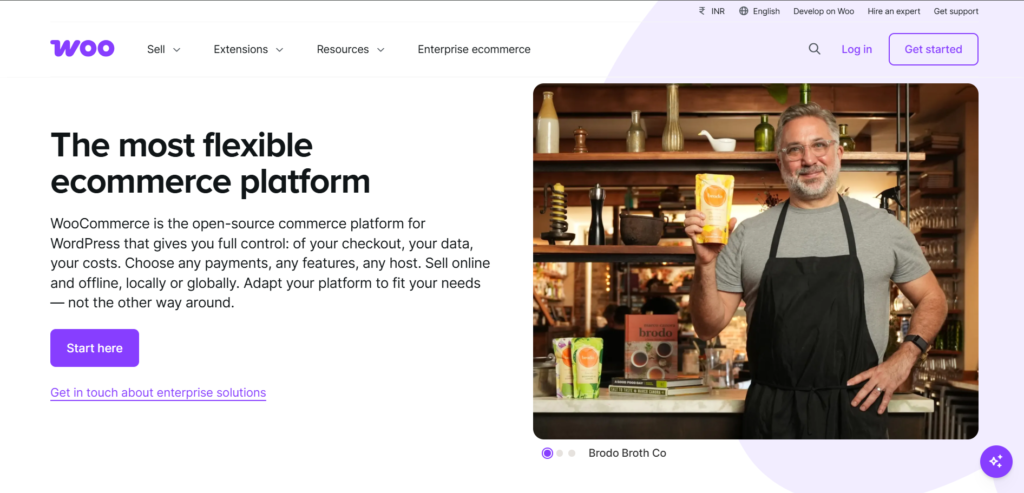
WooCommerce is an open source ecommerce platform that works with WordPress. It allows businesses to build and manage online stores with flexible customization options.
Enterprise Features:
- Flexible open-source architecture
- Advanced SEO and content control
- Custom plugin and API integrations
- Full data ownership and control
- Strong global developer ecosystem
Who should choose this:
- Businesses with a technical team
- Companies that want full customization
- Brands already using WordPress
- Stores that need flexible features
Best for: enterprises with strong development teams.
Read More: To Know about Woocommerce Alternatives
4. Shopify Plus – Popular Enterprise Platform

Shopify Plus is the enterprise version of Shopify. It provides fully managed hosting security and automation tools for large ecommerce businesses.
Enterprise Features :
- Dedicated account management
- Automation using Shopify Flow
- Multi currency selling
- Global checkout optimization
- 99.99% uptime
Who should choose this:
- Fast-growing ecommerce brands
- Businesses that want a fully managed platform
- Companies selling globally
- Brands that need automation tools
Best for : Fast growing global DTC brands.
Read More: To Know about Shopify Alternatives
5.Squarespace Commerce – Content Focused Ecommerce Platform

Squarespace combines website content management with ecommerce features.
Enterprise Features:
- Elegant and professional website templates
- Built-in blogging and content marketing tools
- Integrated payment processing
- Inventory management for products
- Mobile optimized store design
- Basic marketing and SEO tools
Who should choose this:
- Creative businesses and designers
- Brands focused on content and design
- Small ecommerce stores
- Businesses that want easy setup
Best for: creators designers boutique brands and businesses that focus on storytelling design and content marketing.
Read More: To Know about Squarespace Alternatives
6.BigCommerce Enterprise – API First Commerce Platform
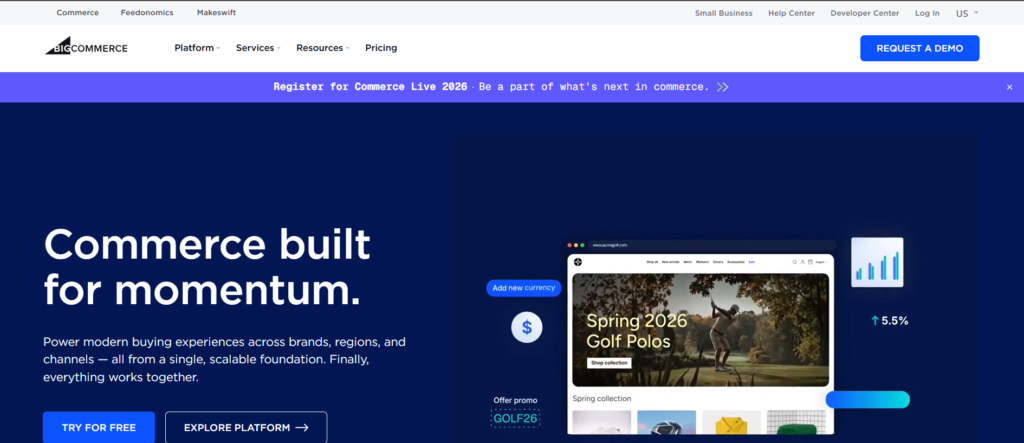
BigCommerce provides strong enterprise ecommerce capabilities without heavy plugin dependency.
Enterprise Features:
- Headless commerce architecture
- Multi storefront support
- Built in SEO features
- No transaction fees
- Advanced APIs
Who should choose this:
- Large ecommerce stores
- Businesses with big product catalogs
- Brands selling internationally
- Companies needing strong SEO features
Best for: large ecommerce catalogs and international selling.
Read More: To Know about BigCommerce Alternatives
7.Salesforce Commerce Cloud – Premium Enterprise Solution
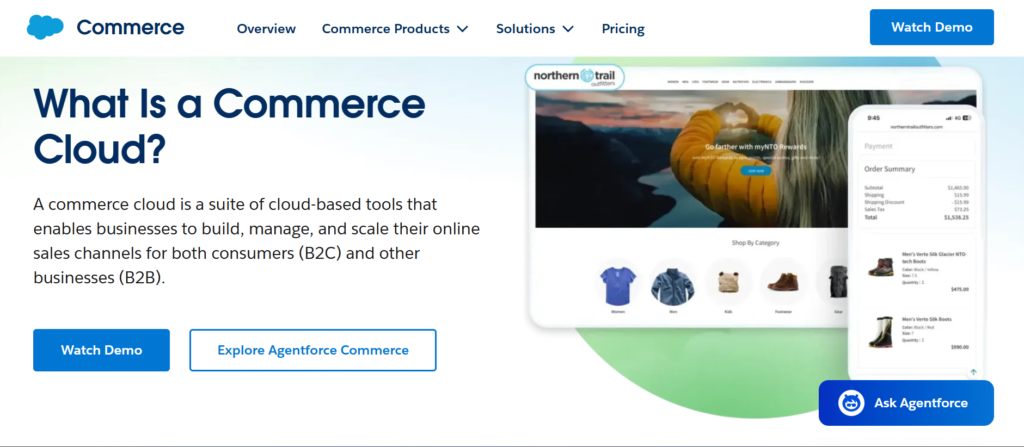
Salesforce Commerce Cloud is built by Salesforce and is designed for large businesses that need personalization and global ecommerce features.
Enterprise Features:
- AI driven personalization
- Advanced customer segmentation
- Global commerce capabilities
- Omnichannel integrations
Who should choose this:
- Large enterprise businesses
- Global brands with complex needs
- Companies focused on personalization
- Businesses with strong budgets
Best for: large multinational brands with complex customer experience.
Read More: To Know about BigCommerce Alternatives
8.Wix Enterprise – Simple Cloud Ecommerce Platform
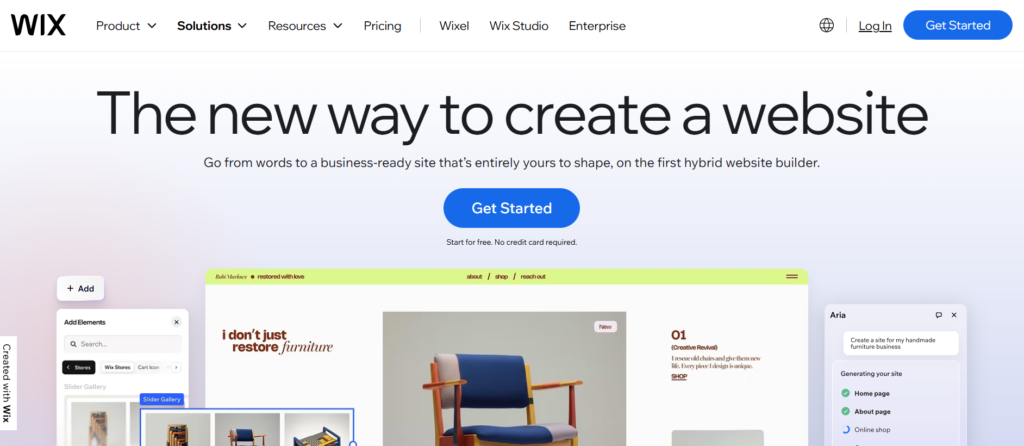
Wix Enterprise is a cloud based ecommerce platform that helps businesses create and manage online stores easily. It provides scalable hosting, design flexibility and simple tools that allow businesses to launch and manage their store without technical complexity.
Enterprise Features:
- Drag and drop website builder
- AI powered website design tools
- Secure cloud hosting
- Built in marketing and SEO tools
- Multiple payment gateway integrations
- Mobile optimized store designs
Who should choose this:
- Mid sized businesses
- Brands that want simple management
- Businesses that prefer easy setup
- Companies that do not need complex features
Best for: mid sized brands that want quick setup, easy management and flexible design options.
Read More: To Know about Wix Alternatives
Magento Alternatives Pricing Comparision
| Platform | Pricing Model | Starting Cost | Additional Costs | Best For Budget |
| Wcart | Subscription | Custom and Affordable | Minimal add-ons | SMB to Mid-market |
| Webnexs | Subscription | Custom pricing | Setup + integrations | Mid to Enterprise |
| Shopify Plus | SaaS Subscription | ~$2,000/month | Apps, transaction fees | Enterprise brands |
| BigCommerce | SaaS Subscription | Custom (~$1,000+/month) | Apps, integrations | Large stores |
| WooCommerce | Open source | Free (core) | Hosting, plugins, dev costs | Budget + flexible |
| Salesforce Commerce Cloud | Revenue-based | Custom (very high) | Implementation + licensing | Large enterprises |
| Wix | Subscription | ~$30–$500/month | Apps, upgrades | Small to mid |
| Squarespace | Subscription | ~$25–$65/month | Limited add-ons | Small businesses |
How to Choose the Right Magento Alternative
Choosing a new ecommerce platform is not just a technical decision it affects how your business grows.
Before you switch from Magento, take a moment to think about what your store actually needs.
1.Traffic and Scalability
- If your website gets a lot of visitors , you need a platform that won’t slow down or crash during peak times.
- A good platform should handle traffic smoothly especially during sales, ads, or festive seasons.
2.Product Catalog Size
Some platforms struggle when your catalog grows , so catalog size is important. If you sell a large number of products, your platform should make it easy to:
- Manage inventory
- Search products quickly
- Organize categories without confusion
3.Business Model
Not all ecommerce platforms are built the same. Each model needs different features. Choosing the wrong one can slow you down later.
Ask yourself:
- Are you selling directly to customers (B2C)?
- Are you handling bulk orders or wholesale (B2B)?
- Are you planning a marketplace with multiple sellers?
4.Technical Resources
- If you don’t have developers available full-time, managing an open-source platform can become stressful and expensive.
- In that cases , a SaaS platform is usually a better choice it handles hosting, updates, and security for you.
Key Takeaways
- Magento is powerful but complex to manage
- Modern platforms offer easier scaling
- Built-in features reduce development costs
- Performance impacts growth and conversions
- Choosing the right platform helps long-term success
Final Thoughts
Enterprise ecommerce is changing quickly. Businesses now need platforms that provide:
- Cloud scalability
- Built in enterprise tools
- Faster performance
- Reduced development complexity
Even though Magento is still a powerful platform many enterprises are choosing modern ecommerce platforms that make operations easier while supporting global growth.
Choosing the right Magento alternative depends on your:
- Growth strategy
- Technical resources
- Global expansion plans
- Budget
Choosing the right platform today can make a big difference in how well your ecommerce business grows and succeeds in the long run.
Find your perfect platform with us!
Not sure which platform is right for your business?
Get expert advice and find the best ecommerce solution based on your needs.
Frequently Asked Questions
Related Platform Comparisons
- 10 Best Centra Alternatives – compare features, pricing & the best fit for your store.
- 9 Best commercetools Alternatives – compare features, pricing & the best fit for your store.
- 8 Best Webflow Alternatives – compare features, pricing & the best fit for your store.
- 8 Best GoDaddy Alternatives – compare features, pricing & the best fit for your store.
- Best Volusion Alternatives – compare features, pricing & the best fit for your store.
- 10 Best OpenCart Alternatives – compare features, pricing & the best fit for your store.
- 10 Best Online Store Builders – compare features, pricing & the best fit for your store.


























Leave a Reply