
Quick Answer:
The major B2B ecommerce trends in 2026 include AI-powered personalization, self-service buying, ecommerce automation, mobile-first purchasing, personalized pricing and catalogs, B2B marketplaces, headless and API-first commerce, data-driven decision-making, conversational commerce, and stronger cybersecurity. These trends reflect a broader shift from sales-representative-led purchasing toward digital self-service and personalized buying experiences.
Key B2B eCommerce Takeaways for 2026
- The global B2B ecommerce market is valued at $33.7 trillion in 2026 and is forecast to reach nearly $48.1 trillion by 2030, according to Statista.
(Source: Statista ) - B2B buyers now behave like consumers they expect personalization, mobile access, and self-service, not just a sales rep and a price list.
- 79% of B2B buyers prefer to place repeat orders online, showing how important self-service ecommerce has become for business purchasing.
(Source: Shopify) - 65% of organizations with an ecommerce or B2B portal offer customers and field sales teams the ability to transact through mobile devices (Source: Dynamicweb & Sapio Research )
- Headless commerce and marketplaces are becoming the default architecture for enterprise sellers managing multiple channels.
- 83% of B2B buyers prefer ordering and paying online, according to research cited by Shopify from Gartner.
(Source: Shopify )
This guide explores the 10 biggest B2B ecommerce trends shaping 2026. You’ll learn how AI, modern commerce platforms, buyer expectations, and operational improvements are changing wholesale selling. We also share real-world examples, industry insights, and practical tips to help manufacturers, wholesalers, and enterprise businesses decide where to invest next.
Read More: Top 10 B2B Ecommerce Challenges and Solutions in 2026
What Is B2B eCommerce? (Definition)
B2B (business-to-business) eCommerce is the online sale of goods or services between two businesses, for example, a manufacturer selling components to a distributor, or a wholesaler selling bulk inventory to a retailer conducted through a dedicated digital platform rather than phone calls, email quotes, or in-person sales visits.
Unlike B2C eCommerce, B2B transactions typically involve larger order volumes, negotiated or account-specific pricing, multi-step approval workflows, and longer-term relationships
What Are the Top B2B Ecommerce Trends in 2026?
1. AI-Powered Personalization in B2B eCommerce
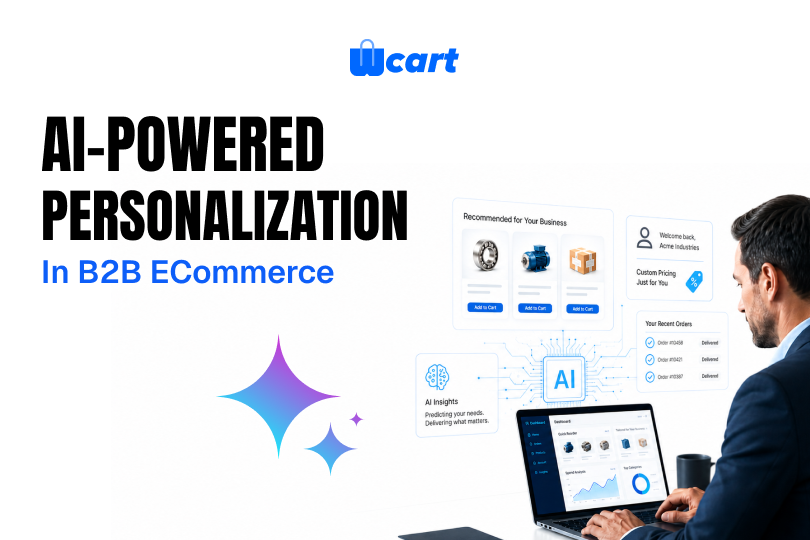
AI is one of the clearest growth drivers in B2B eCommerce for 2026. Businesses are using AI to analyze customer behavior, recommend products, predict demand, and improve the overall buying experience. Instead of showing every customer the same catalog, sellers can now surface personalized product suggestions based on a buyer’s history and stated interests.
- According to Salesforce reports, nearly 73% of customers expect businesses to understand their unique needs and expectations.(Source: Salesforce)
- This is why AI-powered personalization is becoming one of the top B2B ecommerce trends in 2026
For example, manufacturers and wholesale businesses are now using AI tools to automate recommendations, improve inventory planning, and provide faster customer support. AI also helps businesses analyze customer purchasing patterns and identify future sales opportunities.
Benefits of AI in B2B eCommerce
- Better customer experience
- Faster product recommendations
- Improved inventory planning
- Better sales forecasting
- Reduced support workload
- Increased repeat purchases
Why Businesses Are Investing in AI
- Automation helps reduce manual work
- Customers expect personalized experiences
- Businesses want better operational efficiency
- AI improves decision-making using customer data
2. Rise of Headless Commerce
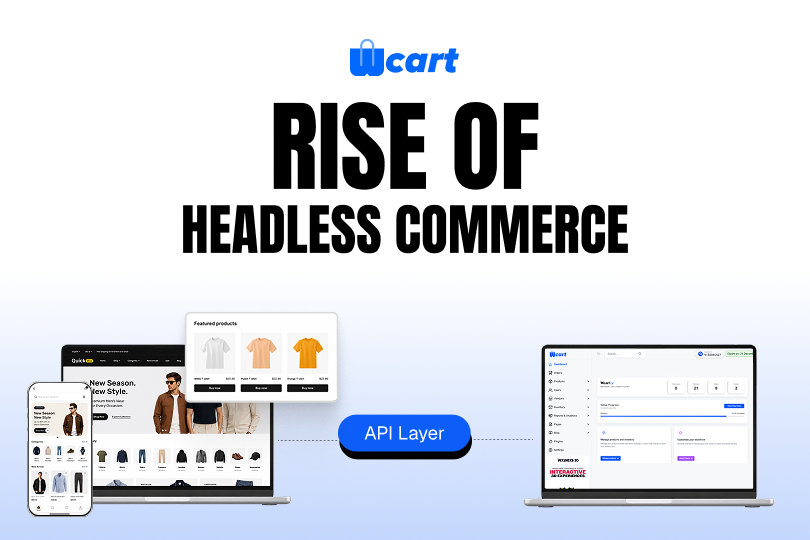
- Headless commerce is becoming one of the fastest-growing B2B ecommerce trends in 2026. It separates the frontend (what customers see) from the backend (inventory, pricing, order management) so each can be updated independently.
- Traditional all-in-one platforms often struggle to keep up with enterprise brands managing multiple sales channels and large catalogs headless architecture removes that bottleneck.
- Many enterprise brands are now moving toward headless commerce because it improves website speed, scalability, and omnichannel experiences. Faster-loading websites also help reduce bounce rates and improve SEO performance.
For example, large distributors handling thousands of products can update frontend experiences without affecting backend operations. This makes it easier to scale digital commerce systems as customer expectations continue rising.
Why Headless Commerce Is Growing
- Faster frontend experiences
- Better mobile performance
- Easier integrations
- Improved scalability
- Better customer engagement
As more companies focus on omnichannel commerce, headless ecommerce platforms will continue and going to be more important in the future.
3. Mobile-First B2B Buying Experience
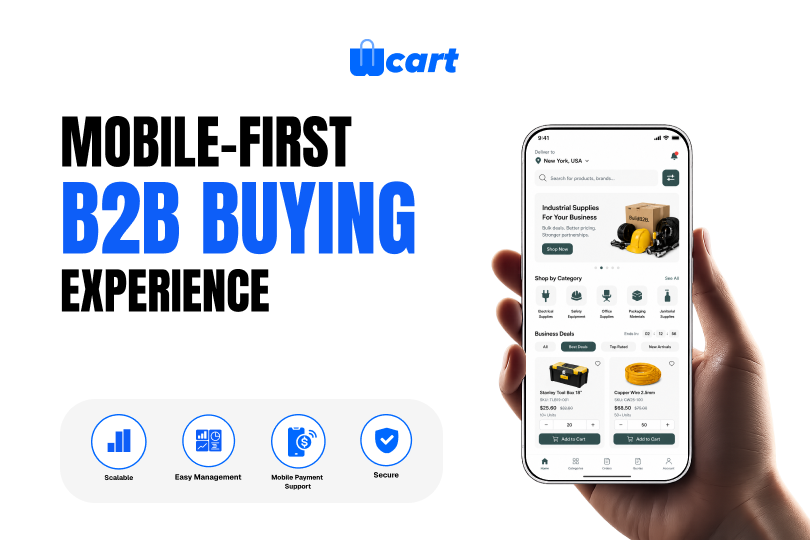
- Mobile is no longer a B2C-only concern. Today, many B2B buyers use smartphones for product research, supplier comparisons, purchase decisions, and reordering.
- Shopify reports that more than 65% of buyers now use a mobile device somewhere in the purchasing process.This is one of the reasons why mobile-first commerce is becoming one of the top B2B ecommerce trends in 2026.
Companies with slow mobile experiences often struggle with:
- Higher bounce rates
- Lower engagement
- Reduced conversions
- Poor customer satisfaction
For example, many wholesale suppliers now allow customers to reorder products directly from mobile apps instead of relying on traditional sales calls or email communication.
Important Mobile Commerce Features
- Responsive website design
- Quick reorder functionality
- Faster mobile page speed
- Mobile payment support
- Real-time inventory visibility
Companies investing in mobile-first ecommerce experiences are improving customer convenience while also increasing online sales opportunities.
4. Self-Service Portals Becoming Essential
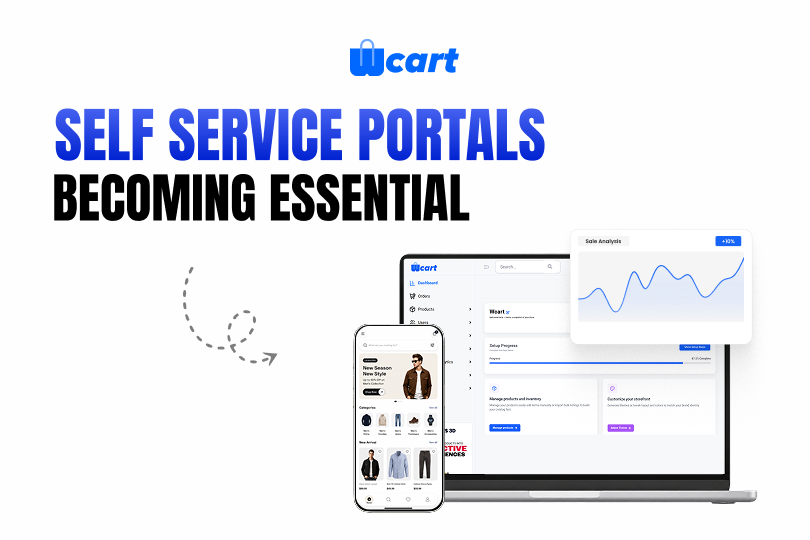
- Modern buyers want faster and more independent purchasing experiences. Instead of depending completely on sales representatives, many customers now prefer managing invoices, orders, tracking, and account details on their own.
- This is why self-service portals are becoming a major part of enterprise ecommerce platforms in 2026.
- Self-service systems improve convenience while reducing workload for support teams. Buyers can quickly access pricing
For example, manufacturers handling repeat bulk orders often use self-service systems to help customers reorder products within seconds.
| Self-Service Feature | Customer Benefit |
| Order tracking | Better transparency |
| Invoice access | Faster account management |
| Quick reordering | Improved convenience |
| Personalized pricing | Better buying experience |
| Account dashboards | Simplified purchasing |
5. Automation in B2B Operations
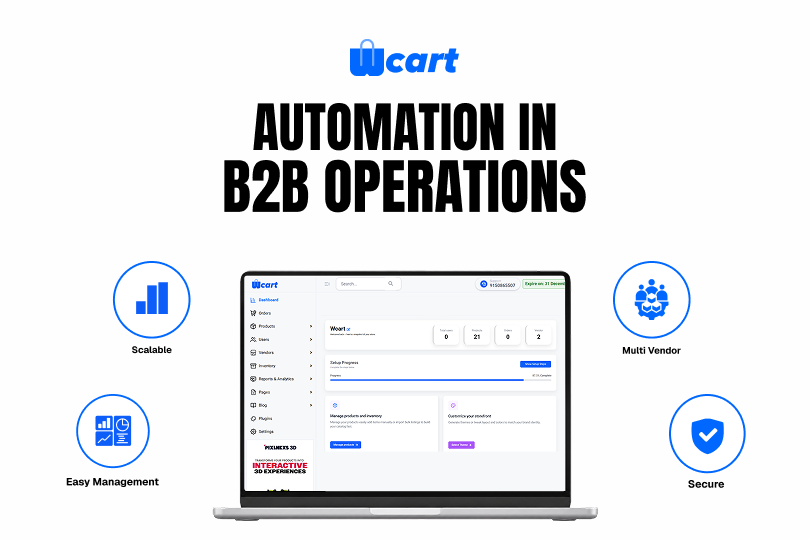
- Automation is helping ecommerce teams improve efficiency while reducing manual work. Over the last few years, more companies have started automating inventory management, order processing, invoicing, customer communication, and shipping updates.
- As order volumes continue increasing, automation is becoming essential for managing large ecommerce operations efficiently.
According to recent industry reports, companies implementing ecommerce automation often experience:
- Faster order processing
- Better inventory accuracy
- Lower operational costs
- Improved workflow management
- Better customer communication
For example, wholesale distributors now use automated inventory systems to update stock levels instantly across multiple warehouses. This helps reduce overselling while improving delivery accuracy.
Areas Where Automation Helps
- Inventory management
- Shipping notifications
- Invoice generation
- CRM and ERP synchronization
- Customer communication
Automation is not replacing human teams completely. Instead, it is helping ecommerce operations run more smoothly while allowing teams to focus on customer relationships and business growth.
6. Voice and Conversational Commerce

- Voice and conversational commerce are slowly becoming part of the future of B2B ecommerce. Buyers increasingly expect faster communication and quick answers while browsing products or managing orders online.
- Instead of waiting for email replies, many customers now prefer instant support through AI chatbots and conversational systems.
For example, ecommerce brands now use conversational tools to:
- Answer product questions instantly
- Recommend products
- Provide order updates
- Simplify customer support
These systems improve customer engagement while also reducing support workload for ecommerce teams.
Benefits of Conversational Commerce
- Faster customer support
- Better customer engagement
- Reduced response time
- Improved buying experiences
As AI-powered communication tools continue improving, conversational commerce may become a much bigger part of ecommerce experiences over the next few years.
Modern ecommerce brands need flexible and scalable platforms to manage changing customer expectations and digital growth.
7. Hyper-Personalized Pricing and Catalogs
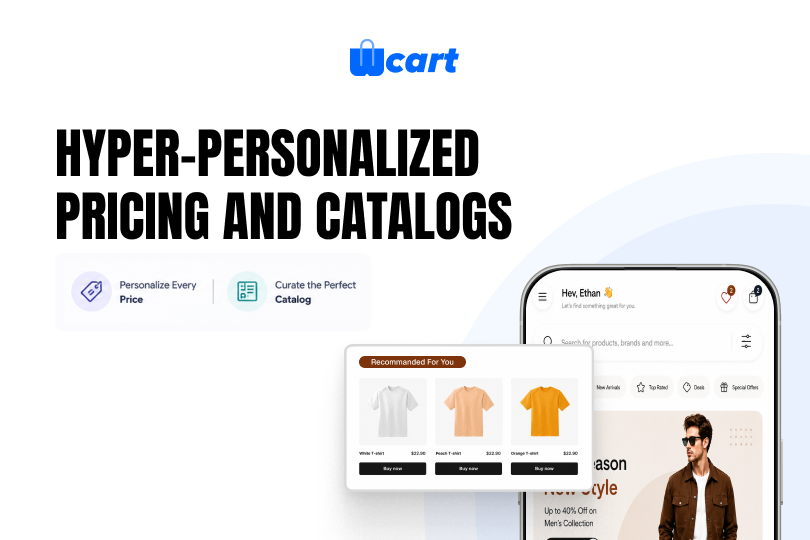
- Personalization is becoming more advanced across modern ecommerce platforms. Instead of offering identical pricing and catalogs to every buyer, companies are now creating highly personalized experiences based on customer profiles and purchasing history.
- Different customers often have different pricing agreements, product preferences, and payment requirements. Modern ecommerce systems make it easier to manage these complex pricing structures efficiently.
For example, manufacturers working with distributors often provide customer-specific pricing and custom product catalogs based on order volume and long-term partnerships.
Advantages of Personalized Ecommerce Experiences
- Better customer retention
- Higher conversion rates
- Improved customer satisfaction
- Increased repeat purchases
This trend is especially important for wholesalers and enterprise brands managing large customer networks across multiple markets.
8. Growth of B2B Marketplaces
- B2B marketplaces are growing rapidly as more companies move toward digital procurement systems.
- Marketplaces improve product discovery, speed up supplier connections, boost digital visibility, and open up global expansion opportunities.
- Many enterprise teams are now also building private marketplaces for their own distributor and wholesale networks industrial manufacturers, for instance, use private B2B marketplaces to simplify procurement and streamline supply chain communication.
Marketplaces create opportunities for:
- Easier product discovery
- Faster supplier connections
- Improved digital visibility
- Global expansion opportunities
For example, industrial manufacturers now use private B2B marketplaces to simplify procurement and improve supply chain communication.
Why Marketplace Commerce Is Growing
- Wider customer reach
- Better procurement efficiency
- Improved supplier management
- Faster business expansion
As digital procurement continues growing, B2B marketplaces are expected to become even more important in the future of ecommerce
9. Data-Driven Decision Making
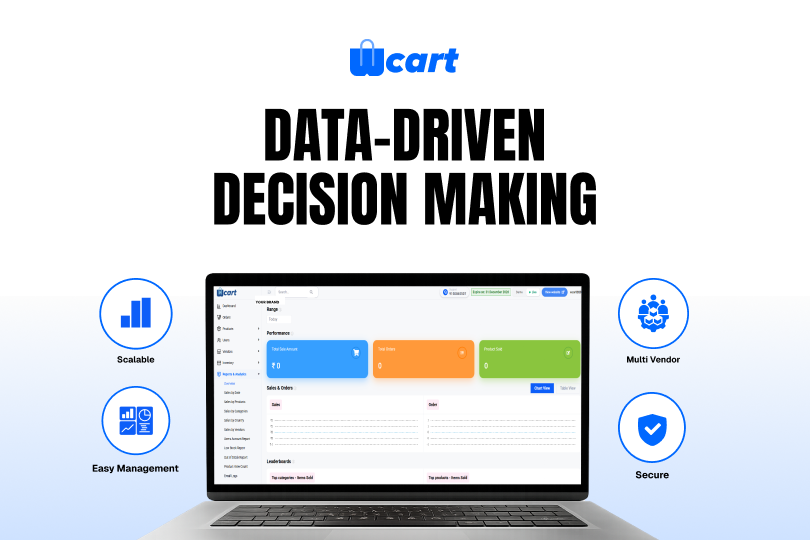
- Today, successful ecommerce brands rely heavily on data to understand customer behavior and improve business performance.
- Data analytics helps ecommerce teams track product demand, customer preferences, inventory trends, and conversion rates more accurately.
- Instead of making decisions based only on assumptions, companies now use real-time analytics to improve operations and customer experiences.
For example, online sellers can identify which products perform best during seasonal demand and adjust inventory planning accordingly.
Important Ecommerce Metrics
- Conversion rates
- Average order value
- Customer retention
- Cart abandonment rate
- Product demand trends
As ecommerce competition continues growing, data-driven decision-making is becoming one of the most important enterprise ecommerce trends for long-term growth.
10. Cybersecurity and Secure Transactions
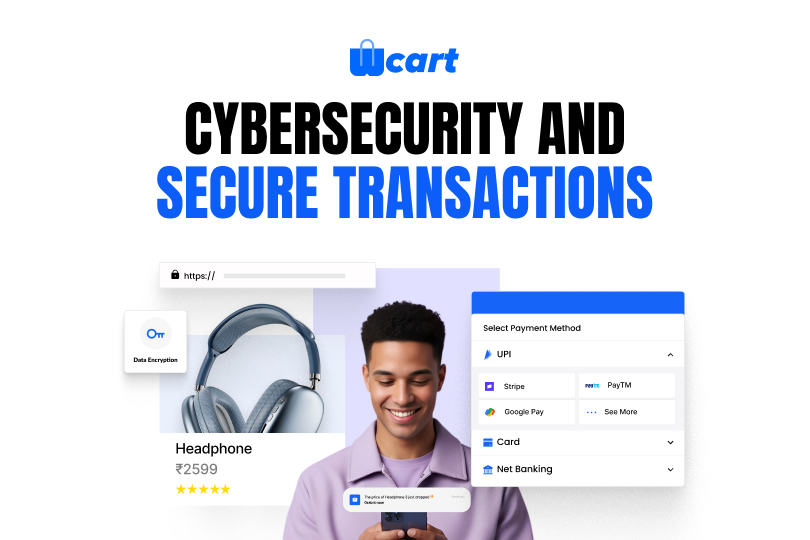
- As more B2B transactions move online, cybersecurity is becoming a major priority for ecommerce companies. Ecommerce platforms manage sensitive customer data, payment details, invoices, and supplier information every day.
- Because of this, brands are investing heavily in secure payment systems, fraud prevention tools, and cloud security infrastructure.
- A single security issue can damage customer trust and create operational problems for ecommerce teams.
Important Security Features
- Secure payment gateways
- Multi-factor authentication
- Data encryption
- Fraud detection systems
- Secure cloud hosting
Companies focusing on secure ecommerce experiences often build stronger customer confidence and long-term business relationships.
How Businesses Can Adapt to B2B Ecommerce Trends
| Trend | What businesses can do |
|---|---|
| AI personalization | Use customer and product data to personalize recommendations |
| Headless commerce | Separate storefront experiences from backend commerce systems where needed |
| Mobile commerce | Optimize product discovery, ordering and account management for mobile |
| Self-service | Provide customer portals for orders, invoices and reordering |
| Automation | Automate repetitive order, inventory and invoicing tasks |
| Conversational commerce | Add AI-assisted product and customer support |
| Personalized pricing | Offer customer-specific pricing and catalogs |
| Marketplaces | Evaluate marketplace channels and private B2B marketplaces |
| Data-driven commerce | Track conversion, AOV, retention and product demand |
| Security | Strengthen authentication, payment security and fraud controls |
15 B2B Ecommerce Statistical Trends Every Business Should Watch in 2026
Market Growth & Scale
- Digital channels now make up 56% of B2B revenue, up from just 32% in 2020 (Source: Swell)
- US B2B marketplace sales jumped 519% between 2021–2024, now ~14% of all B2B sales (Source: Elogic Commerce)
- Amazon Business alone has crossed $35 billion in annualized sales (Source: Elogic Commerce)
- US B2B ecommerce site sales hit $2.297 trillion in 2024, up 10.5% year-over-year (Source: eMarketer, via Uncap)
- The number of industry-specific B2B marketplaces has grown from 75 five years ago to over 750 today (Source: Ringly)
Buyer Behavior & Expectations
- 61% of B2B buyers say they’d rather skip the sales rep entirely (Source: Gartner, via Scube Marketing)
- 83% of B2B buyers already know exactly what they want before a rep even gets involved (Source: Scube Marketing)
- 39% of B2B buyers are comfortable placing orders over $500,000 without ever speaking to a rep (Source: Elogic Commerce)
- 80% of B2B buyers now use their phone at some point while researching or ordering (Source: Uncap)
- 90% of B2B buyers say they’d switch suppliers entirely for a better online buying experience (Source: Capital One Shopping)
AI, Technology & Operational Impact
- 94% of B2B buyers now use generative AI tools to research and compare suppliers (Source: Ringly)
- AI adoption has reached 89% among revenue-facing teams (Source: Ringly)
- 71% of B2B businesses use AI somewhere in ecommerce ops, but only 33% have rolled it out fully (Source: Ringly)
- 85% of B2B organizations now run a self-service buying portal (Source: Elogic Commerce)
- Digitally mature B2B sellers beat their sales targets by 110% more than sellers who lag behind (Source: Deloitte Digital, via Uncap)
B2B Ecommerce Trends in India
India is becoming one of the fastest-growing ecommerce markets globally. Manufacturers, wholesalers, distributors, and ecommerce brands are rapidly investing in digital commerce platforms to improve customer reach and operational efficiency.
Several factors are driving ecommerce growth in India:
- Increased smartphone usage
- Growth of digital payments
- Rising internet penetration
- Expansion of wholesale ecommerce
- Government support for digital transformation
Indian ecommerce companies are also investing heavily in automation, AI-powered commerce, and mobile-first ecommerce experiences.
As digital adoption continues increasing across industries, India will likely remain a major growth market for B2B ecommerce over the next few years.
What Is the Future of B2B Ecommerce?
B2B ecommerce is moving toward a more self-directed, AI-assisted and connected buying environment, where buyers can research, evaluate and complete purchases with less dependence on traditional sales processes. Recent data shows how quickly this shift is happening:
- 67% of B2B buyers prefer a rep-free buying experience, while 70% prefer completely digital, self-service purchasing.
- 39% of buyers are comfortable placing orders worth more than $500,000 through self-service channels, up from 28% two years earlier.
- The global B2B ecommerce market was estimated at $19.34 trillion in 2024 and is projected to reach $47.5 trillion by 2030.
Together, these figures point toward a future where digital self-service, AI-assisted decision-making, connected commerce systems and increasingly autonomous purchasing workflows become a larger part of how businesses buy and sell online.
Challenges Companies Face While Adopting B2B Ecommerce Trends
Although digital transformation offers major opportunities, many companies still face challenges while adopting modern ecommerce technologies.
Some of the most common challenges include:
- Integration complexity
- High implementation costs
- Employee training requirements
- Managing large product catalogs
- Data security concerns
Ways Companies Can Overcome These Challenges
- Invest in flexible ecommerce platforms
- Train teams properly
- Implement automation step by step
- Focus on long-term digital growth
As ecommerce technology continues evolving, companies that adapt strategically will likely stay ahead of competitors.
Conclusion
The way companies buy and sell things on the online is changing quickly. From AI-powered personalization to automation and mobile-first commerce, digital transformation is becoming very important, for B2B growth in 2026.
Companies that start using these B2B ecommerce trends will likely improve customer experience, simplify operations, and stay ahead in a highly competitive market. Whether it is manufacturers, wholesalers, or enterprise brands, modern ecommerce platforms are helping teams scale faster and manage customer expectations more efficiently.
As the future of B2B ecommerce keeps changing brands should focus on technology, better user experiences, and digital commerce strategies. Platforms like Wcart can help companies build modern ecommerce ecosystems designed for long-term growth.

























Leave a Reply