
Note: This guide has been updated for 2026 with the latest pricing, features, and platform comparisons to help you choose the best Weebly alternative.
Weebly alternatives exist because Weebly’s feature set, built for simple drag-and-drop sites, often can’t keep pace with growing ecommerce needs like multi-channel selling, advanced checkout customization, or B2B pricing structures. As businesses scale your online store, they typically look for platforms offering deeper customization, stronger app ecosystems, or open-source. The right alternative depends on three factors: business model (B2B vs. B2C), technical comfort level, and growth stage.
This guide compares five proven options Wcart, Shopify, BigCommerce, Hostinger, and Duda across pricing, ecommerce capability, and ideal use case, so you can match the platform to your actual requirements rather than guessing.
Key Takeaways:
- Weebly Commerce is shrinking: stores running Weebly Commerce decreased 6% year-over-year and 3.7% quarter-over-quarter in Q1 2026, with 34,277 live stores currently on the platform.
- Tiny and shrinking CMS footprint: Weebly accounts for just 0.5% of all websites using a known CMS, with an estimated 819,826 live websites still running on it.
- Barely visible among top-traffic sites: Weebly’s global traffic ranking has actually increased over the past three months, moving from 2,105 to 2,231, with overall web traffic up 5.45% month-over-month modest movement that hasn’t translated into broader market share gains.
- Losing ground to Wix and Squarespace: Wix now powers 4.3% of all websites and grew 32.6% year-over-year, generating $1.99 billion in annual revenue, while Squarespace holds 2.5% of all websites and was acquired for $7.2 billion.
- Small-business heavy, low enterprise adoption: 86% of Weebly’s customer base is small businesses with under 50 employees, while only 6% are large enterprises with 1,000+ employees; Retail is Weebly’s largest customer industry at 5%.
Quick Comparison of the Best Weebly Alternatives
| Platform | Best For | Starting Price | Ecommerce Capability | Ease of Use | Customization Level | Recommended For |
| Wcart | Custom Ecommerce & B2B Projects | $37/month | Excellent | Moderate | Very High | Manufacturers, Distributors, B2B Brands, Marketplaces |
| Shopify | Online Stores | $29/month | Excellent | Easy | High | Ecommerce Businesses and Retail Brands |
| Hostinger Website Builder | Budget-Friendly Websites | $2.99/month | Moderate | Very Easy | Moderate | Freelancers, Startups, Small Businesses |
| BigCommerce | Growing Ecommerce Businesses | $39/month | Excellent | Moderate | High | Mid-Sized and Enterprise Ecommerce Brands |
| Duda | Agency Website Management | $19/month | Moderate | Easy | High | Agencies, Freelancers, Web Professionals |
Launch Your Ecommerce Website in Minutes With Our Easy Builder.
5 Best Weebly Alternatives For Ecommerce Business
1. Wcart
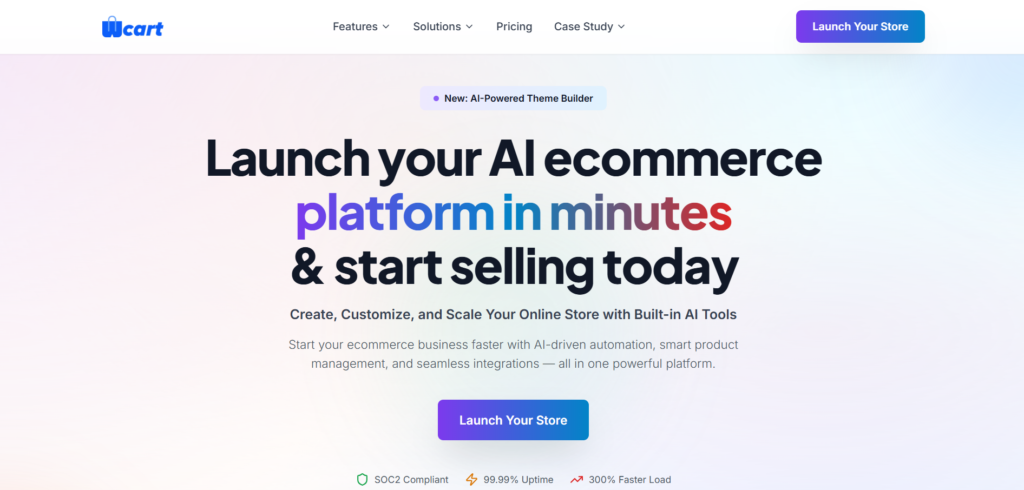
Wcart is designed for businesses that require more than a regular website builder. While other platforms focus on helping users launch websites quickly using templates, Wcart is geared to creating ecommerce solutions that meet specific business needs.
Key Features
- Custom Ecommerce Development – Every ecommerce website is developed according to the business’s requirements, product structures, and customer experiences.
- B2B Commerce Solutions – Businesses can create dealer portals, wholesale pricing structures, account-based purchasing systems, and bulk ordering capabilities.
- Multi-Vendor Marketplace Functionality – Companies planning to build marketplace platforms can manage multiple vendors, commissions, products, and seller accounts.
- ERP and CRM Integrations – Wcart can integrate with existing business systems, helping organizations streamline operations and reduce manual work.
- Custom Checkout Workflows – Checkout processes can be designed to match specific customer journeys rather than relying on standard templates.
Pricing
- Starter Store – $37/month – secure payment integration, basic SEO tools, social media integrations, and support for up to 2 staff accounts.
- Premium Store – $99/month -Includes everything in Starter, plus support for 2 payment gateways, custom domain support, email template customization, and up to 5 staff accounts.
- Advanced Store – $299/month – Includes inventory and warehouse management, abandoned cart recovery, AI-powered tools, multi-currency support, advanced page building tools, upselling features, and up to 15 staff accounts.
- Enterprise Store – $699/month – Includes advanced SEO tools, unlimited staff accounts, full customization options, affiliate and reward systems, API access, multi-vendor marketplace functionality, and priority support.
Pros
- The platform adapts to your operations rather than forcing you to change established workflows.
- Supports advanced ecommerce scenarios that many website builders cannot handle effectively.
- Can connect with existing business software to improve operational efficiency.
Cons
- Custom development generally costs more than launching a template-based website.
- Projects require planning, design, development, and testing before launch.
Why Choose Wcart Over Weebly?
Wcart moves beyond template-based ecommerce, letting businesses build around their own workflows instead of adapting to predefined features. This makes it especially suited to B2B businesses, manufacturers, distributors, and companies needing marketplace functionality.
Best For: Custom ecommerce projects, B2B commerce, and marketplace businesses.
2. Shopify

Shopify is one of the most popular ecommerce platforms in the world and powers millions of online shops. Shopify was designed specifically for online selling, unlike general website builders. Its ease of use makes it accessible to beginners, while its extensive app marketplace and enterprise solutions make it suitable for established brands as well.
Key Features
- Product Management – Store owners can organize products, categories, variants, pricing, and inventory from a centralized dashboard.
- Multi-Channel Selling – Products can be sold through websites, Facebook, Instagram, TikTok, marketplaces, and physical retail locations.
- Shopify Payments – The platform includes its own payment solution while also supporting numerous third-party gateways.
- Abandoned Cart Recovery – Automated reminders help businesses reconnect with customers who leave without completing a purchase.
- App Marketplace – Thousands of apps are available to add marketing, shipping, accounting, loyalty, and customer support functionality.
Pricing
- Basic Shopify – $29/month – Includes an online store, unlimited products, discount codes, and abandoned cart recovery.
- Shopify – $79/month – Designed for growing businesses that need additional reporting tools, staff accounts, and lower transaction fees.
- Advanced Shopify – $299/month – Provides advanced reporting, improved shipping discounts, and more detailed analytics.
- Shopify Plus – Custom Pricing – Built for enterprise-level businesses with high sales volumes and advanced operational requirements.
Pros
- Every feature is designed to support online selling.
- Businesses can expand functionality without custom development.
- The interface is straightforward and easy to navigate.
Cons
- Many advanced features require paid applications.
- Subscription fees, apps, and transaction costs can add up.
Why Choose Shopify Over Weebly?
While Weebly includes ecommerce functionality, But Shopify was built specifically for online selling. Businesses gain access to better inventory management, stronger marketing tools, multi-channel selling, shipping integrations, and a much larger app ecosystem.
For companies focused primarily on ecommerce, Shopify often provides a more complete solution.
Best For: Online stores, ecommerce startups, and retail brands.
3. BigCommerce
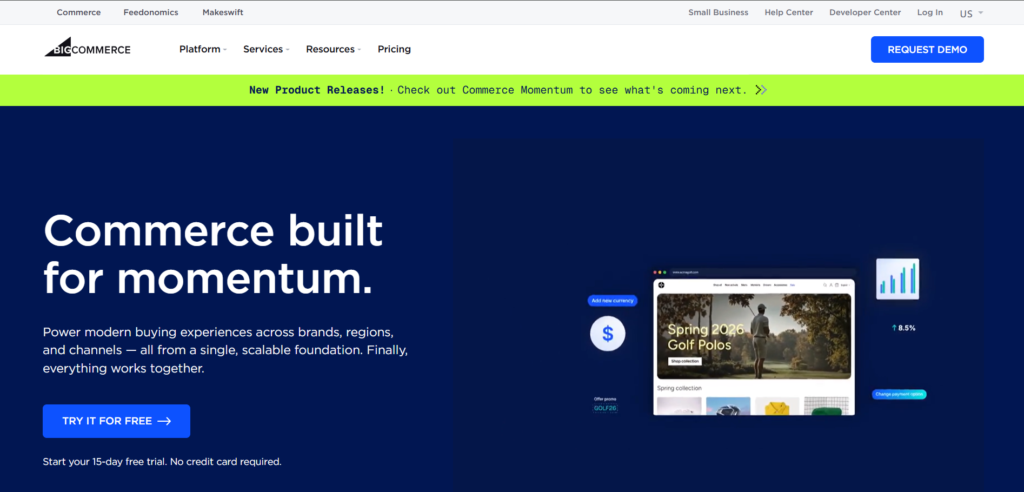
BigCommerce is a platform designed for stores. It is designed for businesses that need additional features to sell their products. While many website builders offer ecommerce as an additional feature, BigCommerce was built specifically to support online retailers.
Key Features
- Multi-Channel Selling – Products can be sold through websites, marketplaces, social media platforms, and retail channels.
- Advanced Product Management -Supports large product catalogs with multiple variants and inventory controls.
- B2B Commerce Features – Businesses can create wholesale pricing structures and customer-specific purchasing experiences.
- Built-In SEO Tools – Provides tools for optimizing product pages, categories, and website content.
- Multi-Storefront Capabilities – Businesses can manage multiple storefronts from a centralized environment.
Pricing
- Standard Plan – $39/month – Suitable for new and growing online stores that need professional ecommerce functionality.
- Plus Plan – $105/month – Includes customer segmentation, abandoned cart recovery, and advanced marketing tools.
- Pro Plan – $399/month – Designed for larger businesses managing significant sales volumes and complex catalogs.
- Enterprise Plan – Custom Pricing – Built for large organizations requiring custom infrastructure, dedicated support, and advanced operational capabilities.
Pros
- Every major feature is designed around online selling.
- Many features are available without requiring additional applications.
- Can support businesses managing thousands of products.
Cons
- New users may need time to understand all available features.
- Smaller stores may find simpler platforms more affordable.
Why Choose BigCommerce Over Weebly?
BigCommerce was built specifically for businesses that depend heavily on online sales, offering advanced inventory management, multi-channel selling, B2B commerce, and customer segmentation that basic builders like Weebly don’t support at scale.
Best For: Growing ecommerce brands, wholesalers, distributors, and online retailers.
4. Hostinger Website Builder
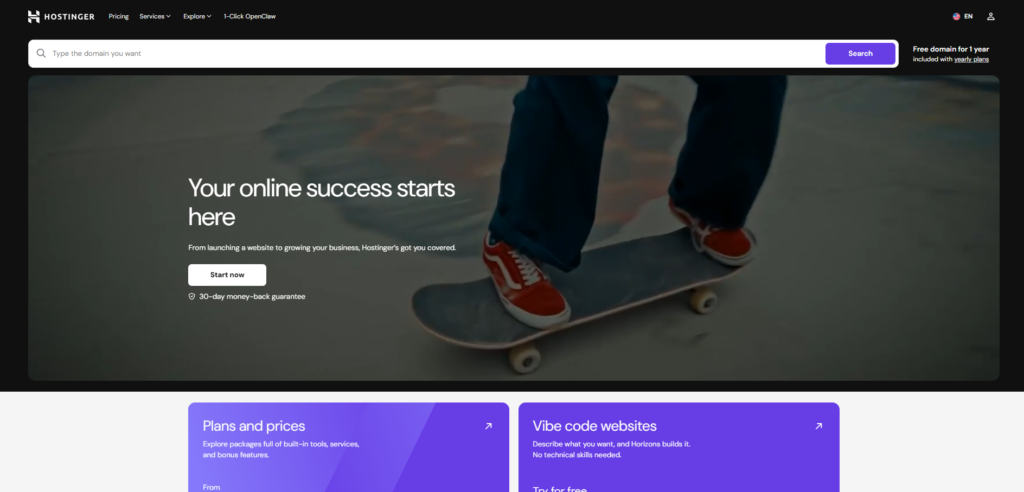
Hostinger Website Builder has become a popular choice for businesses and freelancers who want a website without a big price tag. What sets it apart is that everything happens in one place you build the website, and Hostinger hosts it too, with no separate hosting provider to manage.
Unlike some website builders that require separate hosting and website management tools, Hostinger combines website creation, hosting, AI tools, and domain management into a single platform.One of the biggest reasons businesses choose Hostinger is its value for money.
Key Features
- AI Website Builder – The platform can generate website layouts based on information about your business, reducing the time required to create a website.
- AI Content Generator – Businesses can create page content, headlines, and website copy using built-in AI tools.
- Ecommerce Functionality – Users can manage products, payments, inventory, and orders from a centralized dashboard.
- Responsive Templates – Templates automatically adjust to desktops, tablets, and smartphones.
- Built-In Hosting – Website hosting is included, eliminating the need to purchase hosting separately.
Pricing
- Premium Website Builder Plan – Starting Around $2.99/month – Suitable for personal websites, freelancers, and small businesses looking for an affordable online presence.
- Business Website Builder Plan – Starting Around $3.99 to $4.99/month – Includes ecommerce features, AI tools, increased storage, and advanced business functionality.
- Additional Services – Businesses may choose premium domains, email hosting, and other optional services depending on their requirements.
Pros
- Offers one of the most affordable entry points among modern website builders.
- Most users can create a website without technical expertise.
- Businesses do not need to manage separate hosting providers.
Cons
- Businesses with highly specific requirements may eventually outgrow the platform.
- Large ecommerce operations may require more specialized platforms.
Why Choose Hostinger Website Builder Over Weebly?
Hostinger Website Builder has become a popular choice for businesses and freelancers who want a website without a big price tag. Website creation, hosting, AI tools, and domain management all live on one platform, so there’s no separate hosting provider to manage. That combination of affordability and simplicity is the platform’s biggest draw.
Best For: Startups, freelancers, local businesses, and budget-conscious entrepreneurs.
5.Duda
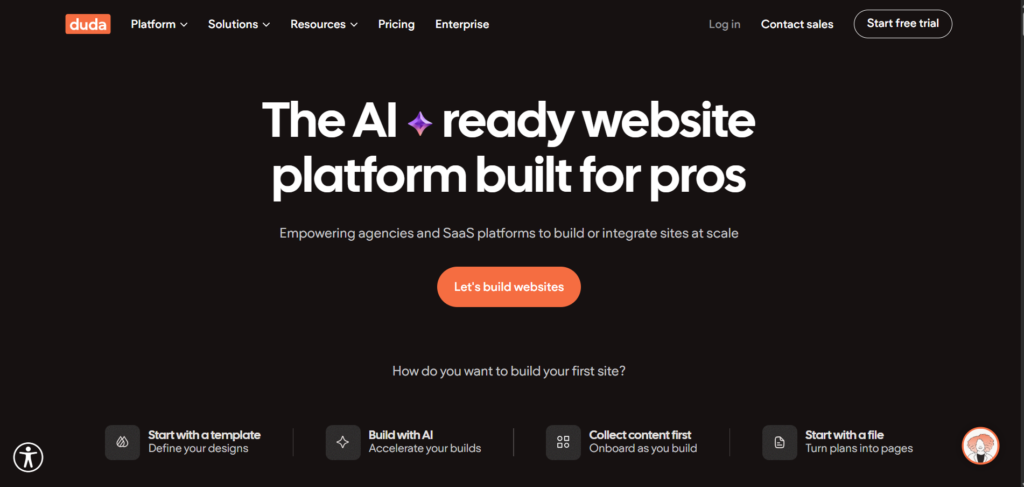
Duda is a website builder widely used by web design agencies that need to create websites for multiple clients while maintaining consistency and productivity. Duda primarily manages multiple businesses websites . Duda places a strong emphasis on team collaboration, client management, and efficient website deployment.
Key Features
- Team Collaboration Tools – Multiple team members can work on website projects simultaneously.
- White-Label Functionality – Agencies can present the platform under their own branding.
- Client Management Features – Helps professionals organize and manage multiple website projects.
- Responsive Templates – Provides mobile-friendly templates suitable for various industries.
- Website Personalization – Businesses can create customized visitor experiences based on user behavior.
Pricing
- Basic Plan – Around $19/month — Suitable for freelancers and small businesses managing a limited number of websites.
- Team Plan – Around $29/month –Includes collaboration tools for multiple users.
- Agency Plan – Around $52/month — Provides client management and white-label functionality.
- White Label Plan – Around $149/month — Designed for agencies that want complete branding control.
Pros
- Provides tools that simplify client website management.
- Multiple team members can contribute efficiently.
- Allows agencies to strengthen their own brand presence.
Cons
- Not intended for complex online stores.
- Offers fewer extensions compared to WordPress and Shopify.
Why Choose Duda Over Weebly?
While Weebly is primarily designed for individual website owners, Duda focuses on professionals managing websites. Agencies gain access to collaboration tools, white-label commerce, workflow improvements, and project management features that are not commonly available in traditional website builders.
For freelancers, agencies, and digital service providers handling multiple projects, Duda often provides a more efficient working environment than Weebly.
Best For: Agencies, freelancers, digital professionals, and businesses managing multiple websites.
Conclusion
Choosing a Weebly alternative doesn’t have to be difficult. The best platform is the one that matches your business needs today and can support your goals in the future. Whether you need an easy website builder, a powerful online store, a content-focused platform, or a custom ecommerce solution, there is an option that fits your requirements.
Take your some time to compare the features, pricing, and strengths of each platform before making your decision. A website is more than just an online presence it’s an important part of your business journey.
We hope this guide has helped you understand your options and made your decision a little easier. Wishing you success as you build, grow, and take your business to the next level. Happy website building!
Future-proof Your Brand Today with a Powerful White Label Ecommerce Platform!
Frequently Asked Questions(FAQ)
Related Platform Comparisons
- 8 Magento Alternatives for Enterprise Ecommerce – compare features, pricing & the best fit for your store.
- Best Wix Alternatives – compare features, pricing & the best fit for your store.
- Best Ecwid Alternatives – compare features, pricing & the best fit for your store.
- 7 Powerful WooCommerce Alternatives – compare features, pricing & the best fit for your store.
- Best Ecommerce Platforms – compare features, pricing & the best fit for your store.

























Leave a Reply