
Quick Answer
The best ecommerce order management software in 2026 streamline operations, enhance customer experiences, and integrate advanced technologies. These platforms offer robust inventory management, real-time analytics, and multi-channel support. Leading solutions prioritize scalability, automation, and customization to meet diverse business needs, ensuring efficient order processing and fulfillment.
Key Takeaways
- The global OMS software market is projected to grow from ~$1 billion in 2021 to $1.9 billion by 2026, a 12.3% CAGR. (Netguru)
- Manual order management processes cost businesses 30% more to run than automated ones, and automated systems process orders roughly 50% faster with fewer errors. (Netguru)
- Order management is projected to account for 34% of total inventory software application demand in 2026, the single largest use case in the category. (Future Market Insights)
- A single warehouse mispick costs up to $100 to correct, meaning just a handful of errors per week can add up to $10,000 a year in avoidable cost. (SellersCommerce)
Order management becomes more complicated than simply processing orders when ecommerce companies expand into enterprise-level operations. You no longer have to deal with a single warehouse or sales channel. Rather you are overseeing thousands of orders in numerous locations, warehouses, marketplaces and fulfillment partners.
Using spreadsheets or simple tools in this situation can easily lead to issues. Revenue, customer satisfaction and brand trust can all be directly impacted by inventory mismatches, delayed deliveries, inadequate warehouse coordination and a lack of real time insight.
An ecommerce order management software is built to:
- Manage several orders through several channels.
- Display inventories in real time across many warehouses
- Automate intricate fulfillment procedures
- Connect easily with ERP, CRM and logistics systems
- Support distributed order management and smart routing
In this guide, we compare the ecommerce OMS software in 2026 including features, pricing, benefits and limitations so you can choose the right solution.
What Is an Ecommerce Order Management System?
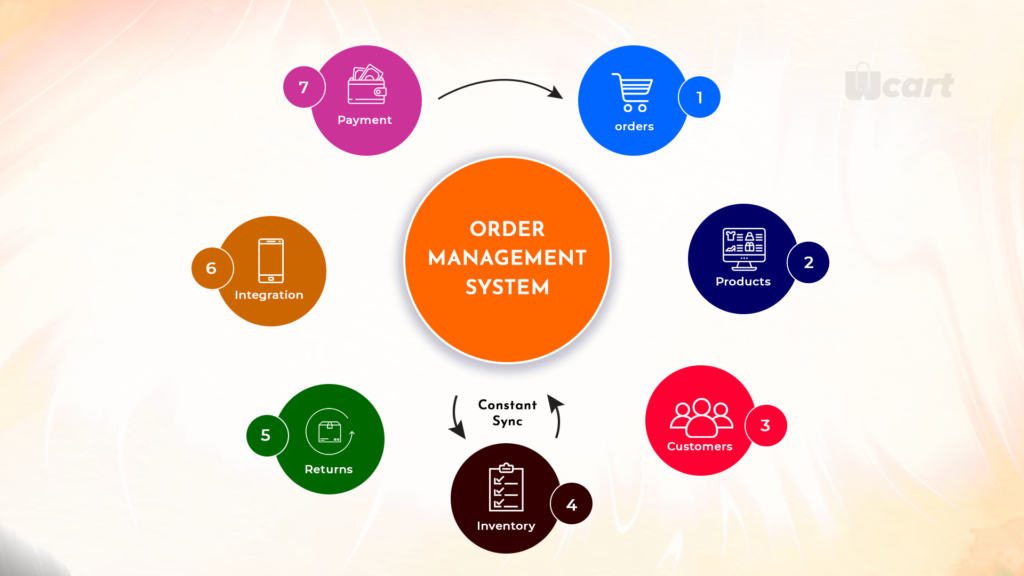
An ecommerce order management system (OMS) is software that helps businesses track, process and fulfill customer orders across multiple sales channels. It combines inventory, automates order routing, manages shipping and provides real time updates to customers.
Instead of manually updating spreadsheets or switching between platforms, an OMS provides a single dashboard to manage everything from order placement to delivery.
What Makes the Best Ecommerce Order Management Software?
The best ecommerce order management software shares a few core traits regardless of price point or company size:
- Real-time inventory sync across every channel you sell on
- Automated order routing that doesn’t need manual intervention
- Clean integration with your existing ERP, CRM, and shipping tools
- Reporting that surfaces real bottlenecks, not just raw order counts
10 Best Enterprise Order Management Software in 2026
1. WCART – Best All in One OMS for Scaling Enterprises
Best for: Enterprises that want one platform for ecommerce and order management
Pricing: Custom
WCART is a system that combines enterprise level order management with ecommerce functionalities. This facilitates the management of operations and lessens the need for several tools.
Key Features:
- Complete order lifecycle management
- Inventory in real time across several warehouses
- Workflows for automated fulfillment
- Built in ecommerce platform
Pros:
- Reduces the number of tools needed
- Faster to set up compared to traditional systems
- Can scale as the business grows
Cons:
- Needs consultation for advanced setups
Use Case: A growing D2C enterprise improved fulfillment speed by 40 percent and reduced operational work by using a single OMS platform instead of multiple tools.
2. Shopify Plus OMS – Best for High-Growth Brands
Ideal for: Businesses that currently use Shopify
Cost: $2000 a month is the starting price.
Order management tools for quickly expanding brands are included with Shopify Plus.
Key Features:
- Built in order tracking
- Multi-channel selling
- Automation tools
Pros:
- Easy to scale within Shopify
- Strong ecosystem of apps
Cons:
- Less flexible compared to standalone OMS platforms
Read more: for shopify alternatives
3. NetSuite OMS – Best ERP-Integrated Solution
Best for: Enterprises that need ERP and OMS together
Pricing: Custom
NetSuite provides complete visibility into corporate operations by integrating order management and ERP into a single platform.
Key Features:
- ERP and OMS together
- Operational and financial insights
- Advanced reporting
Pros:
- Complete business management solution
- Highly scalable
Cons:
- Expensive to implement
- Takes longer to deploy
4. IBM Sterling OMS – Best AI-Powered OMS
Best for: Large enterprise operations
IBM Sterling OMS focuses on smart decision-making using AI.
Pros:
- AI-based order routing
- Real-time decision making
Cons:
- Complex setup
- Requires technical knowledge
Check this: AI is playing a major role in modern OMS systems
5. SAP Commerce Cloud OMS – Best for SAP Ecosystems
Best for: Enterprises using SAP systems
SAP Commerce Cloud OMS works well with other SAP tools and supports large operations.
Pros:
- Deep SAP integration
- Built for enterprise scale
Cons:
- High cost
- Needs technical teams
6. Cin7 Core – Best for Inventory and OMS Integration
Best for: Businesses selling on multiple channels
Pricing: Starts at $299 per month
Cin7 Core combines inventory management with order management.
Pros:
- Clear inventory tracking across channels
- Supports warehouse management
Cons:
- Cost increases as the business grows
7. Brightpearl – Best for Retail Enterprises
Best for: Retail businesses selling across channels
Brightpearl focuses on automation and improving operations.
Pros:
- Strong automation features
- Real-time business insights
Cons:
- Custom pricing
8. Linnworks – Best for Global Marketplace Operations
Best for: Sellers on Amazon, eBay and other marketplaces
Pros:
- Central control of orders
- Good marketplace integrations
Cons:
- Takes time to learn
9. Skubana: Ideal for Businesses Driven by Data
Ideal for: Companies that rely on analytics
Businesses looking for automation and deep data insights can benefit from Skubana.
Pros:
- Advanced analytics
- Automation features
Cons:
- Higher cost
10. Veeqo: The Greatest for Optimizing Fulfillment
Ideal for: Companies that specialize in shipping
Pros:
- Free to use
- Helps automate shipping
Cons:
- Limited features for large enterprises
Ecommerce OMS Software Comparison
| Software | Best For | Pricing | Key Strength |
| Wcart | Scaling D2C and enterprise brands | Custom | All-in-one OMS and ecommerce |
| Shopify Plus OMS | High-growth brands | $2000+ per month | Shopify ecosystem integration |
| NetSuite OMS | Large enterprises | Custom | ERP integration |
| Cin7 Core | Multichannel operations | $299+ per month | Inventory and warehouse sync |
| Brightpearl | Retail enterprises | Custom | Automation |
| Linnworks | Global marketplace sellers | Custom | Channel integration |
| Skubana | High-volume operations | Custom | Advanced analytics |
| IBM Sterling OMS | Large enterprises | Custom | AI-powered OMS |
| SAP Commerce Cloud OMS | Enterprise ecosystems | Custom | SAP integration |
| Veeqo | Growing enterprise sellers | Free | Shipping and fulfillment |
Key Features to Look for in an Ecommerce OMS
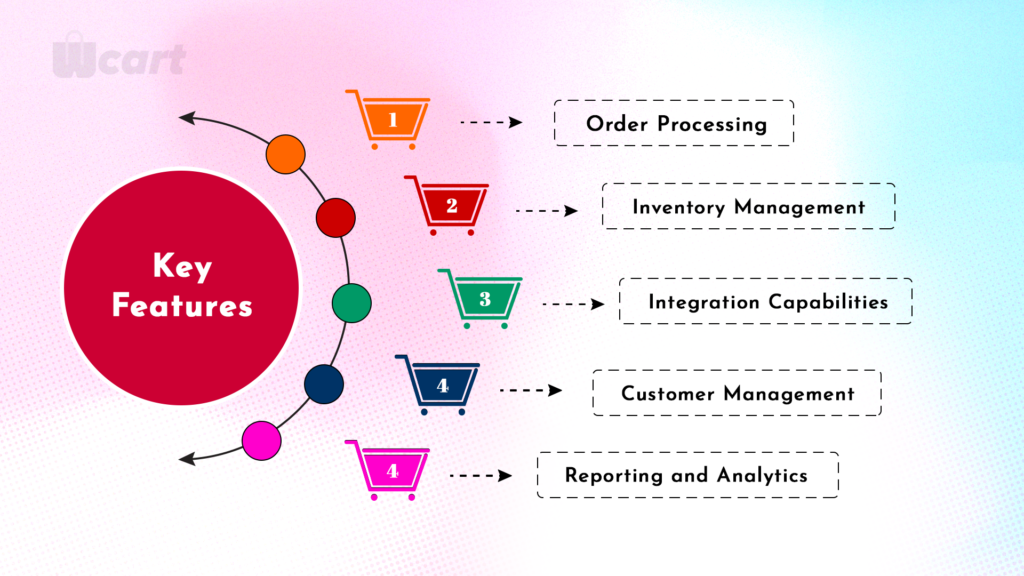
- Real Time Inventory Synchronization
Prevents overselling by updating stock levels instantly across all sales channels. - Multichannel Order Management
Unifies orders from your website, marketplaces and social commerce platforms. - Automated Order Processing
Automatically routes orders, assigns warehouses and generates shipping labels. - Warehouse Management Integration
Improves picking, packing and shipping performance. - Reporting and Analytics
Tracks order performance, fulfillment time and customer behavior. - Returns and Refund Management
Smooth reverse logistics and customer communication.
Modern ecommerce inventory and order management systems combine these capabilities into one scalable solution.
Read More: Essential Ecommerce Inventory Management Techniques for Business Success
Types of Ecommerce Order Management Systems
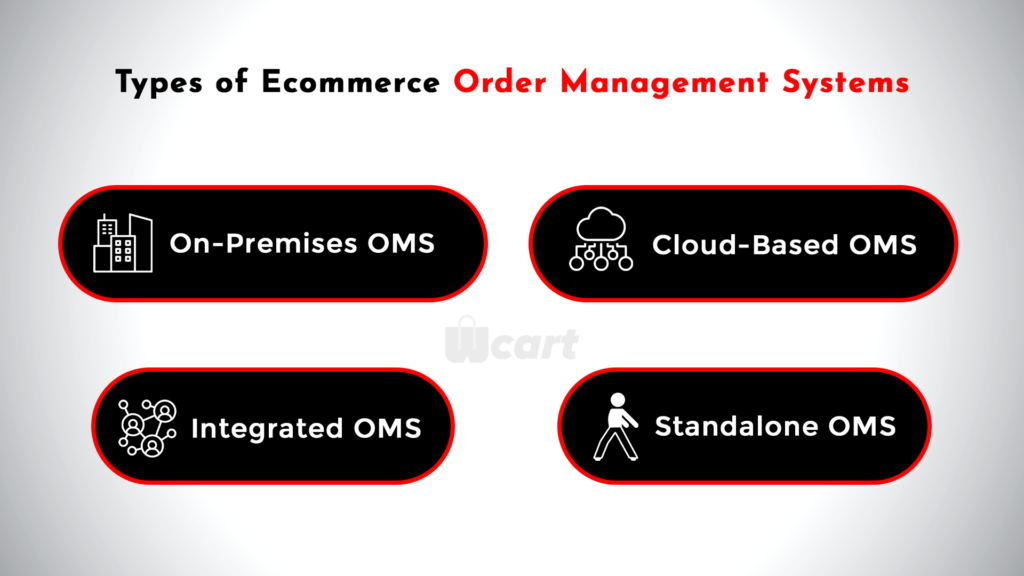
Cloud Based Order Management Systems
Hosted online and accessible from anywhere, these systems are scalable and ideal for small to mid sized businesses.
On Premises OMS
Installed on company servers, offering more customization and control for enterprise level businesses.
Integrated OMS
Built into ecommerce platforms such as Shopify or WCART, providing smooth platform functionality.
Standalone OMS
Independent systems that integrate with multiple ecommerce platforms and third party tools.
Scale Faster with the Right Order Management Software Choice!
How to Select the Appropriate OMS Software
Selecting the Ecommerce Order Management Software (OMS) requires careful consideration of various factors. To make an informed decision, keep the following key considerations in mind.
1. Functionality and Features
Look for features that align with your business requirements, such as order processing automation, real-time inventory updates, and integration with shipping carriers. Consider whether the OMS provides customization options to adapt to your unique business needs.
- Inventory Management Capabilities– Ensure the OMS provides robust inventory management capabilities, including real-time stock tracking, automatic inventory updates, and low-stock alerts.
- Order Tracking and Fulfillment Options – Look for features like order status updates, shipment tracking, and the ability to split or combine orders.
- Customer Communication and Support Features – Consider OMS features that facilitate seamless communication and support with customers. Features like automated order confirmation emails, customizable notifications, and the ability to handle returns and exchanges.
- Reporting and Analytics Capabilities – Once in a while, these features provide valuable insights into your business performance, including order trends, sales data, and customer behavior.
2. Scalability and Flexibility

Look for an OMS that can accommodate your business’s growth and adapt to changing needs. Ensure the system can handle increasing order volumes without sacrificing performance or efficiency.
- Ability to Handle Growing Order Volumes– Select an OMS that can effectively handle growing order volumes without compromising on order processing speed or accuracy.
- Support for Multiple Sales Channels – Ensure the system can seamlessly integrate with your online store, marketplaces like Amazon & Ebay, and even brick-and-mortar stores if applicable.
- Compatibility with Future Business Expansion Plans – If you have aspirations to enter new markets, expand your product offerings, or launch additional sales channels, ensure the OMS is compatible with these expansion goals.
Read More: Top 5 E-Commerce Development Company
3. Automation and Efficiency

Look for an OMS that offers automated processes to streamline your order management. Automation reduces manual intervention, minimizing errors and saving time. Evaluate how the OMS automates key tasks such as:
- Order Routing and Allocation Automation -A robust OMS should have the capability to automatically route orders to the appropriate fulfillment center or warehouse based on predefined rules.
- Automated Notifications and Alerts – Look for an OMS that provides automated notifications and alerts at various stages of the order process.
- Streamlined Processes for Order Processing and Fulfillment – Generally, the chosen OMS should offer streamlined processes to optimize these areas.
4. Reporting and Analytics
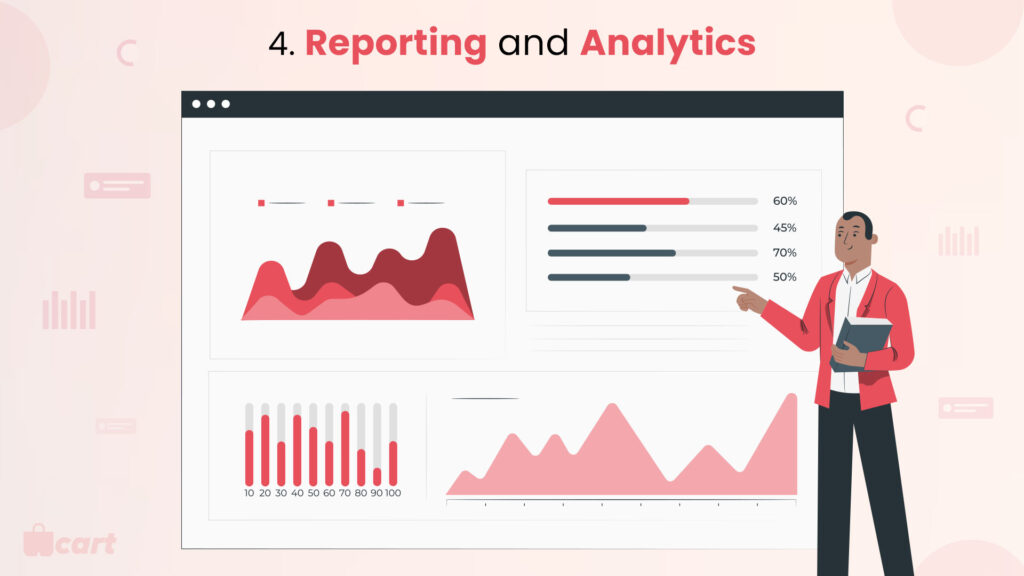
Look for an OMS that provides comprehensive reporting features to track order performance, analyze sales trends, and monitor key metrics. Meanwhile, robust reporting tools enable you to make data-driven decisions and identify areas for improvement in your order management processes.
- Reporting Capabilities for Tracking Order Performance – Look for features that provide insights into order processing times, order accuracy rates, and fulfillment efficiency.
- Insights and Analytics to Optimize Inventory Management – Look for features that provide visibility into inventory levels, stock turnover rates, and demand forecasting.
- Data Visualization Tools for Informed Decision-Making– Interactive charts, graphs, and dashboards enable you to visually analyze sales performance, track order trends, and identify patterns.
Read More: 12 Must-Try Tips for Increasing Ecommerce Conversion Rates
5. Customer Experience and Support

The customer experience is most important in ecommerce. Look for an OMS that prioritizes customer experience and support.
- Seamless and Intuitive Interface for Customers – A user-friendly and visually appealing interface enhances the overall shopping experience and reduces cart abandonment rates.
- Order Tracking and Communication Features – Likewise customers should be able to track their orders in real-time and receive automatic notifications about order status updates, shipment tracking, and delivery details.
- Customer Support Options and Responsiveness – Look for features such as live chat, email support, and a comprehensive knowledge base.
Benefits of Enterprise Order Management Softwares

Using an enterprise OMS gives clear advantages:
- Faster order processing at scale
- Reduce operating expenses by using automation
- Improved client satisfaction through real time updates
- More accurate inventory across channels
- Centralized control of operations
How to Implement, Integrate, and Optimize an Order Management Software (step-by-step)
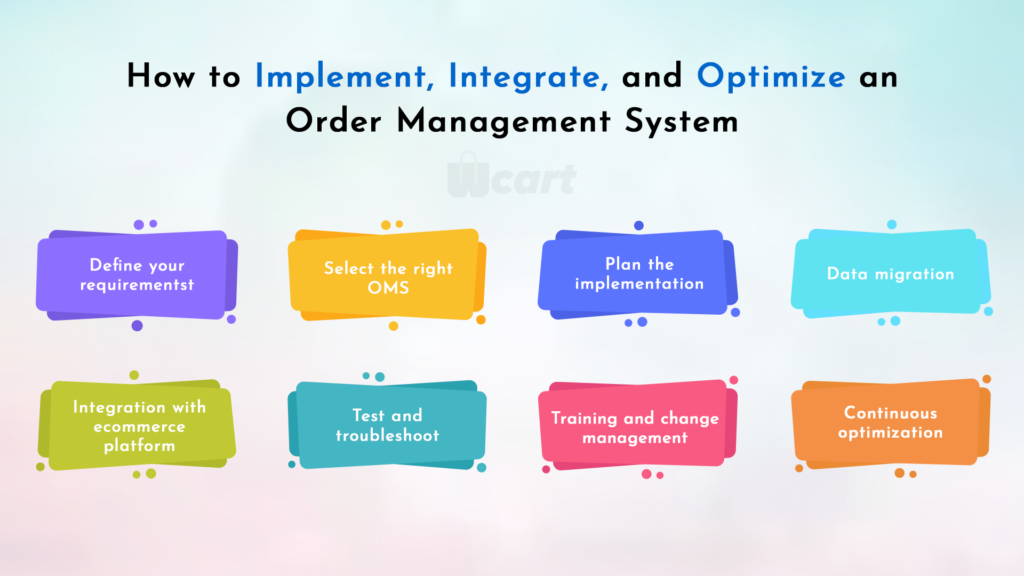
Implementing an Ecommerce Order Management Software requires careful planning and execution. Follow these steps in the same way for a successful implementation:
- Define your requirements: Clearly outline your business needs, objectives, and desired outcomes from the OMS implementation. Identify specific functionalities and integrations required.
- Select the right OMS: Choose an OMS that aligns with your requirements and offers the necessary features and scalability.
- Plan the implementation: Develop a detailed implementation plan, including timelines, resource allocation, and key milestones. Ensure adequate training for the staff who will be using the system.
- Data migration: Carefully migrate existing data from legacy systems to the new OMS. Verify data accuracy and integrity during the process.
- Integration with ecommerce platform: Follow best practices to integrate the OMS with your ecommerce platform. Ensure seamless communication between the systems for order synchronization, inventory updates, and customer data.
- Test and troubleshoot: Conduct thorough testing of the OMS to identify and resolve any issues or discrepancies. Test order processing, inventory management, and communication workflows.
- Training and change management: Provide comprehensive training to the staff who will be using the OMS. Prepare them for the transition and communicate the benefits of the new system.
- Continuous optimization: By the time, regularly evaluate the OMS performance, gather feedback from users, and make necessary adjustments. Optimize the system based on data insights and user experiences.
Read More: Maximizing Profits with the Latest Ecommerce Trends
6 Best Practices for Integration with Ecommerce Platform and Other Systems
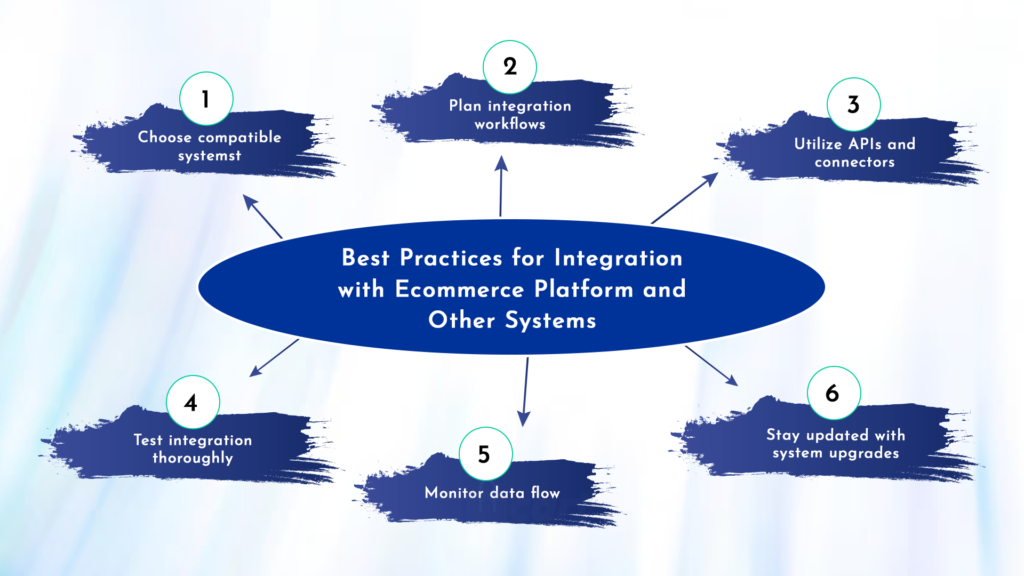
When integrating an OMS with your ecommerce platform and other systems, follow these best practices:
- Choose compatible systems – confirm your OMS and ecommerce platform align on data formats, APIs, and communication protocols
- Plan integration workflows – map the data flow for orders, inventory, and customer information ahead of time
- Use APIs and connectors – leverage what your OMS and ecommerce platform already provide rather than building custom
- Test integration thoroughly – run real scenarios: order placement, inventory updates, data consistency
- Monitor data flow – set up monitoring to catch sync issues early
- Stay current – keep your OMS and connected systems updated for compatibility and new features
Read More: how to build scalable systems like marketplaces like Amazom
Common Challenges and How to Overcome Them
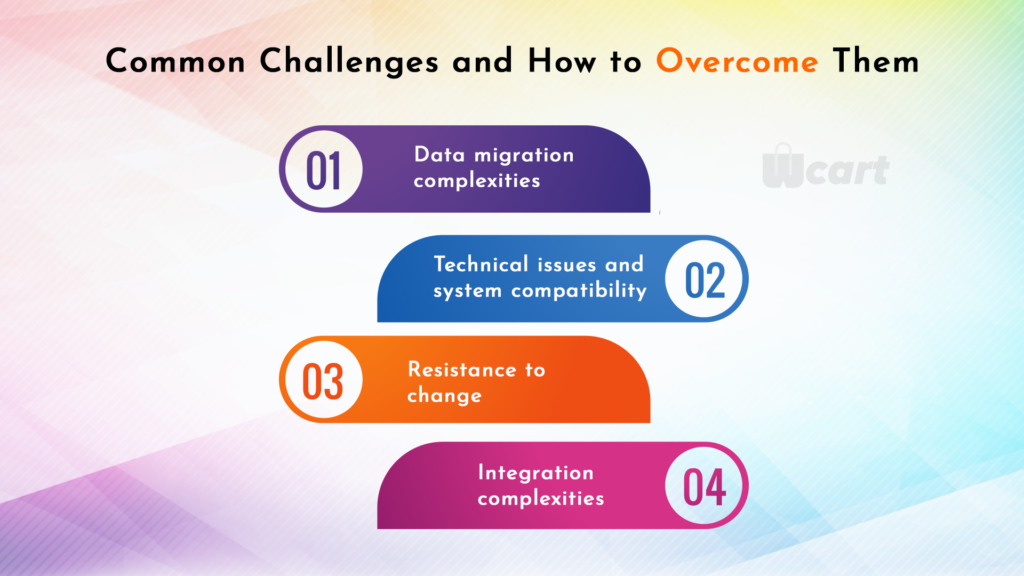
- Data Migration Issues
Plan proper data mapping before switching systems. - Team Resistance
Provide training and clearly communicate the benefits of automation. - Integration Complexities
Work with vendors offering API based integration and ongoing technical support.
Read More: Unlocking E-commerce Success With Top 9 Business Models
Which Enterprise OMS Is Right for You
- All-in-one solution: WCART
- ERP integration: NetSuite
- SAP ecosystem: SAP Commerce Cloud
- AI-powered OMS: IBM Sterling
- Retail automation: Brightpearl
Your final choice depends on your business needs, existing systems and growth plans.
Conclusion
At the enterprise level, order management is not just an operational task. It is essential to the expansion of businesses.
Businesses may scale more easily, simplify operations and improve customer satisfaction across all platforms and geographical areas with the help of an appropriate OMS.
Businesses are now opting for unified solutions that provide improved visibility, automation and control across numerous disparate tools.
Wcart is a solid choice to think about if you’re searching for a scalable all in one enterprise solution.

























Leave a Reply