
Quick answer: PrestaShop alternatives offer a range of options for ecommerce businesses. Wcart is a top pick, providing a no-code store builder and headless commerce platform that scales to enterprise, making it an ideal choice for businesses seeking flexibility and customization without the need for extensive coding knowledge.
Starting an online store today is easier than ever. Platforms like PrestaShop have helped over 300,000 ecommerce businesses build and manage online stores without creating everything from scratch.
However, as businesses grow, many store owners face challenges such as:
- Technical complexity
- High maintenance costs
- Dependency on paid modules
Managing hosting, updates and performance often requires developer support which increases costs over time.
Modern ecommerce platforms solve these problems by offering:
- Built-in features
- Cloud hosting
- Automatic updates
- Easy store setup
👉 In this guide, we will explore the best PrestaShop alternatives in 2026, compare their features and help you choose the right platform for your business.
Quick Comparison: Best PrestaShop Alternatives
| Platform | Type | Best For | Hosting | Ease of Use |
| Wcart | Cloud ecommerce | Fast store launch | Included | Very Easy |
| Webnexs | Hosted ecommerce | Custom ecommerce | Included | Easy |
| Shopify | SaaS | Ecommerce brands | Included | Easy |
| WooCommerce | Open source | WordPress websites | Required | Medium |
| BigCommerce | SaaS | Growing brands | Included | Easy |
| Magento | Open source | Large enterprise | Required | Complex |
| Wix | SaaS | Small stores | Included | Very Easy |
| OpenCart | Open source | Developer projects | Required | Medium |
| Shift4Shop | SaaS | Budget ecommerce | Included | Easy |
| Squarespace | SaaS | Design-focused stores | Included | Easy |
| Ecwid | SaaS | Add ecommerce to websites | Included | Easy |
| Shopline | SaaS | Global selling | Included | Easy |
Each platform works differently depending on your business size and technical skills.
What is PrestaShop?
PrestaShop is a free platform that helps businesses build online stores.
Because it is open source anyone can see and change the code to make the store work how they want.
You can use it to add products, manage orders, take payments and change the look of your store with different themes and tools.
It offers:
- Product catalog management
- Order processing
- Payment gateway integrations
- Customizable themes and modules
- Support for multiple languages and currencies
Being open source means developers can change the code to make a store unique.
But running a PrestaShop store also requires:
- Web hosting
- Server setup
- Installing modules
- Security management
If you don’t have technical skills, managing these can be difficult.
PrestaShop Market Share
- Over 300000 ecommerce websites use PrestaShop
- Popular in Europe and Latin America
- Mostly used by small and medium businesses
Even with its popularity many businesses move to cloud platforms that are easier to manage.
PrestaShop Pricing and Hidden Costs
PrestaShop software is free but running a store costs money.
| Expense | Cost |
| Hosting | $20 – $200 per month |
| Premium themes | $60 – $200 |
| Modules | $50 – $300 per module |
| Developer customization | $30 – $150 per hour |
| Maintenance | $500 – $5000 per year |
Many advanced features need paid modules. Total costs can increase quickly. Cloud ecommerce platforms usually include most features which can save time and money.
Why Businesses Look for PrestaShop Alternatives?

Even though PrestaShop is flexible but it is not always the best choice for every store.
Technical knowledge
You need knowledge of hosting, servers and databases. Non technical entrepreneurs may struggle.
Module Dependency
Advanced features need extra modules. These cost money and may cause compatibility problems.
Maintenance and Security
Store owners are responsible for updates, security patches and backups. This adds extra work.
Performance Optimization
Larger stores may need extra servers or developer help to keep the site fast.
PrestaShop vs Modern Ecommerce Platforms
| Feature | PrestaShop | Modern Ecommerce Platforms |
| Hosting | Required | Included |
| Setup | Complex | Easy |
| Maintenance | Manual | Automatic |
| Cost | Variable | Predictable |
| Scalability | Requires optimization | Built in |
| Security | Self-managed | Platform managed |
👉 Modern platforms reduce technical work and allow businesses to focus more on growth and sales.
Why Many Users Are Moving Away from PrestaShop
Many PrestaShop users start with flexibility in mind, but as their business grows, they face challenges like high maintenance, module costs and technical complexity.
Managing hosting, updates and performance often requires developer support which increases costs over time.
This is why many businesses are now switching to modern ecommerce platforms that offer simplicity, speed and scalability without technical effort.
What are the 12 Best PrestaShop Alternatives?
There are several platforms available for PrestaShop alternatives; let us have a look at the leading platforms one by one.
1. Wcart

A cloud ecommerce platform that helps entrepreneurs launch stores easily.
Key Features:
- Drag and drop store builder
- Built in ecommerce tools
- Secure hosting
- Mobile friendly stores
- Integrated marketing tools
Pros:
- Very easy to set up and use
- Built-in ecommerce features (no extra plugins needed)
- Secure hosting included
- Fast store launch
Cons:
- Limited deep customization compared to open-source platforms
- Smaller ecosystem compared to larger platforms
Best for: Fast store launch without technical setup
2. Webnexs
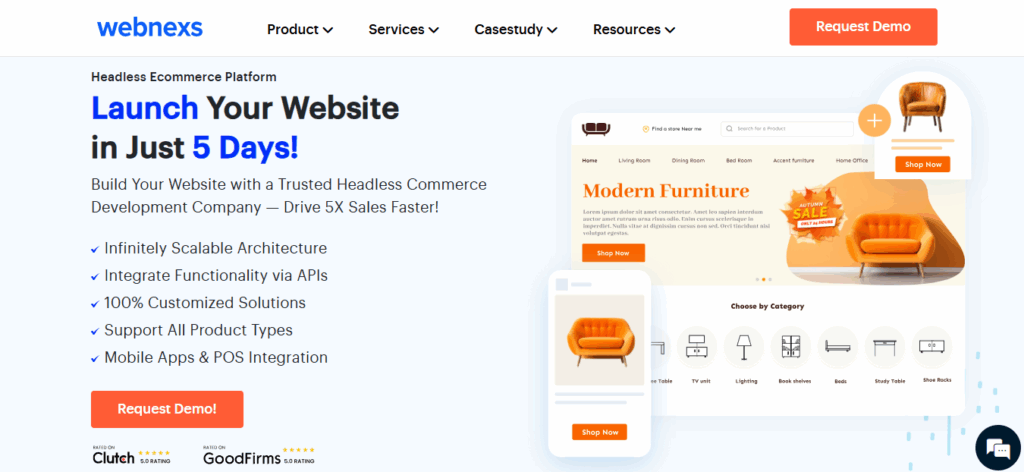
Webnexs creates custom online stores and marketplaces for businesses that need advanced features.
Key Features:
- Custom ecommerce development
- Multivendor marketplace solutions
- Payment gateway integrations
- Advanced analytics tools
Pros:
- Fully customizable ecommerce solutions
- Supports multi-vendor marketplaces
- Advanced business features and integrations
- Scalable for enterprise needs
Cons:
- Higher cost compared to SaaS platforms
- Requires planning and setup time
Best for: Businesses that need enterprise level customization
3. Magento (Adobe Commerce)
Enterprise level ecommerce platform for large businesses.
Key Features:
- Scales for enterprise level operations
- B2B ecommerce tools
- Fully customizable architecture
Pros:
- Highly scalable for large businesses
- Full control over customization
- Strong B2B ecommerce features
Cons:
- Requires technical expertise
- High development and maintenance costs
- Complex setup
Read More: To Know about Magento Alternatives
4. BigCommerce
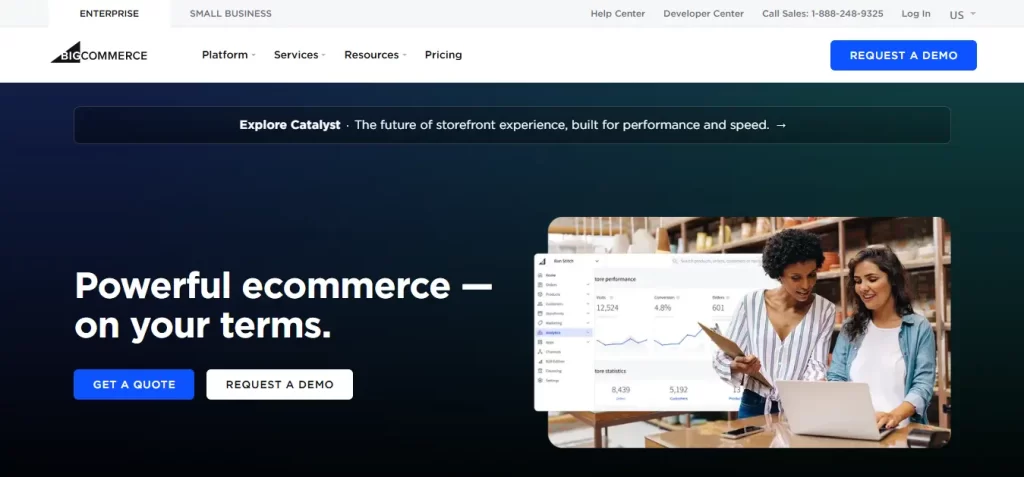
Cloud platform for growing brands.
Key Features:
- Headless commerce support
- Multi channel selling
- Built in SEO tools
Pros:
- Built-in SEO and marketing tools
- Multi-channel selling support
- Scalable without heavy technical work
- No need for many third-party apps
Cons:
- Limited design flexibility compared to some platforms
- Monthly pricing can increase as you scale
Best for: Businesses planning to scale quickly
Read More: To Know about Bigcommerce Alternatives
5. Shopify

One of the most popular hosted ecommerce platforms.
Key Features:
- Hosted and secure ecommerce platform
- Payment processing
- App marketplace
- Mobile optimized stores
Pros:
- Very easy to use for beginners
- Quick setup and launch
- Large app marketplace
- Reliable hosting and security
Cons:
- Monthly subscription cost
- Transaction fees (if not using Shopify Payments)
- Limited customization compared to open-source
Best for: Ecommerce brands that want an easy to use platform
Read More: To Know about Shopify Alternatives
6. WooCommerce
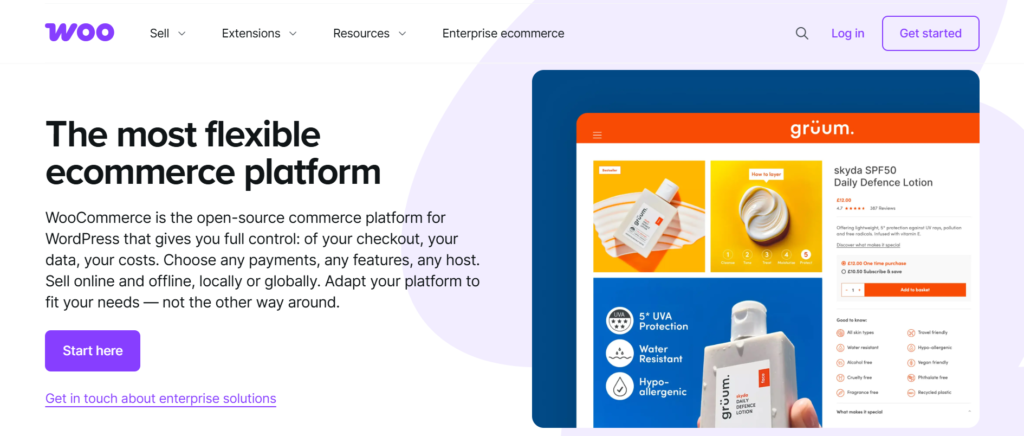
A WordPress plugin to convert websites into online stores.
Key Features:
- Open source and flexible
- Large plugin ecosystem
- Strong SEO capabilities
Pros:
- Highly flexible and customizable
- Strong SEO capabilities
- Large plugin ecosystem
- Ideal for WordPress users
Cons:
- Requires hosting and maintenance
- Performance depends on hosting quality
- Can become complex with many plugins
Best for: WordPress users who want ecommerce functionality
Read More: To Know about Woocommerce Alternatives
7. Wix ecommerce
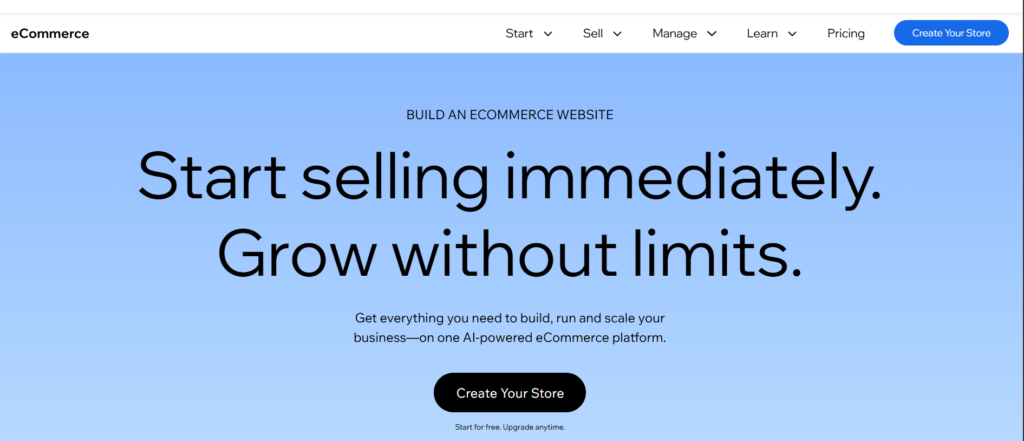
Easy to use website builder with ecommerce features.
Key Features:
- Drag and drop builder
- Modern templates
- Integrated marketing tools
Pros:
- Beginner-friendly drag-and-drop builder
- Quick setup
- Attractive templates
- Built-in marketing tools
Cons:
- Limited scalability for large stores
- Less flexibility compared to advanced platforms
Best for: Small stores that need simple setup
Read More: To Know about Wix Alternatives
8. OpenCart
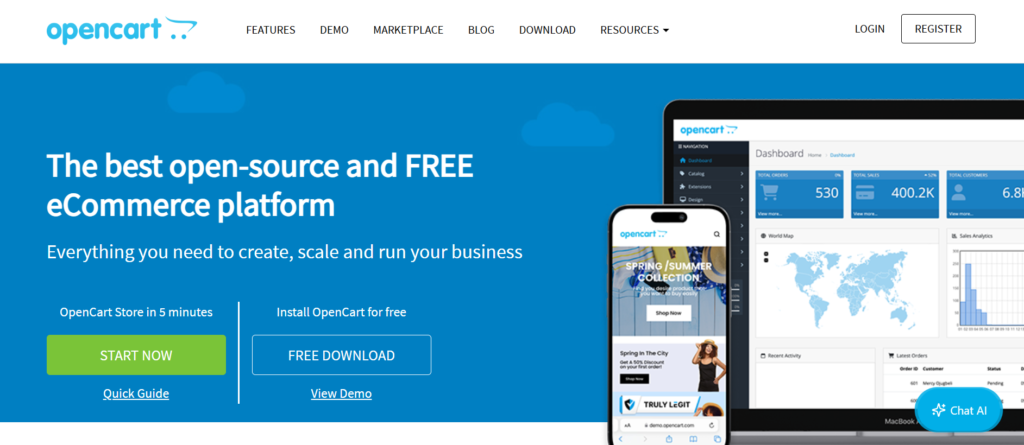
Open source platform similar to PrestaShop.
Key Features:
- Open-source and flexible
- Large extension marketplace
- Multi-store management
Pros:
- Free and open-source
- Flexible customization options
- Large extension marketplace
Cons:
- Requires technical knowledge
- Manual maintenance and updates
- Limited built-in features
Best for: Developers or businesses that want a custom open source solution
Read More: To Know about opencart Alternatives
9. Shift4Shop

A cloud based ecommerce platform that is affordable and easy to use
Key Features:
- Hosted platform with built-in features
- Secure payment processing
- Marketing and SEO tools
Pros:
- Affordable pricing
- Built-in ecommerce features
- Secure and hosted platform
Cons:
- Limited design options
- Smaller ecosystem compared to competitors
Best for: Small businesses looking for a low cost ready to use platform
10.Squarespace Commerce

Design focused templates with integrated ecommerce tools for creative brands.
Key Features:
- Easy drag and drop editing
- Design focused templates
- Integrated ecommerce and marketing tools
Pros:
- Beautiful design templates
- Easy to use
- Built-in ecommerce and marketing tools
Cons:
- Limited advanced ecommerce features
- Not ideal for large-scale stores
Best for: People who want a beautiful and creative online store
11. Ecwid
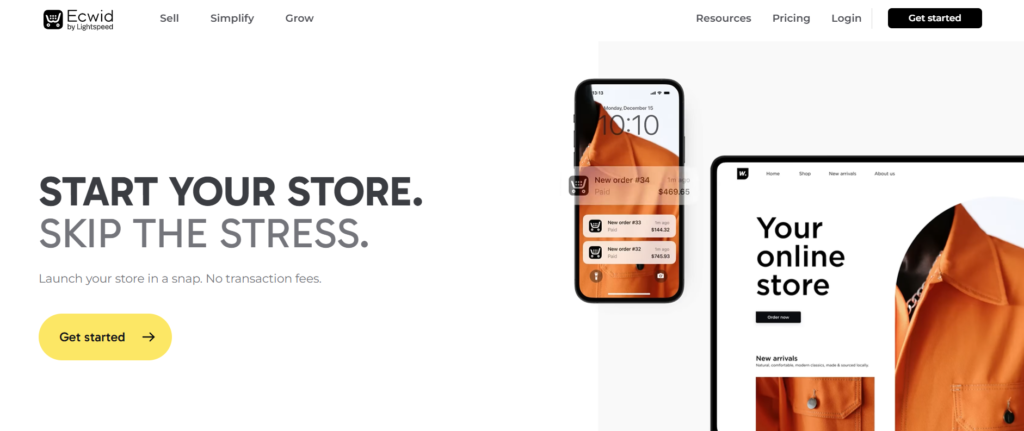
Ecwid lets businesses add an online store to any website they already have.
Key Features:
- Works on existing websites and social media platforms
- Supports multiple payment gateways
- Mobile friendly stores
Pros:
- Easy to add to existing websites
- Supports multiple platforms
- Simple setup
Cons:
- Limited customization
- Advanced features require paid plans
Best for: Businesses that want to quickly sell products on their existing website
12. Shopline
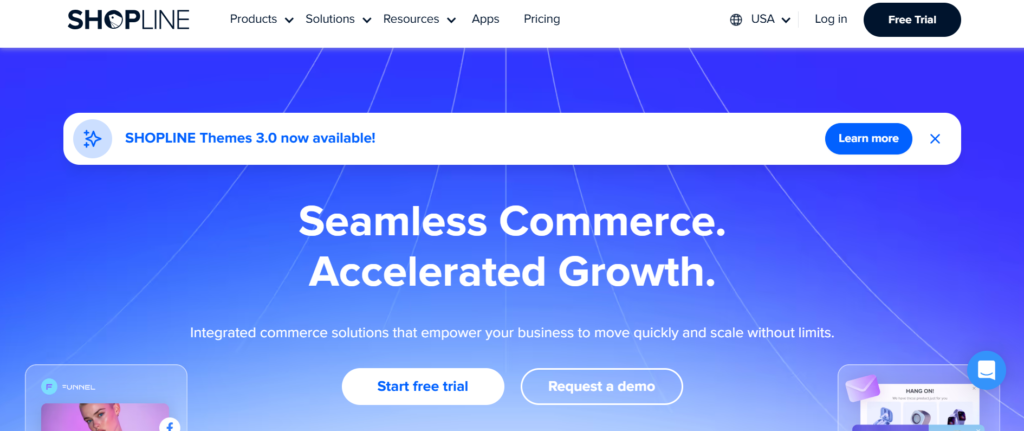
Shopline helps businesses sell products to customers in other countries and around the world.
Key Features:
- Multi country selling support
- Built in payment and shipping integrations
- Marketing tools for global markets
Pros:
- Strong international selling features
- Built-in payment and shipping tools
- Good for global expansion
Cons:
- Less popular than major platforms
- Limited third-party integrations
Best for: Businesses that want to expand internationally
Best Alternatives by Business Needs
| Business Need | Recommended Platform |
| Beginner ecommerce store | Wcart |
| WordPress website | WooCommerce |
| Enterprise ecommerce | Magento |
| Custom ecommerce solution | Webnexs |
| Growing ecommerce brand | BigCommerce |
How to Select the Appropriate Platform
Usability: Select a platform that best suits your abilities.
Customization: Verify that it enables the functionality your store need.
Scalability: Is it able to expand with your company?
Integrations: Examine marketing tools, delivery services, and payment gateways.
How to migrate PrestaShop
Make a backup of your data: Store all of your orders, goods and client data.
Select a Different Platform: Select the new e-commerce platform that best suits your store.
Transfer Store Data: Use migration tools to move your orders, merchandise and client information.
Create Your Store: Customize the menus, templates and store layout.
Configure SEO Redirects: To maintain your website’s search engine rankings, use 301 redirects.
Final Thoughts
For developers who wish to completely personalize their store, PrestaShop is still a powerful option.
However, because cloud platforms like Wcart, Webnexs, Shopify, and BigCommerce are simpler to use, expand with your business and maintain smooth operations, many firms now select them.
Selecting the appropriate platform aids in the expansion and competitiveness of your store.
Fill our quick form and get your personalized report within 2 hours.
Frequently Asked Questions
Related Platform Comparisons
- 8 Best Webflow Alternatives – compare features, pricing & the best fit for your store.
- 8 Best GoDaddy Alternatives – compare features, pricing & the best fit for your store.
- Best Volusion Alternatives – compare features, pricing & the best fit for your store.
- 9 Best Shift4Shop Alternatives for Your Online Store – compare features, pricing & the best fit for your store.
- 7 Best Squarespace Alternatives – compare features, pricing & the best fit for your store.
Final verdict
When searching for PrestaShop alternatives, it’s essential to consider the specific needs of your business. Whether you’re a small store, scaling brand, enterprise, or developer, there’s a suitable option available. Each alternative offers unique features, pricing models, and customization capabilities that cater to different user types.
- Best for small stores: OpenCart (free and open-source) – A lightweight and user-friendly platform ideal for small businesses with limited resources.
- Best for scaling brands: Wcart (subscription-based) – Offers a no-code store builder and headless commerce platform that scales to enterprise levels, making it perfect for growing brands.
- Best for enterprise: Magento (paid plans) – A comprehensive and customizable platform designed for large-scale businesses with complex operations.
- Best for developers: WooCommerce (free and open-source) – A popular and highly customizable platform built on top of WordPress, ideal for developers who want flexibility and control.
Ready to switch from PrestaShop? Create your Wcart store and launch with 0% transaction fees, no-code setup, and room to scale.


























Leave a Reply