Quick answer: Enterprise ecommerce development requires a scalable and flexible platform. Wcart is a top pick for enterprise ecommerce development due to its headless commerce capabilities, allowing for customization and integration with existing systems, making it an ideal choice for large businesses with complex ecommerce needs.
Key TakeAways
Customer expectation levels are also much higher now. According to the research show that more than 73% of online shoppers expect websites to load within 3 seconds, and nearly 40% of users leave a website if they take time to be opened.
Enterprise ecommerce is evolving at a rapid pace in this year of 2026, and businesses are focusing much on building scalable online stores that can support long-term growth. The purpose of ecommerce websites is no longer limited to the sale of goods and services anymore.
Modern enterprise ecommerce platforms help businesses:
manage heavy traffic loads
improve customer experience
support global operations
automate daily workflows
improve website performance
generate more conversions and sales
In this guide, you will learn about enterprise ecommerce development, scalable ecommerce platforms, enterprise ecommerce architecture, modern ecommerce trends, and the technologies businesses are using to grow online stores in 2026.
Unlike small ecommerce websites, enterprise ecommerce platforms are designed to handle large-scale operations and complex business requirements.
A small ecommerce store may process 50 to 100 orders per day. Enterprise ecommerce businesses , by contrast, often handle more than 10,000 daily orders, manage millions of monthly visitors, sell thousands of products, support global customer traffic, and process payments through multiple payment systems every day.
This level of business growth requires better ecommerce architecture and advanced operational systems.
Enterprise ecommerce focuses heavily on performance, automation, integrations, and customer experience. These ecommerce systems are built to manage both customer-facing operations and backend business processes together.
At this stage, ecommerce was more about experimenting online than running.
Why Enterprise Ecommerce Platforms Matter in 2026
Enterprise ecommerce platforms are becoming more important because ecommerce competition continues to increase every year. Businesses are no longer competing only on product pricing.
Research shows that more than 60% of ecommerce traffic now comes from mobile devices. Customers expect websites to load quickly and provide smooth shopping experiences across mobile apps, websites, marketplaces, and social media platforms.
Modern enterprise ecommerce platforms help businesses:
improve customer experience
support omnichannel commerce
manage large traffic volumes
automate business processes
improve conversion rates
For example, during major ecommerce sales events, enterprise websites may receive 5x higher traffic , thousands of simultaneous checkouts and millions of product page requests
Studies show that ecommerce businesses lose billions of dollars every year because of slow website performance and abandoned carts. This is why enterprise ecommerce development is now one of the biggest priorities for growing online businesses.
Types of Ecommerce Websites for Different Businesses
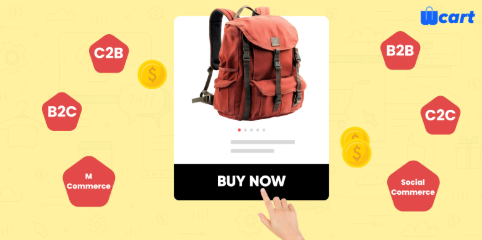
Before beginning construction, it is crucial to select the appropriate ecommerce model. The requirements and complexity levels of each category vary.
1.Business to Consumer
This is the most common type where businesses sell directly to customers. It focuses on easy navigation fast checkout and high conversion rates.
2.Business to Business
In this model businesses sell to other businesses. These websites often include bulk orders custom pricing and account based buying.
3. Direct to Consumer
Here brands sell directly to customers without middlemen. This helps them control branding and customer data better.
4. Marketplace
A marketplace allows multiple sellers to sell on one platform. It needs advanced features like vendor management commission systems and order tracking.
Key Features of Enterprise Ecommerce Platforms
Modern enterprise ecommerce platforms work like complete digital commerce ecosystems. They are designed not only for selling products but also for suitable for large-scale business operations efficiently. I
1.Scalable Ecommerce Infrastructure
One of the biggest features of enterprise ecommerce platforms is scalable infrastructure. Enterprise businesses often experience sudden traffic spikes during festive sales, product launches, and promotional campaigns.
For example, a website handling 10,000 daily visitors today may need to support:
100,000+ visitors next year
millions of page requests
larger inventories
higher transaction volumes
Without scalability, businesses may face downtime, slow performance, and lost sales. This is one reason why growing ecommerce brands invest heavily in scalable ecommerce infrastructure.
2.Advanced API Integrations
Enterprise ecommerce businesses usually work with multiple systems together, including ERP software, CRM platforms, payment gateways, inventory systems, and analytics tools. API-first ecommerce architecture helps businesses connect all these systems smoothly and improve operational efficiency.
Strong integrations help businesses:
automate workflows
improve inventory accuracy
manage customer data efficiently
As ecommerce operations become more complex, flexible integrations are becoming one of the most important parts of enterprise ecommerce development.
3.Omnichannel Commerce
Omnichannel commerce is becoming essential in enterprise ecommerce development because customers now shop across multiple platforms, including websites, mobile apps, social media, marketplaces, and physical stores.
Enterprise ecommerce platforms help businesses:
manage all channels together
improve customer experience
maintain inventory synchronization
Research shows that businesses using omnichannel commerce strategies can retain customers nearly 90% better than businesses using only one sales channel. This is why many enterprise businesses are focusing more on unified ecommerce experiences across every platform.
4.Headless Commerce Architecture
Headless commerce architecture is another major trend in enterprise ecommerce development. In traditional ecommerce systems, the frontend and backend are connected tightly. Headless commerce separates both systems, giving businesses better flexibility and faster website performance.
Headless commerce helps businesses:
improve page speed
create custom user experiences
improve mobile performance
Many enterprise businesses are moving toward headless commerce because it supports long-term scalability and better customer experiences.
5.Enterprise Ecommerce Security
Security also plays a major role in enterprise ecommerce platforms. Enterprise ecommerce websites manage customer data, payment information, transaction records, and business operations daily. As cybersecurity threats continue to increase every year, businesses are investing more in secure ecommerce infrastructure.
Strong ecommerce security systems include:
SSL encryption
fraud protection
secure payment gateways
Security has become one of the most important parts of enterprise ecommerce development because even small security issues can affect customer trust and business reputation.
These solutions aid companies in expanding more quickly, operating more effectively and retaining clients. Future time and cost savings can be achieved by starting with a scalable platform.
Choosing the right enterprise ecommerce platform is one of the biggest decisions for growing businesses. Different ecommerce platforms offer different levels of scalability, customization, integrations, flexibility, and operational control. In 2026, businesses are focusing more on platforms that can support long-term growth, high traffic, and better customer experiences without affecting performance.
1.WCART
WCART enterprise ecommerce platform helps businesses build scalable online stores with advanced customization, enterprise integrations, high-performance infrastructure, and flexible ecommerce solutions designed for long-term growth.
Best for: businesses that need custom integrations and fast iteration without hiring developers.
Strength: built-in headless architecture and enterprise integrations without the typical Adobe/Salesforce implementation timeline.
Limitation: as a newer platform, it has a smaller third-party plugin ecosystem than Shopify or Adobe Commerce confirm specific integration needs before committing.
2.Shopify
Shopify is widely used by growing ecommerce brands because it offers simple store management, faster deployment, cloud infrastructure, and multi-channel selling for businesses looking to scale quickly.
Best for: businesses prioritizing speed to market and a mature app ecosystem over deep backend customization.
Strength: the largest app marketplace in ecommerce, plus reliable managed infrastructure.
Limitation: deep custom workflows can require expensive app stacking or Shopify Plus’s higher-cost custom checkout extensibility.
3.BigCommerce
BigCommerce Enterprise focuses heavily on API flexibility, headless commerce, B2B ecommerce capabilities, and enterprise scalability, making it popular among businesses requiring advanced integrations.
Best for: businesses needing headless commerce with strong B2B account and pricing features out of the box.
Strength: open API architecture with no forced checkout restrictions.
Limitation: the app ecosystem, while solid, is smaller than Shopify’s factor this into your integration planning.
4.Adobe Commerce
Adobe Commerce is preferred by enterprises that require advanced customization, complex workflows, multi-store operations, and large product catalog management for large-scale ecommerce businesses.
Best for: businesses with in-house development teams and complex, highly specific catalog or workflow requirements.
Strength: near-unlimited customization through its open architecture.
Limitation: requires significant developer resources to implement and maintain total cost of ownership is meaningfully higher than SaaS competitors.
5.Salesforce Commerce
Salesforce Commerce Cloud helps global brands improve customer personalization, enterprise automation, omnichannel commerce, and customer experience management across multiple markets.
Best for: enterprises prioritizing deep CRM-driven personalization across global markets.
Strength: tight native integration with Salesforce’s broader CRM and marketing tools.
Limitation: pricing and implementation are enterprise-scale commitments, generally not cost-effective for mid-market businesses.
Enterprise Ecommerce Statistics Businesses Should Know
Better performance improves customer experience and revenue
Conclusion
Ecommerce enterprise development is not just about building a website anymore. In 2026, businesses require a reliable ecommerce platform that can support heavy traffic, huge product catalogs, dynamic customer needs, and evolving business processes without compromising on speed.
As ecommerce competition continues to increase, companies must focus on speed, flexible, secure, and customer-focused to succeed in their market
Modern enterprise ecommerce platforms help businesses manage operations more efficiently, improve customer engagement, and support long-term business growth.
Scalable architecture, omnichannel commerce, advanced integration capabilities, and improved website speed have become must-haves for enterprises.
Businesses that invest in the best ecommerce platform today will be better prepared for future expansion and increasing customer demand. Whether it could be anything from B2B commerce, international commerce, or bulk commerce having a reliable enterprise ecommerce solution can be advantageous in many ways.
Enterprise ecommerce development is the process of building scalable ecommerce systems for large businesses that handle high traffic, large product catalogs, multiple integrations, and complex operations.
Enterprise ecommerce is important because businesses now need scalable online stores that can support global customers, high traffic, mobile commerce, and modern customer expectations without affecting performance.
Headless commerce is an ecommerce architecture where the frontend and backend are separated, allowing businesses to improve flexibility, website speed, customization, and omnichannel experiences.
Your company’s needs will determine this. Platforms that are adaptable and scalable are preferable for expansion.
Scalability helps ecommerce websites manage growing traffic, increasing orders, larger inventories, and customer demand without affecting website performance or checkout experience.
When evaluating alternatives, consider factors like scalability, customization options, and integrations. Wcart, a no-code store builder, offers flexibility and ease of use. Assess your business needs and choose a platform that aligns with your goals.
Priya
Priya is an eCommerce strategist at Wcart who writes about planning, building, and growing online stores. Her guides span website planning, headless commerce, ecommerce CMS platforms, personalization, inventory management, and conversion optimization. She helps merchants make smart decisions at every stage of their store journey.
Informative and well-written article that I was searching for. It’s evident that a significant amount of contemplation and investigation was put into it. I would recommend it to anyone who is interested in the history and evolution of ecommerce website development.
This was a really interesting read! It’s amazing to think about how far ecommerce website development has come over the years. I appreciate the historical overview provided in this article. It’s fascinating to see how different technologies and trends have impacted the development of ecommerce websites.





























Leave a Reply