

One of the most well known brands in website development, domain registration and hosting is GoDaddy. Because it provides everything required to launch a website from a single platform, it is a popular choice for small businesses. Additionally, it offers ecommerce tools that support businesses rapid online sales.
But as online companies expand their ecommerce needs frequently get more complicated. More advanced features than basic website builders usually offer may be needed to support B2B clients, manage larger product catalogs, handle higher order volumes and create personalized shopping experiences.
For this reason, a lot of companies begin looking for GoDaddy alternatives. Without the drawbacks of a website first approach, a suitable ecommerce platform can strengthen customer experiences, simplify operations and allow for future expansion.
The top GoDaddy alternatives for ecommerce companies in 2026 are evaluated in this guide. These platforms provide features that might better suit your company’s needs, whether you’re starting a new online store, expanding out into different sales channels or planning long term growth.
Why Businesses Look for GoDaddy Alternatives
GoDaddy offers a straightforward method for building websites and online shops. Although it is effective for beginner users, expanding companies frequently require more ecommerce features.
Common reasons businesses switch to GoDaddy alternatives include:
- Advanced inventory management
- Better product catalog organization
- Multi-vendor marketplace support
- B2B ecommerce features
- More customization options
- Flexible third party integrations
- Improved scalability
- Better customer management tools
- Enhanced checkout experiences
- Multichannel selling support
Businesses looking for long term ecommerce growth often prefer platforms designed specifically for online selling rather than general website creation.
How We Selected These GoDaddy Alternatives
To create this list, we evaluated each platform based on:
- Ecommerce functionality
- Customization flexibility
- Scalability
- Ease of use
- B2B capabilities
- Marketplace support
- Integration options
- Suitability for growing businesses
The platforms included in this guide represent a mix of ecommerce first solutions, enterprise commerce platforms and website builders that offer online selling capabilities.
Quick Comparison Table: Best GoDaddy Alternatives
| Platform | Best For | Ecommerce Features | Customization | Scalability |
| Wcart | Growing ecommerce businesses | Advanced | High | High |
| Webnexs | Enterprise and marketplace businesses | Advanced | High | High |
| Shopify | Small and medium businesses | Advanced | Medium | High |
| BigCommerce | Fast growing brands | Advanced | High | High |
| WooCommerce | WordPress users | Advanced | High | Medium High |
| Wix | Small online stores | Moderate | Medium | Medium |
| Squarespace | Design focused brands | Moderate | Medium | Medium |
| Adobe Commerce | Enterprise businesses | Enterprise | Very High | Very High |
Why Wcart Is One of the Best GoDaddy Alternatives
Before exploring the full list, it is worth understanding why many businesses consider Wcart when comparing GoDaddy alternatives.
Unlike platforms that focus primarily on website creation, Wcart is built specifically for ecommerce. It provides tools for managing products, customers, orders and business operations from a centralized platform.
While keeping a flexibility for future expansion, businesses can introduce marketplace solutions, B2C stores and B2B commerce portals. The platform is made to help both new and established brands that require flexible ecommerce features.
Key Benefits of Wcart
- Ecommerce focused architecture
- Flexible storefront customization
- Marketplace capabilities
- B2B and B2C support
- Advanced product management
- Scalable infrastructure
- Customer and order management tools
A Quick Success Story
Wcart and Cask88, a premium whisky marketplace, collaborated to increase customer satisfaction and scalability as the company grew internationally. The platform was able to support major transaction growth while offering investors and customers a better experience by modernizing the ecommerce infrastructure and optimizing operations.
This demonstrates how businesses can move beyond the limitations of basic website builders and adopt an ecommerce platform designed for long-term growth.
Internal Link Opportunity: Link to the Cask88 case study, ecommerce platform pages, marketplace platform guides and B2B ecommerce resources.
Best 8 GoDaddy Alternatives
1. Wcart
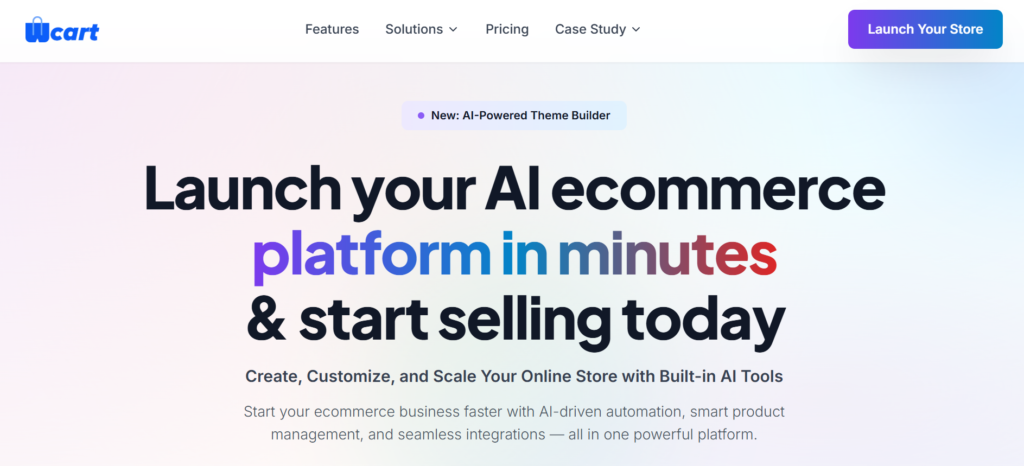
Wcart is a solid ecommerce platform made for companies seeking total control over their online selling processes. Wcart places more importance on business expansion and commerce functionality than website focused platforms.
Through a single dashboard, the platform assists retailers in managing orders, customers, inventory and goods. Companies can support a variety of business models, such as B2C, B2B and marketplace commerce, while building unique storefronts.
Pros
- Built specifically for ecommerce
- Marketplace ready functionality
- Flexible customization
- Strong scalability
- Supports multiple business models
Cons
- Advanced features may require implementation planning
- Larger projects may need custom configurations
Best For
Growing ecommerce businesses looking for long-term scalability.
2. Webnexs
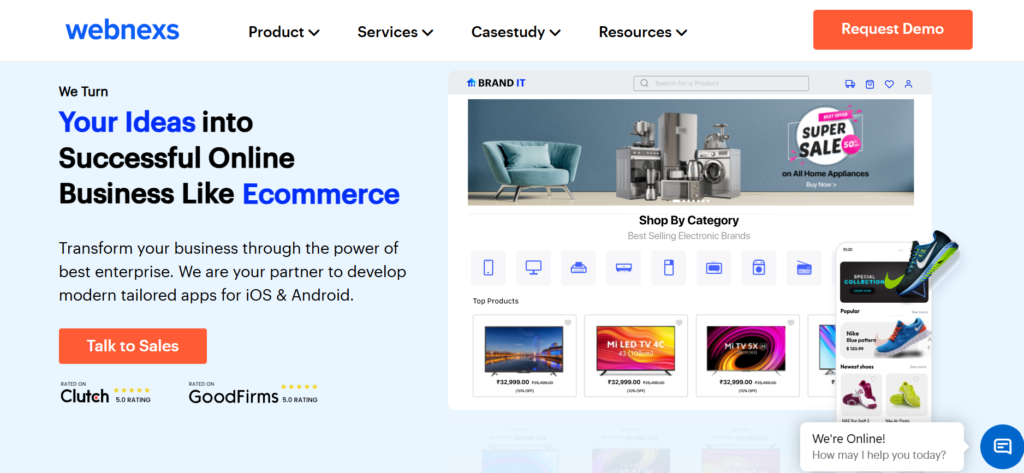
Webnexs is another strong option among GoDaddy alternatives. The platform is meant for companies that need enterprise level flexibility and modern ecommerce features.
Customized ecommerce experiences, multivendor marketplaces and online stores are all supported by Webnexs. Companies can maintain operational efficiency while developing unique client experiences and workflows.
It is ideal for businesses planning for ongoing expansion due to its scalable infrastructure.
Pros
- Marketplace functionality
- Enterprise grade flexibility
- Scalable architecture
- Multi channel selling support
- Advanced customization options
Cons
- May be more advanced than required for very small businesses
- Setup can take longer for complex projects
Best For
Businesses requiring marketplace or enterprise ecommerce capabilities.
3. Shopify

One of the most widely used ecommerce platforms nowadays is Shopify. It makes it easier to create stores and enables companies to start up fast without much technical skills.
The platform offers access to a wide app ecosystem, hosting and payment processing. Thousands of third party integrations allow businesses to expand functionality.
Pros
- Easy to use
- Fast setup process
- Large app marketplace
- Secure hosting
- Strong community support
Cons
- Additional apps can increase costs
- Some advanced customizations require developers
Best For
Small and medium-sized businesses seeking simplicity.
Read More: To Know about Shopify Alternatives
4. BigCommerce

BigCommerce is made for companies that require strong ecommerce capabilities without relying too much on third party apps.
The platform has multichannel selling features, SEO tools and complex product management. BigCommerce’s built in functionality and scalability make it a popular choice for expanding brands.
Pros
- Strong built in features
- Multichannel selling
- Advanced SEO capabilities
- Flexible product management
- Scalable infrastructure
Cons
- Learning curve for beginners
- Premium plans can become expensive
Best For
Growing ecommerce brands with expanding product catalogs.
Read More: To Know about Bigcommerce Alternatives
5. WooCommerce
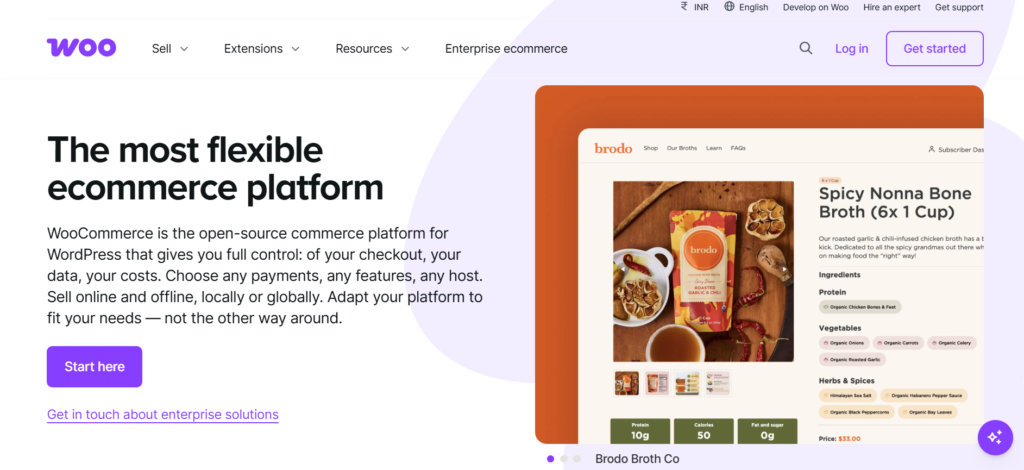
For companies that already use WordPress, WooCommerce is a well liked ecommerce option. It offers flexibility and a wide range of customization options because it is an open source platform.
Companies can use the broad WordPress ecosystem to create custom online stores.
Pros
- Open source flexibility
- Large plugin ecosystem
- Extensive customization
- Strong content management capabilities
- Large community support
Cons
- Requires hosting management
- Maintenance responsibilities fall on the business
Best For
Businesses already operate WordPress websites.
Read More: To Know about Woocommerce Alternatives
6. Wix
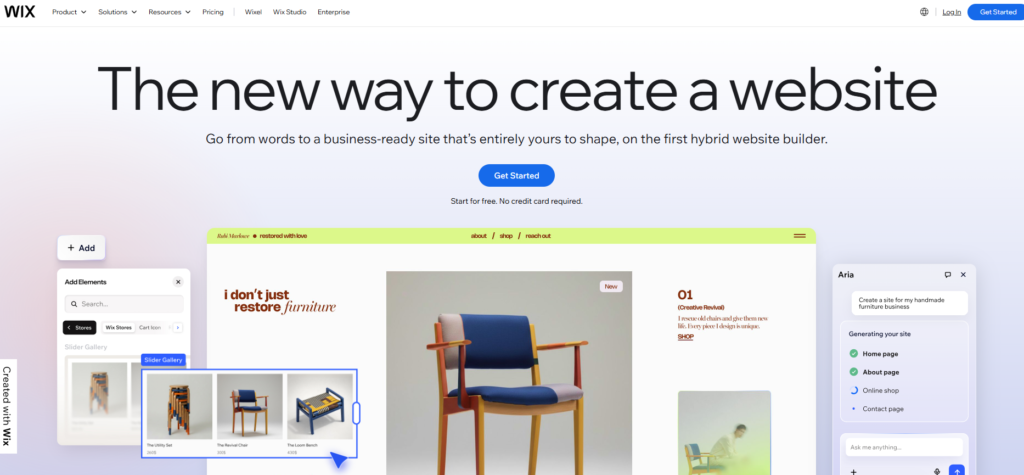
Wix connects ecommerce features with website development in an easy setting. Small businesses looking for a simple way to create an online presence frequently choose it.
The platform provides built in selling tools, drag and drop editing and templates.
Pros
- Easy setup
- User friendly editor
- Built in ecommerce features
- Modern templates
Cons
- Limited scalability for larger stores
- Fewer advanced ecommerce capabilities
Best For
Small businesses and startups launching their first online store.
Read More: To Know about Wix Alternatives
7. Squarespace

Squarespace is renowned for its content focused websites and well created templates. Additionally, it has ecommerce features that let companies sell goods online.
Squarespace is frequently used by brands that place a high value on visual presentation.
Pros
- Professional templates
- Strong design capabilities
- Built in marketing features
- Simple store management
Cons
- Limited advanced ecommerce tools
- Less flexibility than dedicated ecommerce platforms
Best For
Creative businesses and design focused brands.
Read More: To Know about Squarespace Alternatives
8. Adobe Commerce
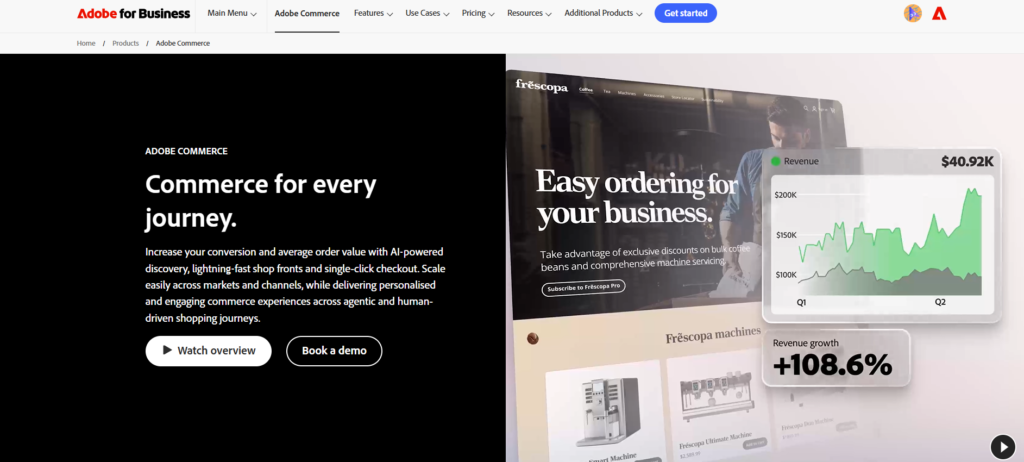
For big businesses with complex operational needs, Adobe Commerce is an enterprise ecommerce solution.
The platform facilitates extensive customization, international selling, B2B commerce and complex catalogs.
Pros
- Enterprise level capabilities
- Advanced customization
- Strong B2B functionality
- Global commerce support
Cons
- Higher implementation costs
- Requires technical expertise
Best For
Large enterprises with complex ecommerce operations.
Read More: To Know about Magento Alternatives
Which GoDaddy Alternative Is Right for You?
Choose Wcart If
- You want an ecommerce first platform
- You need marketplace functionality
- You require B2B and B2C support
- You expect significant business growth
Choose Webnexs If
- You need enterprise level flexibility
- You want a multivendor marketplace
- You require custom business workflows
Choose Shopify If
- You want a quick launch
- Ease of use is your priority
Choose BigCommerce If
- You need advanced built-in features
- You are scaling rapidly
Choose WooCommerce If
- You already use WordPress
- You want maximum customization
Choose Wix or Squarespace If
- You are starting a small online store
- Design simplicity is important
Choose Adobe Commerce If
- You operate at enterprise scale
- You require advanced commerce infrastructure
Final Thoughts
GoDaddy is a helpful platform for starting small online shops and websites. However, companies that intend to expand frequently require tools that can handle rising operational demands, more flexibility and improved ecommerce capabilities.
Advanced product management, improved customization, marketplace support and scalability that surpasses the capabilities of a traditional website builder are all offered by the top GoDaddy substitutes.
Because Wcart and Webnexs are designed to support today’s commerce requirements like B2B selling, marketplace operations and scalable growth, they stand out for companies aiming for long term ecommerce success. Depending on the size and goals of your company, Shopify, BigCommerce, WooCommerce, Wix, Squarespace and Adobe Commerce also provide useful solutions.
Consider your present needs, future objectives and customer experience requirements before making a choice. The foundation for long term, sustainable growth can be strengthened by selecting the right ecommerce platform now.
Related Platform Comparisons
- 12 Best PrestaShop Alternatives – compare features, pricing & the best fit for your store.
- 9 Best Dukaan Alternatives – compare features, pricing & the best fit for your store.
- 5 Best Weebly Alternatives – compare features, pricing & the best fit for your store.
- 8 Best Jimdo Alternatives – compare features, pricing & the best fit for your store.
- 10 Best Big Cartel Alternatives – compare features, pricing & the best fit for your store.
- 10 Best Centra Alternatives – compare features, pricing & the best fit for your store.
- Best Ecommerce Platforms – compare features, pricing & the best fit for your store.

























Leave a Reply