
Quick Answer
E-commerce refers to buying and selling goods or services online. It encompasses a wide range of activities, from retail websites to digital marketplaces, enabling businesses to reach customers globally. Ecommerce has transformed how transactions occur, offering convenience and accessibility for both sellers and buyers.
Key Takeaways
- Global ecommerce sales are projected to reach $6.88 trillion in 2026, making up 21.1% of all retail sales worldwide. (Source: Shopify)
- The B2B ecommerce market alone is worth roughly $36 trillion in 2026, dwarfing the consumer side of the industry. (Source: SellersCommerce)
- Amazon leads global marketplace GMV at $847.35 billion, with TikTok Shop now the third-largest platform globally at $656.45 billion. (Source: CompaniesHistory)
- Digital wallets now handle 56% of global ecommerce transaction value, ahead of credit cards at 32%. (Source: CompaniesHistory)
- Mobile commerce is on pace to hit $2.74 trillion in 2026, roughly 60% of all global online sales. (Source: ecommercestatistics.net)
Ecommerce has changed the way businesses sell products and customers shop online. From small startups to large companies selling online has become one of the easiest and fastest ways to grow a business.
- Review the ecommerce business model types.
- We also cover starting an online store from a passion.
- B2B sellers should also note the B2B ecommerce hurdles.
Today ecommerce uses advanced technologies like AI driven personalization mobile commerce social media selling secure payment gateways and cloud based ecommerce platforms. As ecommerce sales continue to grow in 2026 more businesses are moving online to reach customers around the world.
In this guide you’ll learn:
- What ecommerce is and its Evolution
- How ecommerce works
- Types of ecommerce business models
- Popular ecommerce sales channels
- Ecommerce payment methods
- Benefits and challenges of ecommerce
- Latest ecommerce trends
- How to start an ecommerce business
Explore Here: Confusing to Start an Ecommerce Business? Here is a Complete Guide!
What is E-commerce?
E-commerce also known as electronic commerce means buying and selling products or services over the internet.
Businesses and individuals use ecommerce platforms websites mobile apps marketplaces and social media channels to sell products online.
Common examples of ecommerce include:
- Online shopping websites
- Mobile shopping apps
- Digital product sales
- Online subscriptions
- Social commerce
- Internet banking
- Online ticket bookings
Ecommerce helps customers browse products compare prices make secure payments and receive products without visiting a physical store.
The Evolution of Ecommerce
The ecommerce industry has grown quickly over the last few decades. Early online shopping changed the way people buy products and helped create today’s large ecommerce companies and online marketplaces.
Today ecommerce is not only for large businesses. Small and medium businesses can also create online stores using platforms like Wcart, shopify and sell products globally with low investment.
Modern ecommerce now includes:
- AI-powered shopping experiences
- Mobile commerce
- Social media selling
- Personalized product recommendations
- Subscription business models
- Omnichannel selling
It began in 1994, when a man sold a CD to a friend online, the internet’s first recorded sale. Decades later, Amazon and Alibaba turned that novelty into infrastructure, growing it into 12 to 24 million online stores worldwide. Then came 2020, when a pandemic forced millions of businesses online overnight. One CD sale to trillions of dollars today.
How Does Ecommerce Work?
Ecommerce works using online platforms payment systems digital technologies and shipping services.
Here’s how ecommerce usually works:
1. Ecommerce Website or Storefront
Businesses create an online store where customers can view and buy products or services. Ecommerce platforms like WCART help businesses:
- Design storefronts
- Manage products
- Track inventory
- Process orders
- Manage customers
2. Product Discovery
A store isn’t worth much if nobody finds it. Customers typically discover products through:
- Search engines
- Social media
- Paid advertisements
- Online marketplaces
- Email marketing
SEO and digital marketing are what actually bring visitors to a store in the first place, since even the best-designed storefront needs a way to get in front of people.
3. Shopping Cart and Checkout
Customers add products to a shopping cart and move to checkout.This step matters more than it looks, since it’s also where most sales are lost. The checkout process usually covers:
- Shipping details
- Delivery options
- Payment methods
- Discount codes
- Tax calculation
Cart abandonment sits at an average of 70.22% across the industry, a figure that’s held remarkably steady for almost two decades. (Source: CompaniesHistory)
4. Online Payments
Ecommerce businesses accept payments through secure payment gateways.
Popular ecommerce payment methods include:
- Credit cards
- Debit cards
- UPI payments
- Digital wallets
- Net banking
- Buy Now Pay Later (BNPL)
- EMI options
WCART supports multiple payment integrations for secure online transactions.
5. Order Fulfillment and Delivery
After payment is completed:
- Orders are processed
- Products are packed
- Shipments are arranged
- Tracking details are shared with customers
Businesses can manage shipping themselves or work with logistics providers.
For digital products delivery happens through download links or online access.
Read more: Difference Between Retail and Ecommerce
Where Does Ecommerce Happen?
Ecommerce doesn’t live in one single place. It plays out across a few genuinely different kinds of channels, and most successful brands end up using more than one.
Ecommerce Websites
Ecommerce websites give businesses full control over:
- Branding
- Customer experience
- Marketing
- Product presentation
- Customer data
Platforms like WCART help businesses build scalable ecommerce websites with advanced customization features.
Benefits of Ecommerce Websites
- Full control of customer data
- Better branding opportunities
- Higher profit margins
- Flexible customization
- SEO benefits
Online Marketplaces
Online marketplaces allow many sellers to sell products on one platform. Marketplaces let many different sellers operate on one shared platform. The best-known examples include Amazon, eBay, Etsy, and Flipkart.
Benefits of Marketplaces
- Large customer base
- Faster visibility
- Easy setup process
Challenges
- High competition
- Limited branding
- Marketplace fees
Social Commerce
Social media platforms now allow businesses to sell directly through social apps.Social commerce combines social media engagement and ecommerce selling in one place.
Businesses can sell products through:
- Instagram Shops
- Facebook Shops
- TikTok Shop
- YouTube Shopping
Social commerce is projected to represent 15.2% of total global ecommerce in 2026, close to $586 billion in sales, and that share keeps climbing as more platforms build native checkout tools. (Source: DemandSage)
Read more: Tips to Create an Ecommerce Website
Ecommerce Payment Methods
Offering different payment methods helps improve customer trust and increase conversions.Popular ecommerce payment methods include:
Credit and Debit Cards
- Online card payments are one of the most common ecommerce payment methods.
- Digital wallets like Google Pay, Apple Pay, PayPal, PhonePe, and Paytm now account for 56% of global ecommerce transaction value (Source: Worldpay Global Payments Report)
Buy Now Pay Later (BNPL)
- Buy Now, Pay Later (BNPL) lets a customer split a purchase into smaller installments
UPI Payments
- UPI is one of the most popular ecommerce payment methods in India because it is fast and simple.
Subscription Billing
- Subscription billing handles recurring charges for subscription-based businesses automatically
- WCART supports secure payment gateway integrations to make online payments simple.
Types of Ecommerce
Not all ecommerce works the same way. The buyer, the seller, and the relationship between them all shift depending on the model.
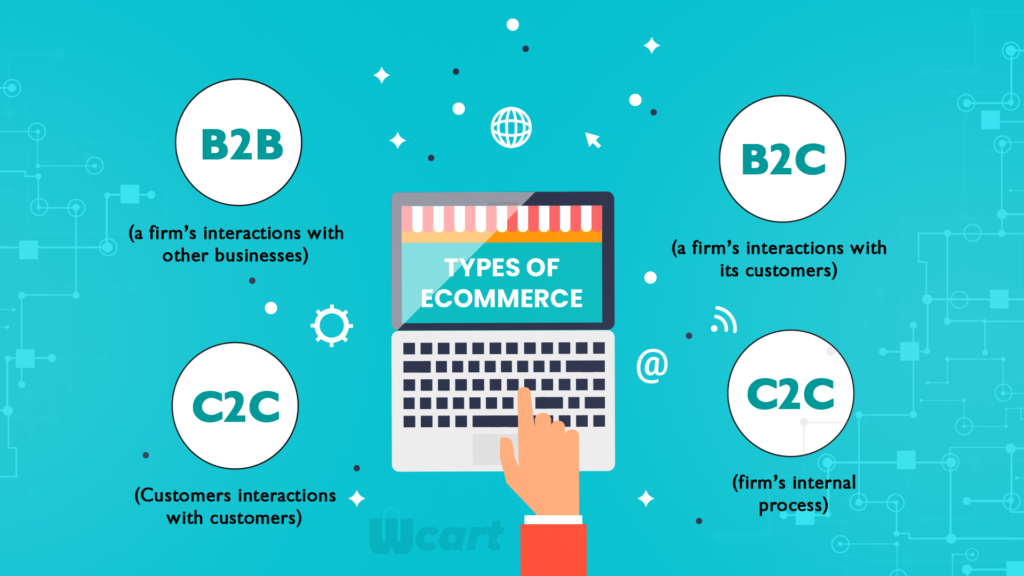
Business to Consumer (B2C)
- B2C ecommerce means businesses sell products directly to consumers online.
- This is the most common ecommerce model, covering fashion brands, electronics stores, and grocery delivery apps.
Business to Business (B2B)
- B2B ecommerce business sells products or services to other businesses, like wholesale suppliers, SaaS companies, manufacturers, and distributors.
- The B2B ecommerce market is worth roughly $36 trillion in 2026, dwarfing the consumer side of the industry and growing at close to 14.5% a year. (Source: SellersCommerce)
- Modern B2B ecommerce platforms now provide user-friendly shopping experiences.
Consumer to Consumer (C2C)
- C2C ecommerce allows individuals to sell products or services to other individuals. Examples include:
- Used product marketplaces
- Handmade product platforms
- Peer to peer selling apps
Direct to Consumer (DTC)
- DTC brands sell directly to customers without middlemen.
- This tends to mean better profit margins, stronger direct customer relationships, and full control over the brand experience
- Many modern ecommerce startups use the DTC model.
Ecommerce Revenue Models
Ecommerce businesses earn money in different ways.
Product Sales
- Selling physical or digital products online.
Subscription Model
- Earning recurring income through subscriptions or memberships.
Affiliate Marketing
- Earning commissions through referrals and partnerships.
Advertising Revenue
- Making money through sponsored ads or promotions.
Transaction Fees
- Charging fees for marketplace or payment transactions.
Read More: To Know about Headless Ecommerce Solution
Benefits of Ecommerce
1. Global Reach
A business can sell to customers in another country without ever opening a physical location there. This alone is one of the biggest structural advantages ecommerce holds over traditional retail.
2. Lower Operational Costs
Compared to traditional retail ecommerce businesses often need:
- Lower rent
- Fewer employees
- Lower infrastructure costs
3. 24/7 Availability
An online store never closes. Customers can browse and buy at any hour, from any time zone, without waiting for a location to open.
4. Better Customer Insights
Ecommerce platforms provide useful analytics such as:
- Customer behavior
- Purchase patterns
- Traffic sources
- Conversion rates
This helps businesses improve marketing and sales performance.
5. Personalized Shopping Experiences
AI and automation help businesses provide:
- Loyalty programs
- Personalized recommendations
- Targeted promotions
- Customized emails
What are the Different Ecommerce Challenges
High Competition
The ecommerce industry is highly competitive.
Businesses need strong:
- Branding
- Customer experience
- Product quality
- Marketing strategies
Security Concerns
Online businesses must protect customer data using:
- SSL certificates
- Secure payment gateways
- Fraud protection systems
Shipping and Logistics
Fast and reliable shipping is important for customer satisfaction.
Common ecommerce logistics challenges include:
- Delayed deliveries
- High shipping costs
- Returns management
Customer Retention
Keeping customers is important for business growth.
Businesses need:
- Loyalty programs
- Excellent service
- Fast support
- Consistent engagement
Ecommerce Trends in 2026
AI-Powered Ecommerce
Artificial intelligence is improving ecommerce through:
- AI chatbots
- Personalized recommendations
- Automated marketing
- Predictive analytics
Mobile Commerce Growth
- More customers now shop using smartphones instead of desktops.
- Mobile friendly ecommerce websites are important for growth.
Social Commerce Expansion
- Social media platforms are becoming major ecommerce sales channels.
- Short videos and influencer marketing help customers discover products.
Voice Commerce
- Voice assistants are changing how customers search and shop online.
- Businesses are optimizing ecommerce websites for voice search.
Sustainable Ecommerce
Customers are choosing brands with:
- Eco friendly packaging
- Ethical sourcing
- Sustainable production methods
Read More: To Know about the Challenges Faced by the B2B Ecommerce
What Are The Steps To Start Ecommerce Business
Step 1: Choose Your Niche
- Identify real market demand, genuine customer pain points, and where the actual product opportunity sits.
Step 2: Research the Market
- Study competitors, pricing, customer trends, and any gaps the current market isn’t serving well.
Step 3: Create Your Brand
- Build out a business name, logo, brand identity, and consistent messaging before you start selling.
Step 4: Build Your Ecommerce Website
- Choose a platform like Wcart to design the store, add products, configure payments, and manage orders from one place.
Step 5: Set Up Payments and Shipping
- Integrate payment gateways, shipping providers, tax settings, and delivery options so the operational side actually works end to end.
Step 6: Launch Marketing Campaigns
- Promote the business through SEO, social media marketing, paid ads, email marketing, and influencer collaborations.
Read more: To Know About Ecommerce Website Development
Why Businesses Choose WCART for Ecommerce
WCART helps businesses create scalable and customizable ecommerce stores with modern features for online selling.
Key advantages include:
- Advanced customization
- Multi vendor capabilities
- Mobile friendly storefronts
- Secure payment integrations
- SEO friendly architecture
- Omnichannel selling support
- Scalable infrastructure
Whether you’re starting a new business or growing an enterprise ecommerce store WCART provides the tools and flexibility needed for growth.
Final Thoughts
Ecommerce continues to change the global business industry. As more customers prefer online shopping businesses investing in ecommerce are creating better growth opportunities.
From product discovery to secure payments and global delivery ecommerce helps brands connect with customers worldwide.
Whether you’re starting your first online store or growing an existing business choosing the right ecommerce platform is important.
WCART helps businesses build powerful ecommerce experiences designed for growth scalability and modern customer expectations.
Start your ecommerce journey today and build the future of online selling.

























Leave a Reply