
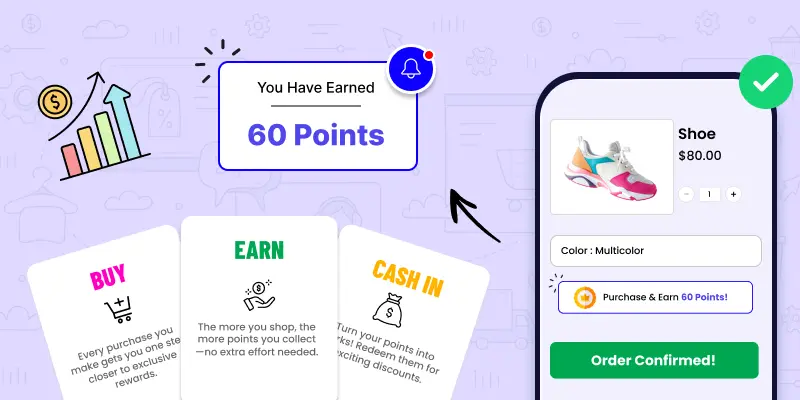
Building customer loyalty takes more than just saying “thank you” after a purchase. You need a strong strategy that helps create real and long-term relationships with your audience. A reward point system for customers is one of the best ways to improve customer loyalty and encourage repeat purchases.
Drive higher conversion rates.
Win back lost sales with abandoned cart recovery.
Reward loyalty and use personalization in ecommerce.
Boost engagement with the Find and Earn plugin.
This guide explains how to plan create and track a successful reward program that supports retention and growth for your ecommerce business.
Key Takeaways
- Boosts Key Metrics: A properly planned reward point system helps improve customer retention average order value (AOV) and customer lifetime value (CLV).
- Design is Crucial: Begin with clear goals and a set budget. Then create different ways for customers to earn points through purchases and brand engagement.
c - Technology Matters: Selecting the right loyalty software is important. Choose a platform that offers strong customization detailed analytics and features designed specifically for ecommerce.
- Promotion is Essential: A successful launch needs a multi-channel promotional strategy using email social media and on site banners to increase enrollments.
- Optimization is Ongoing: Regularly monitor key metrics such as retention and redemption rates. Use this data to A/B test rewards and improve your program for better results.
What Is a Reward Point System and Why Does Your Ecommerce Store Need One?
Before starting the implementation process it is important to understand the main idea and business value of a reward point system. Having this basic understanding will help you create a program that connects well with your customers and supports measurable business growth.
Defining the Reward Point System
A reward point system works on a simple exchange of value. Customers complete certain actions and in return your brand gives them points. These points act like a special currency within your brand ecosystem. Customers can later redeem these points for rewards such as discounts free products or exclusive access to sales.
This model can be used as a standalone loyalty program or as the foundation for a more advanced setup like a VIP tiered program. In a tiered system customers earn more points over time and move to higher membership levels unlocking better rewards and exclusive benefits.
The Tangible Business Benefits of a Point-Based System
Implementing a reward point system is a smart business strategy that can support long-term growth. Here are some of the key benefits:
- Increased Customer Retention: One of the biggest advantages is improved customer loyalty. When customers feel appreciated and collect points they are more likely to return and shop with your brand instead of choosing a competitor.
- Higher Average Order Value (AOV): Reward systems encourage customers to spend more. For example when customers are close to earning a reward they may add extra items to their cart to reach the required point level.
- Improved Customer Lifetime Value (CLV): By increasing repeat purchases and boosting AOV a reward system helps increase the total revenue a customer brings to your business over time. A higher CLV shows strong and sustainable business growth.
- Valuable Customer Data: Every point earned or redeemed gives useful customer insights. You can understand shopping behavior purchase frequency and reward preferences helping you create more personalized marketing campaigns.
- Cost-Effective Marketing: Keeping existing customers is usually more affordable than finding new ones. A loyalty program helps strengthen relationships with your current customers and creates a steady source of repeat revenue.
In simple terms a well-planned reward point system is an effective way to build customer loyalty improve important revenue metrics and grow your ecommerce brand.
The Foundation: How to Design Your Reward Point System
A successful reward program starts with proper planning and a clear understanding of your customers and business goals. Here are the key steps to designing an effective reward point system.
Step 1: Defining Your Goals and Budget
Start by setting clear goals for your program. Your objectives will guide all future decisions. Ask yourself what you want to achieve such as:
- Increase customer purchase frequency
- Get more user-generated content (UGC) like reviews
- Encourage customer referrals
- Improve customer retention by a certain percentage
Once your goals are clear create a realistic budget. This should include reward costs and any loyalty software or platform expenses. You should also manage “points liability” which is the total value of unredeemed points. A proper financial plan helps keep the program sustainable.
Step 2: Deciding How Customers Earn Points
This is where you can align customer actions with your business goals. A balanced reward point system should include both purchase-based and engagement-based activities.
Transactional Actions
These actions are directly connected to purchases.
- Make a purchase: A simple rule like “1 point per $1 spent” is easy for customers to understand.
- Spend above a certain amount: Bonus points for higher-value orders can help increase AOV.
- Buy selected products: Offer extra points to promote new products or clear old inventory.
Engagement Actions
These actions reward customers for interacting with your brand.
- Create an account: Encourages sign-ups and helps collect customer information for future marketing.
- Birthday rewards: Giving points on birthdays adds a personal touch.
- Follow on social media: Reward customers for following your brand on platforms like Instagram Facebook or TikTok.
- Write product reviews: Encourage customers to leave reviews especially photo or video reviews by offering bonus points.
- Refer a friend: Reward loyal customers for bringing new shoppers to your ecommerce store.
Many ecommerce loyalty platforms can connect these activities together. For example loyalty software can integrate with review systems and automatically reward customers when they submit reviews. This helps generate more user-generated content and increases trust for future buyers.
Step 3: Determining Point Value and Redemption Options
The success of your reward point system depends on how valuable the rewards feel to customers. Start with a simple and clear point structure such as:
100 points = $1 discount
This makes it easy for customers to understand the value of their points.
Next offer different reward options to match customer interests including:
- Discounts: Percentage-off or fixed-amount coupons
- Free shipping: A popular reward that can reduce cart abandonment
- Free products: Offer exclusive or best-selling products as rewards
- Exclusive access: Give members early access to product launches or sales
- Charitable donations: Allow customers to donate points to charity partners
Step 4: Structuring VIP Tiers (Optional but Recommended)
A VIP tiered program adds motivation and encourages long-term engagement. Customers move through levels such as Bronze Silver and Gold based on points earned or total spending.
Each tier should provide better rewards such as:
- Higher point multipliers (example: Silver members earn 1.25 points per $1 spent)
- Exclusive rewards for higher-tier members
- Early access to sales and promotions
- Priority customer support
Managing a tiered loyalty program can be complex but dedicated ecommerce loyalty platforms make it easier. These platforms allow you to set custom tier requirements based on points earned total spending or number of purchases. This helps create a personalized customer journey that keeps loyal customers engaged with your brand.
Building Your Program: Choosing the Right Technology
After designing your reward point system the next important step is selecting the right technology. One of the biggest decisions is whether to build a custom solution or use dedicated loyalty software.
DIY vs. Loyalty Program Software
A Do-It-Yourself (DIY) solution may seem attractive at first but it often comes with many challenges. Custom-built systems can take a lot of time to develop may be difficult to scale and usually lack advanced features and detailed analytics.
Using a dedicated loyalty program platform is usually the smarter option. These platforms are built for faster setup and include powerful features advanced reporting and important integrations that are hard to achieve with a custom-built system.
What to Look for in a Loyalty Platform
When choosing loyalty software focus on these important features:
- Easy Customization and Branding: The platform should allow you to match the design with your brand identity.
- Flexible Earning & Redemption Rules: Customers should have multiple ways to earn and redeem points.
- VIP Tier Management: If you plan to use a tiered loyalty program the platform should support advanced tier management.
- Strong Analytics and Reporting: You should be able to track program performance customer behavior and ROI.
- Ecommerce Platform Integrations: Smooth integration with platforms like Shopify or Adobe Commerce is important.
- Marketing Tool Integrations: The loyalty platform should connect with email marketing SMS and review tools.
Why a Platform Built for Ecommerce Matters
This is where platforms like Wcart stand out. It offers more than basic loyalty software and is designed specifically for ecommerce businesses. Brands also get support from ecommerce loyalty experts who help with setup strategy and optimization.
Wcart Loyalty
Wcart Loyalty provides flexible earning rules different reward options advanced VIP tiers and customizable point expiration settings.
It also includes strong reporting tools that help businesses measure ROI and track important metrics like repeat purchase rate and customer spending. Choosing an ecommerce-focused loyalty platform like Wcart can help businesses build a scalable reward program with long-term value.
Launching and Promoting Your Reward Point System
Even the best reward program will not succeed if customers are unaware of it. A proper launch strategy and continuous promotion are important for increasing sign-ups and engagement.
Creating a Dedicated Landing Page
Your reward point system should have its own page on your website. This landing page should clearly explain how the program works. Important elements include:
- A strong headline such as “Get Rewarded for Your Loyalty”
- Details on how customers can earn points
- A list of available rewards
- A clear call-to-action (CTA) for joining the program
- An FAQ section to answer common questions
Announcing the Launch
Use a multi-channel marketing strategy to introduce the program.
- Email Marketing: Send launch announcements to your email subscribers.
- SMS Marketing: Share a short message with a direct link to the landing page.
- Social Media: Promote the program through posts and stories on all social platforms.
- On-site Banners & Pop-ups: Highlight the program directly on your website.
Ongoing Promotion Strategies
A reward point system needs regular promotion to stay effective.
- Add point balances and tier status to email newsletters and order emails
- Send automated email or SMS reminders when customers can redeem rewards or when points are about to expire
- Run special campaigns like “double points” events to encourage more purchases
- Train customer support teams so they can explain the loyalty program clearly
A strong launch combined with ongoing promotion can turn your reward point system into a valuable long-term growth strategy for your ecommerce business.
Real-World Examples of Effective Reward Point Systems
Studying successful ecommerce loyalty programs can help you understand how reward point systems improve customer retention engagement and repeat purchases.
Example 1: The Beauty Ecommerce Brand (ColourPop Rewards)
ColourPop Cosmetics uses a reward point system designed to increase repeat purchases and customer engagement.
Structure: Customers earn points for purchases account creation birthday celebrations social media follows and product reviews. Points can be redeemed for discounts on future orders.
What They Do Well: ColourPop keeps the program simple and engaging with multiple earning opportunities and exclusive member rewards. The brand also encourages user-generated content through review incentives and social engagement.
Example 2: The Fashion Ecommerce Brand (ASOS Rewards)
ASOS focuses on creating a personalized loyalty experience for online shoppers.
Structure: Customers receive rewards through purchases special promotions and referral activities. Members also gain access to exclusive discounts and early product access.
What They Do Well: ASOS uses personalized recommendations exclusive offers and member-only promotions to keep customers engaged and increase repeat purchases across its ecommerce platform.
Example 3: The Skincare Ecommerce Brand (The Ordinary)
The Ordinary uses customer engagement and product education as part of its loyalty strategy.
Structure: Customers earn rewards through purchases referrals newsletter sign-ups and product reviews. Rewards are mainly offered as discounts and early access to limited products.
What They Do Well: The brand combines loyalty rewards with educational content and personalized recommendations helping customers stay connected with the brand while encouraging long-term purchasing behavior.
Measuring Success and Optimizing Your Program
The long-term success of a reward point system depends on regular tracking and continuous improvement based on data.
Key Metrics to Track
Monitor these important Key Performance Indicators (KPIs) to measure your program’s performance.
- Customer Retention Rate: Track how many customers return for a second third or fourth purchase after joining the loyalty program.
- Repeat Purchase Rate: Compare how often loyalty members purchase against non-members.
- Redemption Rate: This shows whether your rewards are attractive to customers. A low redemption rate may mean your rewards need improvement.
- Program ROI: Measure whether the extra revenue generated from loyalty members is higher than the total cost of the program.
- Enrollment Rate: Consistent growth in membership shows that your reward program is appealing to customers.
How to Optimize for Better Performance
Use customer data and program insights to improve your loyalty strategy.
- Survey your members: Ask customers for feedback to understand what rewards and benefits they value most.
- A/B test your rewards: Test different reward types and values to see which options perform better.
- Run special promotions: Use campaigns like double point events to increase engagement and boost sales.
- Adjust your thresholds: If very few customers reach VIP tiers consider lowering the entry requirements.
Conclusion: Start Building Lasting Customer Relationships
A reward point system is a valuable investment for building long-term customer relationships and sustainable business growth. By carefully planning your program choosing the right technology promoting it effectively and continuously improving performance you can create a strong loyalty strategy that increases retention and revenue.
The main goal is to make customers feel valued and give them strong reasons to keep choosing your ecommerce brand again and again.
👉 Platforms like WCART make it easy to implement and manage reward systems without complexity.
FAQ
Related guide: Discounts & Promotions on Wcart — the complete hub.

























Leave a Reply