
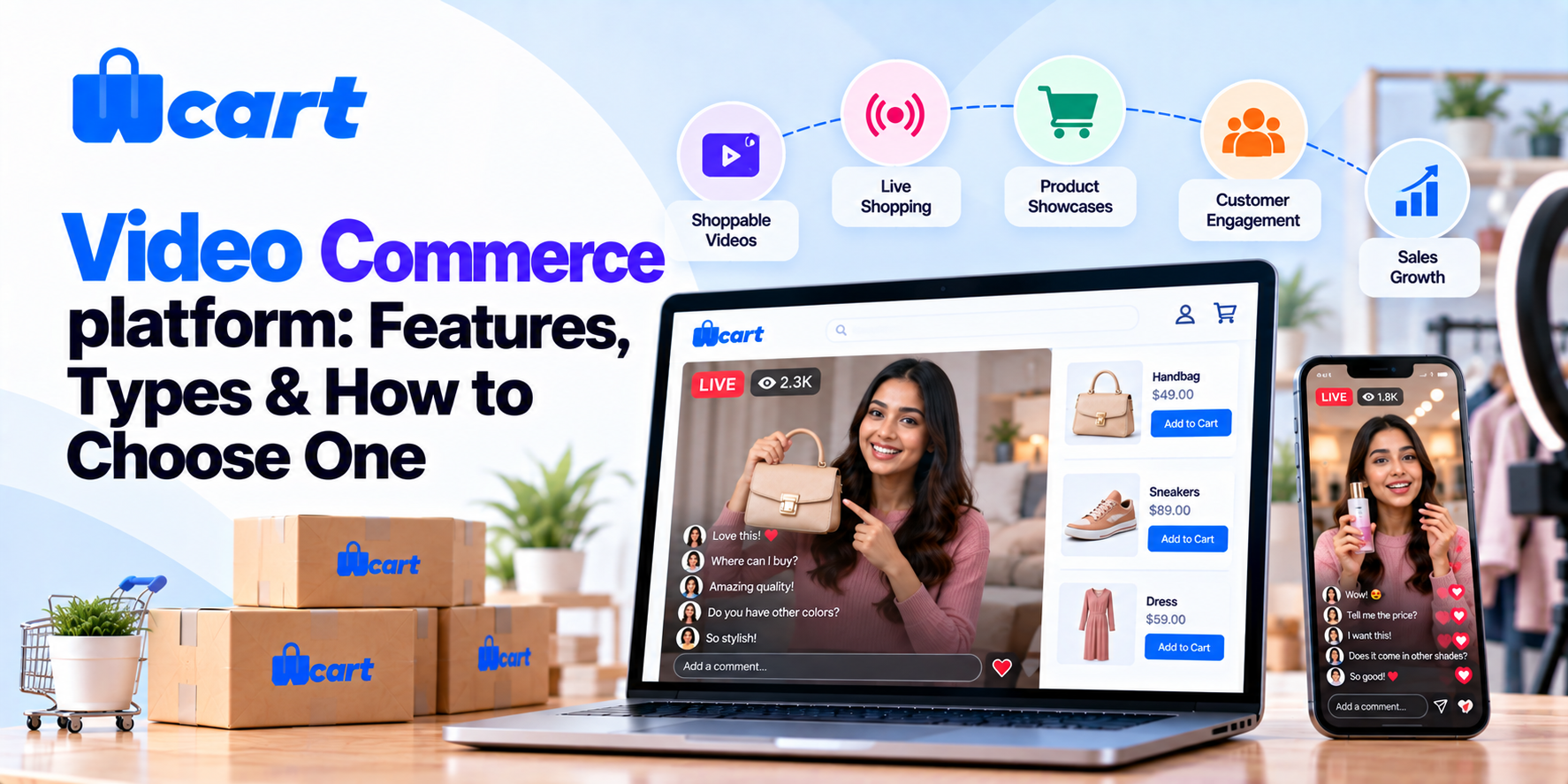
Quick Answer: A video commerce platform is software that adds shoppable video, live shopping and in-video checkout to an online store. Standalone tools add a video layer to your current site. A headless platform with built-in video connects video to your catalog and checkout through APIs. Pick based on your store setup, catalog size and how much you rely on live selling.
Key Takeaways
- 85% of consumers say a video has convinced them to buy a product or service (Source: Wyzowl).
- The live commerce market is forecast to grow from $25.63 billion in 2025 to $31.79 billion in 2026, then reach $74.52 billion by 2030 (Source: The Business Research Company).
- 94.6% of online adults watched online video in the past 30 days (Source: DataReportal).
- Standalone tools add video to an existing store. A headless platform builds video into the catalog and checkout.
- Score every option on live catalog sync, one cart, live and recorded support and reporting.
A video commerce platform lets shoppers watch a video, tap a product and buy without leaving the player. It connects your videos to your catalog, cart and checkout so the whole journey happens in one place.
Shoppers already use video to judge products before they buy. Brands need tools that turn that viewing into orders.
This guide covers what these tools do, the features worth paying for, the main platform types and how to pick one. You will also find examples by industry, a simple rollout plan and the metrics that prove return.
What Is Video Commerce?
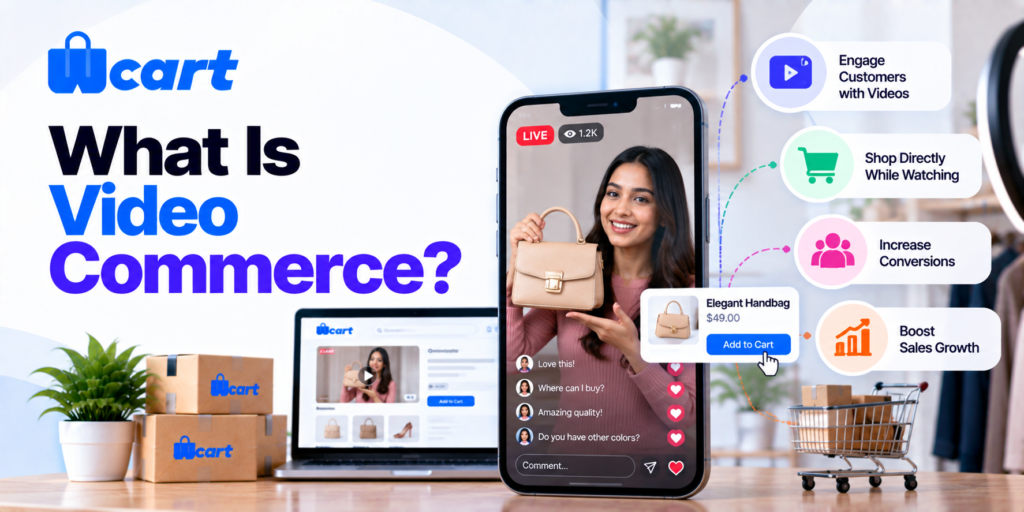
Video commerce fuses content and commerce: product info, demos, and storytelling sit alongside an interactive buy path.
Rather than watching a clip and then hunting down the product on a separate page, the viewer taps a hotspot, a product card, or a live add-to-cart button laid right over the video. The catalog, pricing, inventory, and checkout all stay in sync behind the scenes.
Here is why that matters
- Video helps people understand products before they buy. They can see how a jacket fits, how a serum applies, or how a gadget works.
- Video commerce makes this journey from product discovery to purchase faster and easier.
Why Does Video Commerce for Ecommerce Increase Conversions?
The lift comes from three things that feed each other, a shift that research firms like McKinsey and Coresight Research have tracked as live and shoppable video go mainstream.
- Engagement. Video holds attention longer than photos or text. Shoppers spend more time with the product.
- Trust. Watching a real person handle an item removes doubt. Live sessions and customer clips add proof that studio photos cannot.
- Higher average order value (AOV). Hosts and product tags suggest bundles and add-ons in the flow of the video. The cross-sell feels helpful, so baskets grow
What Formats Does a Video Shopping Platform Support?
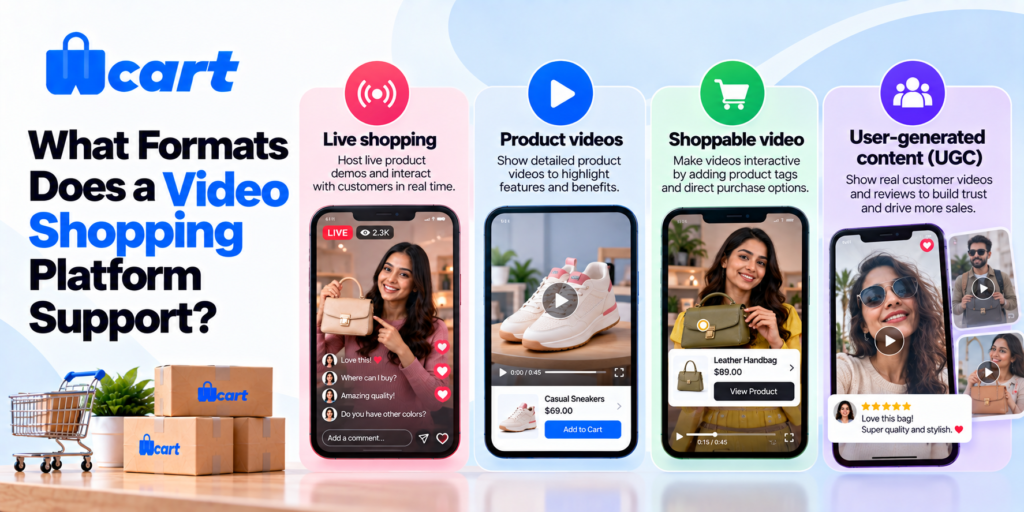
A good video shopping platform covers four formats. Most brands run more than one.
- Shoppable video. These are recorded videos with tappable product tags. Viewers see price and details, add to cart and check out inside the player. They work well on product pages, category pages and homepage banners.
- Live shopping. A host demos products in real time and answers questions while viewers buy. Countdowns and limited offers add urgency that recorded video cannot match.
- User-generated content (UGC). These are real clips from customers and creators, made shoppable. Shoppers see the product used by people like them, which builds credibility fast.
- Product videos. These include demos, unboxings, 360-degree spins and how-to clips. They answer the questions buyers already have and help cut returns.
What Features Should Video Commerce Software Include?
Video commerce software should do more than play clips. Look for these features before you compare prices.
- Product tagging. Tag items inside a video in a few clicks, with no developer help.
- Live shopping tools. Scheduling, chat, host controls and product pinning during a stream.
- Catalog and inventory sync. Tags should show live price and stock so nobody adds a sold-out item.
- One cart and checkout. Items added from a video should land in the same cart as the rest of the session.
- UGC galleries. Collect, approve and publish customer clips as shoppable content.
- Analytics. Track views, tag clicks, conversions and revenue per video.
- Fast delivery. A global CDN and a light player keep pages quick, especially on phones.
How Do Video Commerce Platforms Compare
| Platform | Type | Live shopping | Shoppable video | Works with | Best for |
|---|---|---|---|---|---|
| Videowise | Standalone | Yes | Yes | Shopify, Shopify Plus, Magento, Adobe Commerce, Salesforce Commerce Cloud | Shopify and DTC brands |
| Bambuser | Standalone | Yes | Yes | Shopify, Salesforce, Magento, BigCommerce, Wix | Enterprise and luxury retail |
| Firework | Standalone | Not a listed core product | Yes | Web, email, app, SMS, social, in-store, retailer sites | Large brands needing wide distribution |
| Channelize.io | Standalone | Yes | Yes | Shopify, WooCommerce, Magento, PrestaShop, Wix, Shoplazza | Mid-market stores focused on live selling |
| JOIN | Standalone | Not listed | Yes | Shopify, PrestaShop, Magento, Salesforce Commerce Cloud, WooCommerce | Brands wanting AI-made product video |
| Wcart | Headless platform with built-in video | Enterprise tier | Enterprise tier | Native to the Wcart platform | Brands replatforming or selling on many channels |
What Are the Best Video Commerce Platforms in 2026?
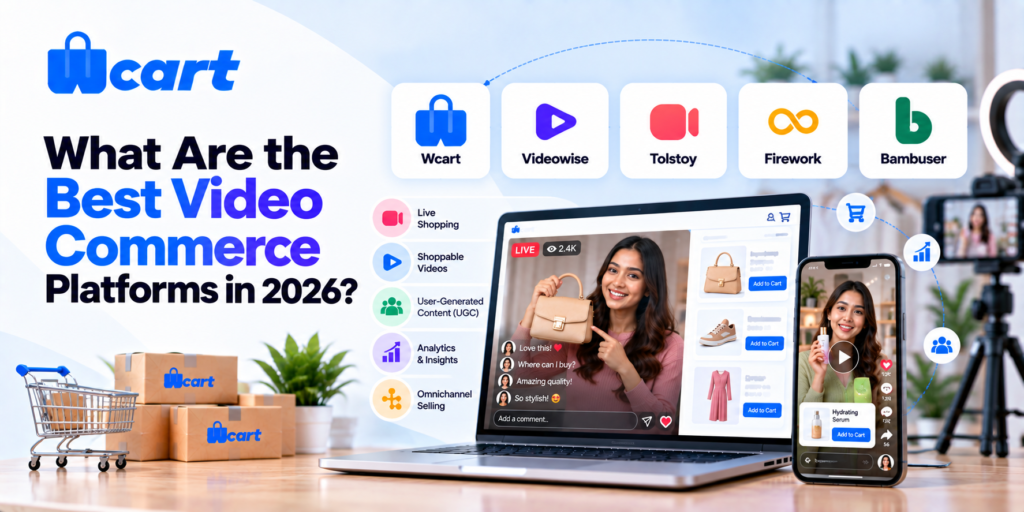
The best video commerce platform depends on your store setup, your sales channels and whether live shopping matters. These five are among the most visible in the category. Each one takes a different approach.
1. Videowise
Videowise is a video commerce platform built mainly for DTC and Shopify brands. It covers shoppable video, live shopping and UGC in one place. The company says over 4,000 brands use it (Source: Videowise, 2026).
Key features
- Shoppable video with AI ranking and always-on A/B tests
- Live shopping with multi-host management and simulcasting to social channels
- UGC Hub to collect content and manage usage rights
Pros
- Covers on-site video, live shows and UGC in a single tool
- Turns live streams into shoppable clips after the show ends
- Reports tie revenue to individual videos
Cons
- Strongest fit is Shopify-style stores, so it suits other stacks less
- Pricing is not shown on the homepage, so expect a demo call
- The wide feature set can feel like a lot for a small catalog
2. Bambuser
Bambuser is an enterprise-focused video commerce platform with four products: live shopping, shoppable video, video consultation and live chat. Its customer list leans toward large fashion, beauty, electronics and retail brands.
Key features
- Live shopping player for websites, apps and social channels
- Shoppable video from social, live and UGC content
- One-to-one video consultation for high-touch selling
Pros
- Video consultation and clienteling suit high-value or luxury sales
- Strong enterprise references and security certifications
- Free trial and a public pricing page
Cons
- The four-product range can be more than a small store needs
- Best results likely need staff to host shows and consultations
- Less focus on AI content creation than newer tools
3. Firework
Firework positions itself as an all-in-one video platform for enterprise and retail brands. Its homepage highlights shoppable video, a video showroom, one-to-one video chat, an AI shopping agent and AI content tools. It reports 1,500+ brands (Source: Firework, 2026).
Key features
- Shoppable video across web, email, mobile app, SMS, social and in-store
- Video showroom that links digital and physical stores
- One-to-one video chat with experts
Pros
- Widest distribution list of the five, including retailer and publisher placements
- Sources content from creators, customers, store staff and AI
- Large-brand customer base across beauty, grocery, fashion and home
Cons
- Live shopping is not listed as a core product on the homepage
- The broad suite may be heavy for a small team
- Case study results mostly come from big brands, so they may not match a smaller store
4. Channelize.io
Channelize.io focuses on live shopping and shoppable video for ecommerce stores. It says more than 1,000 brands use it (Source: Channelize.io, 2026).
Key features
- Live shopping with low-latency streaming and unlimited viewers per show
- Go live from a host app, RTMP and OBS or a pre-recorded video
- Simulcasting to social platforms and shareable show links
- Plugins for Shopify, WooCommerce, Magento, PrestaShop, Wix and Shoplazza
Pros
- Usage-based pricing with no commission on sales
- Works with more open-source and mid-market store platforms than most rivals
- Standby support for live shows, plus WhatsApp support
Cons
- Narrower toolset: live shopping and shoppable video only
- The homepage lists fewer AI content and creator tools than newer platforms
- Usage-based pricing can be harder to forecast during busy seasons
5. JOIN
JOIN is a French AI video commerce platform. It says 400+ websites across 15 countries use it, and it reports an average conversion lift of 19% across its customers (Source: JOIN, 2026).
Key features
- Shoppable videos on product pages, collection pages, homepage, apps and email
- UGC collection with automatic rights management
- Works with Shopify, PrestaShop, Magento, Salesforce Commerce Cloud and WooCommerce
Pros
- Strong AI content creation for catalog-wide video
- Launch in hours, often without engineering help
- Plans based on page views or AI credits, plus a free trial
Cons
- Live shopping is not listed among its products
- Credit-based AI pricing needs planning at catalog scale
- Smaller customer base than the biggest vendors
Which Industries Use Video Commerce for Ecommerce?
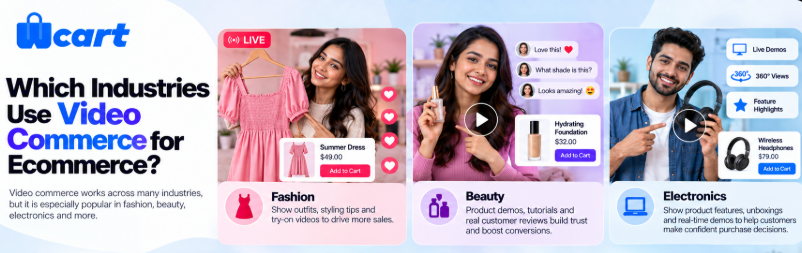
Video commerce for ecommerce works best where seeing the product matters. Three categories stand out.
Fashion
- Fit, movement and styling are hard to read from a flat photo. Lookbook videos, try-on clips and live runway events let shoppers buy a full outfit in one go. Brands such as Zeekas and Mpcollections, both on Wcart’s “Trusted by” list, run their stores on this kind of architecture..
Beauty
- Tutorials and application demos drive the sale. Live sessions with makeup artists and creator clips show real results on different skin tones and types.
Electronics
- Specs rarely close a sale alone. Hands-on demos and side-by-side comparisons help shoppers see the value before a higher-ticket purchase.
How to Get Started with Video Commerce
You don’t have to launch every format on day one. A sane rollout looks more like this:
- Start with shoppable product videos. Repurpose the demo and UGC footage you already have by tagging the products in it. It’s the lowest-effort way in, and it pays off at the page level almost immediately.
- Pilot live shopping. Run one themed live event around a launch or a seasonal moment. Promote it across email and social, and keep the thing tight and interactive rather than sprawling.
- Build a UGC engine. Ask for video reviews, gather creator content, and feature the best clips as shoppable galleries.
- Integrate with your stack. Make sure your video tooling talks to your catalog, inventory, and checkout so product data and stock stay correct in real time. Since most video gets watched on a phone, pair all of this with a solid ecommerce mobile app experience.
How Headless Platforms Integrate Video with Catalog and Checkout
The reason video commerce feels smooth on the better storefronts comes down to architecture. With headless commerce, the presentation layer is split from the commerce engine over APIs. So a video player, a live-stream overlay, or a UGC gallery can hit the very same catalog, pricing, inventory, and cart endpoints that run the rest of the store.
In practice that buys you a few things:
- Real-time accuracy. Product tags pull live pricing and stock, so nobody adds a sold-out item to their cart.
- One cart, everywhere. Something added inside a live stream lands in the same cart as the rest of the session, which makes for a single clean checkout.
- Reuse across channels. The same product data can power video on the web, in apps and on new surfaces without a backend rebuild.
Most viewers watch on a phone, so pair video with a strong ecommerce mobile app. This API-first base also sits alongside other enterprise ecommerce features such as high availability and a global CDN.
Running a multi-vendor marketplace? Each seller can host their own shoppable streams while catalog and checkout stay unified.
How Do You Measure Video Commerce ROI ?
Treat video commerce as a revenue channel you can measure, not a branding experiment you hope works. Watch these numbers:
- Video engagement rate. View-through rate, average watch time, and interactions (tag clicks) per video.
- Conversion rate. Purchases tied to video sessions against your baseline.
- Average order value. Compare AOV on video-influenced orders with non-video orders to see what the upsell is really worth.
- Live event performance. Concurrent viewers, peak engagement, and revenue per minute of broadcast.
- Return rate. A dip in returns on video-supported products tells you people are buying with better information.
Conclusion : Bring Video Commerce to Your Store with Wcart
Honestly, video commerce only feels effortless when it sits on an architecture built for it. Wcart is an AI-based headless ecommerce platform with the API-first foundation, global CDN, SOC 2 security, and multi-currency and multi-language support that shoppable and live video need, with Video Commerce available as an Enterprise-tier capability wired directly into your catalog and checkout. Explore Wcart to see how to turn video into a revenue channel you can actually measure.

























Leave a Reply