
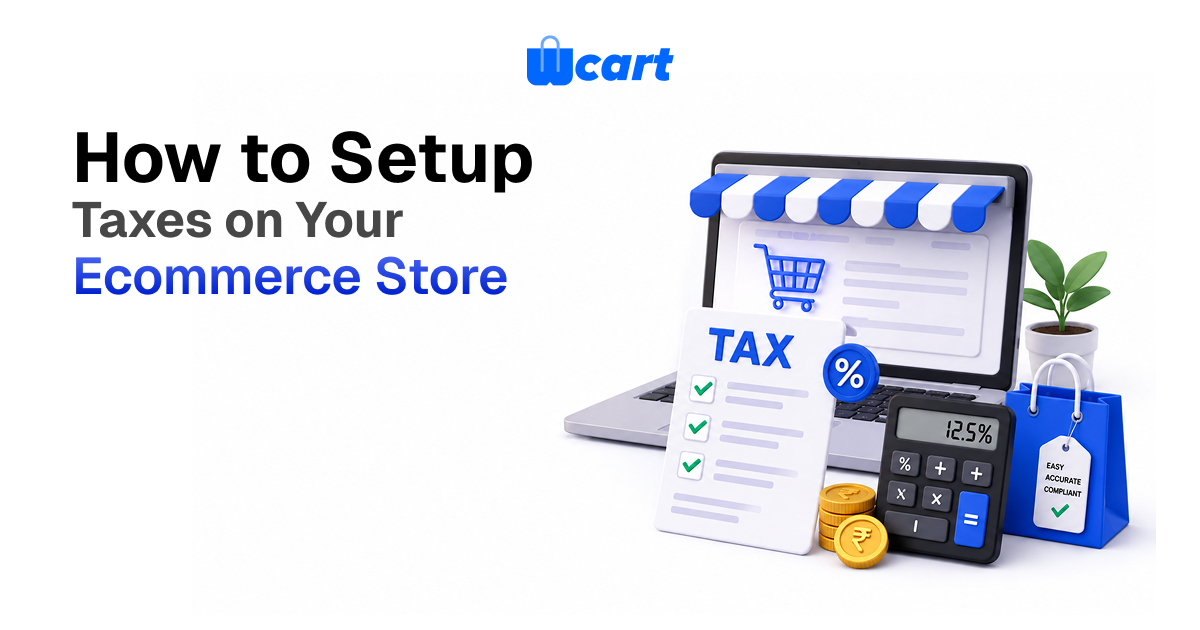
Ecommerce tax setups are really confusing when you have a business. You have to know about tax rates and rules. You have to follow them in different areas. A lot of people who own stores think this is too much to handle.
The good thing is that dealing with taxes for your online store does not have to be hard. If you have the things to help you and a good plan you can make tax calculations automatic reduce mistakes and follow local and international tax laws.
Whether you are starting an online store or selling things in new places it is really important to know how to deal with taxes in a smart way. This guide will show you how to set up taxes for your store using Wcart and it will not be a hassle.
Why Ecommerce Tax Setup Matters for Online Stores
Proper tax setup is essential for every online business. Incorrect tax calculations can result in compliance issues, customer complaints and financial penalties.
When you set up taxes the way customers pay the correct amount when they check out. This makes things clear. Helps you build trust with the people who buy from you.
As your business gets bigger and you start selling in different areas dealing with taxes gets harder. Having a tax system in place helps everything run smoothly and makes sure you follow the rules for a long time.
Understanding Ecommerce Store Taxes
Before setting up taxes, it is important to understand the different types that may apply to your business.
Common ecommerce taxes include:
- Sales Tax
- Goods and Services Tax (GST)
- Value Added Tax (VAT)
- Import Duties
- Customs Charges
The location of your company, the locations of your clients, and the goods or services you offer all affect the taxes you must collect.
Effective ecommerce tax management starts with an understanding of these requirements.
Determine Your Tax Obligations
Every ecommerce business has unique tax responsibilities. Before configuring tax settings, identify where you are legally required to collect taxes.
Your tax obligations may be based on:
- Business registration location
- Warehouse locations
- Physical stores
- Economic nexus requirements
- Customer shipping destinations
Knowing where you have tax obligations helps ensure accurate tax collection and compliance.
Configure Tax Settings in Wcart
Online store tax setup is made easy and effective by Wcart’s adaptable tax management features.
Merchants can establish tax regulations based on nations, states, cities or particular regions within the admin dashboard. This makes it possible for companies to handle taxes from one central location.
Wcart’s adjustable tax settings enable retailers to adjust to evolving laws without sacrificing a smooth checkout process.
Set Up Regional Tax Rates
Tax rates frequently change based on the location of your clients. Location based tax regulations are necessary for companies that sell in several different areas.
Using Wcart, you can:
- Create country specific tax rates
- Configure state or province taxes
- Apply city level tax rules
- Manage international tax requirements
Proper regional tax settings verify that customers are billed correctly and help avoid compliance problems.
Enable Automated Tax Calculation
Manual tax calculations can become difficult as order volume increases. Errors in calculations can affect both customer satisfaction and compliance.
Accurate tax application based on customer location and tax laws is ensured by using automated tax calculation tools.
Automation increases overall operational efficiency, decreases administrative work, and saves time. By automatically applying the relevant tax rules during checkout, Wcart automates tax computations.
Configure Tax-Inclusive or Tax-Exclusive Pricing
Different markets prefer different pricing models. Some regions expect taxes to be included in product prices while others add taxes during checkout.
Tax Inclusive Pricing
Customers see the final price including taxes.
Tax Exclusive Pricing
Taxes are added separately during checkout. Choosing a suitable pricing structure increase customer satisfaction and complies with local regulations.
Set Up Tax Exemptions
Depending on local laws, some clients or businesses might be eligible for tax exemptions.
Examples include:
- Government agencies
- Educational institutions
- Nonprofit organizations
- Wholesale customers
Wcart enables merchants to create customer groups and tax exemption rules, ensuring eligible buyers are not charged unnecessary taxes.
Apply Product-Specific Tax Rules
Not all products are taxed equally. Some products may have special tax rates or exemptions.
Examples include:
- Digital products
- Educational materials
- Medical supplies
- Food products
In order to ensure accurate tax collection across various product types, Wcart enables merchants to assign tax categories to particular products.
Manage International Ecommerce Taxes
Additional tax considerations like VAT, GST and customs duties are introduced when selling internationally.
Companies that are growing internationally need to be aware of each market’s tax regulations.
By enabling merchants to establish country specific tax regulations and compliance settings, Wcart facilitates international tax management.
Businesses can expand internationally thanks to this flexibility without needless tax complications.
Use Tax Reporting Tools
Tax reporting is an important part of maintaining compliance and preparing tax filings.
A good tax reporting system should provide detailed insights into:
- Taxes collected
- Tax by region
- Tax by product category
- Transaction summaries
- Filing-ready reports
Businesses can effectively track tax data and confidently get ready for filing periods with the help of Wcart’s detailed reporting tools.
Common Ecommerce Tax Mistakes to Avoid
Many online businesses make avoidable tax configuration mistakes that can lead to compliance issues.
Using Incorrect Tax Rates
- Applying outdated or incorrect tax rates can result in undercharging or overcharging customers.
Ignoring Regional Requirements
- Different locations often have unique tax regulations that require separate tax rules.
Forgetting Tax Exemptions
- Failing to configure exemptions can create problems for eligible customers.
Misclassifying Products
- Assigning products to incorrect tax categories may result in inaccurate tax calculations.
Not Updating Tax Settings
- Tax laws are always evolving. Maintaining compliance is aided by routine reviews.
- Preventing these errors contributes to a more smooth e-commerce process.
Best Practices for Ecommerce Tax Management
To simplify tax compliance for ecommerce, follow these best practices:
- Automate tax calculations whenever possible
- Regularly review tax settings
- Stay updated on regulatory changes
- Maintain accurate records
- Use detailed tax reporting tools
- Configure regional tax rules carefully
Following these practices reduces risk and improves overall tax management.
Why Choose Wcart for Ecommerce Tax Management?
Managing taxes becomes much easier when your ecommerce platform includes built in tax tools.
Wcart offers:
- Flexible tax configuration
- Automated tax calculation
- Multi region tax support
- Product specific tax settings
- Tax exemption management
- Detailed tax reporting
- International tax support
These features assist retailers in effectively managing sales tax for online sales while upholding compliance in various markets.
Conclusion
Setting up your ecommerce store taxes is not that hard. You just need to know what taxes you have to pay, set up the tax rules and let the computer do the math for you. This way you can follow all the rules. Focus on making your business bigger. If you sell things in your country or in other countries you need to have a good plan for taxes so your business can do well for a long time.
Wcart gives you the tools you need to handle taxes, make your work easier and make shopping easy for your customers. When you have everything set up correctly you can stop worrying about taxes. Spend more time making your ecommerce business bigger.
























Leave a Reply