
Quick Answer
Merchants pay a blend of percentage‑based charges, fixed per‑transaction amounts, and occasional ancillary fees that together form the total cost of each sale. The exact mix depends on the gateway’s pricing model, the payment method used, and any extra services such as fraud protection or currency conversion.
Key Takeaways
- Credit card processing fees typically run between 1.5 percent and 3.5 percent of each transaction, depending on card type and pricing model. (Source: NerdWallet,)
- The combined average interchange rate for Visa and Mastercard reached 2.36 percent in 2025, up from 2.02 percent in 2010. (Source: The Motley Fool)
- Most merchants pay an effective rate of 2.0 to 3.0 percent across all card transactions once assessment fees and processor markup are included. (Source: DirectPayNet)
- Flat-rate processors like Stripe commonly charge around 2.9 percent plus 30 cents per transaction, bundling interchange, assessment, and markup into one number. (Source: DirectPayNet)
- The gap between what a business thinks it pays and what it actually pays is usually 30 to 80 basis points, and often more. (Source: Swipesum)
Merchants launching or scaling an online store quickly discover that “the fee” they see on a pricing page is only part of the story. Unexpected deductions appear on statements, and the total cost per order can feel opaque. Those hidden costs directly affect profit margins, pricing strategy, and cash flow.
This guide breaks down each fee component, why it exists, and how to size up the real cost of a payment gateway. We reference the wider ecosystem, including Shopify, BigCommerce, Adobe Commerce, WooCommerce, Wix, and Squarespace, so you can see where Wcart fits without relying on marketing claims.
What are the core components of a payment gateway fee structure?
Payment gateways typically bundle several distinct charges into the amount that appears on a merchant’s monthly invoice:
- Transaction percentage fee – A share of the sale amount that compensates the gateway for processing the payment.
- Flat per‑transaction fee – A fixed charge applied to each individual order, regardless of size.
- Authorization or hold fee – A small amount levied when the gateway reserves funds before the merchant captures them.
- Chargeback and dispute fee – A cost incurred when a buyer challenges a transaction and the merchant must defend it.
- Cross‑border or currency conversion fee – An extra charge applied when the buyer’s card is issued in a different country or currency.
- Optional service fees – Fees for advanced fraud detection, recurring billing modules, or premium support.
Each component serves a purpose: the percentage fee covers risk and network costs; the flat fee offsets infrastructure usage; the authorization fee reflects the gateway’s effort to hold funds; and so on. Understanding which of these apply to your business is the first step toward an accurate cost picture.
How do transaction fees differ between gateway providers?
Different providers adopt pricing philosophies that reflect their target market and service depth:
- High‑volume, enterprise‑focused gateways often emphasize lower percentage fees while maintaining a modest flat fee, banking on large order totals to offset processing risk.
- All‑in‑one ecommerce platforms may bundle a slightly higher percentage fee with a very low flat fee, simplifying the cost model for merchants who prefer predictability.
- Open‑source or self‑hosted solutions typically allow merchants to connect to multiple processors, giving flexibility to select the cheapest per‑transaction rates but requiring more technical oversight.
Stripe charges a flat 2.9 percent plus 30 cents on most transactions, while a dedicated merchant account might charge interchange plus 0.20 percent plus 10 cents per transaction. (Source: DirectPayNet)
Wcart, as a self-hosted, white-label platform, lets merchants plug in any gateway and keep that structure transparent instead of layering a platform markup on top.
Why do merchants see additional costs beyond the headline fee?
The headline fee advertised on a gateway’s website usually reflects the most common scenario a standard credit card transaction in the merchant’s home currency.
Real‑world sales, however, trigger additional charges:
- Currency conversion when a shopper pays in a foreign currency.
- International card issuance that routes through a different acquiring network.
- Recurring billing that may involve separate subscription management fees.
- Fraud‑prevention services that add a per‑order surcharge for advanced risk scoring.
- Settlement or payout fees that some processors charge for moving funds from the gateway to the merchant’s bank account.
These add‑ons can be easy to overlook because they appear on separate line items or are bundled into a “monthly service fee.” Over time, they accumulate and can represent a sizable portion of the total cost per sale.
Which fee types have the biggest impact on a merchant’s bottom line?
While the exact impact varies by business model, two categories tend to dominate:
- Percentage‑based fees – Since they scale with order value, they become especially significant for high‑ticket items. A modest shift in the percentage can change the profitability of premium products.
- Cross‑border and currency fees – For merchants targeting international buyers, these fees can double the effective cost of a transaction, eroding margins on every overseas order.
Flat per-transaction fees matter more for high-volume, low-ticket businesses like digital downloads. For a $5 sale, a 30-cent fixed fee is a much bigger bite than it is on a $500 order. (Source: Swipesum,)
How can merchants evaluate the true cost of a gateway?
A systematic approach helps cut through marketing jargon:
- Map every fee – List percentage, flat, and ancillary charges side by side.
- Model typical order scenarios – Estimate costs for low, medium, and high‑value orders, including domestic and international cases.
- Factor in volume expectations – Project how many transactions will fall into each bucket over a given period.
- Include hidden or optional fees – Add any fraud‑prevention, recurring billing, or settlement costs you anticipate using.
- Compare against revenue – Determine the percentage of each sale that will be consumed by fees under each scenario.
Creating a simple spreadsheet (or using a calculator tool) allows you to visualize how fee structures affect profitability. Many merchants find that a gateway with a slightly higher headline rate but fewer ancillary fees ends up being cheaper overall.
What role does transaction volume play in fee negotiations?
Gateways often tier their pricing based on the merchant’s monthly processing volume. As volume climbs, they may offer reduced percentages or waive certain flat fees. However, the negotiation leeway is not unlimited:
- High‑volume merchants can leverage their processing weight to request custom contracts that eliminate or lower specific fees.
- Mid‑range merchants may qualify for modest discounts, especially if they commit to a longer contract term.
- Low‑volume merchants typically accept the standard published rates but can still explore alternative processors that specialize in low‑ticket sales.
Understanding where your business sits on the volume spectrum helps you know which negotiation points are realistic. Even without formal discounts, you can sometimes secure a better rate by bundling services (e.g., fraud protection) with a single provider.
How do cross‑border and currency conversion fees affect international sales?
When a card is issued outside the merchant’s country, the payment routes through extra networks, and currency conversion adds a markup on top.
- These fees hit hardest on high-priced international goods, where the conversion markup eats a real chunk of the sale
- Multi-currency pricing lets merchants set local-currency prices, reducing conversion steps
- Local acquiring processes the transaction as if it were domestic, cutting cross-border costs significantly
What are common hidden fees that merchants should watch for?
Even seasoned merchants can be surprised by less‑obvious charges:
- Batch or settlement fees – Small costs for grouping multiple transactions before sending them to the bank.
- Inactivity fees – Applied when a merchant’s account processes no transactions for a set period.
- PCI compliance assistance fees – Some providers charge for helping merchants meet security standards.
- Early termination fees – Penalties for ending a contract before the agreed term.
- Refund processing fees – A charge that may be levied when a sale is reversed, often mirroring the original transaction fee.
Regularly reviewing statements and asking the account manager for a breakdown can prevent surprise expenses.
Read More About : Recurring Billing Setup
How do alternative payment methods influence overall fees?
Beyond traditional credit cards, merchants increasingly accept digital wallets, bank transfers, and emerging options like cryptocurrencies. Each method carries its own cost structure:
- Digital wallets (e.g., Apple Pay, Google Pay) usually piggyback on the underlying card network fees, so they don’t add extra cost but can improve conversion.
- Bank‑transfer or ACH payments often have lower percentage fees but may include a modest flat fee and longer settlement times.
- Cryptocurrency payments can eliminate traditional processor fees, replacing them with network transaction costs that are typically lower, though volatility and regulatory considerations add complexity.
How can merchants reduce the fees they pay without sacrificing service?
Several tactics can trim expenses while maintaining a robust checkout:
- Consolidate gateways – Using a single provider for all payment types can open up volume‑based discounts.
- Negotiate ancillary services – If you already have a strong fraud detection system, you may be able to drop the gateway’s optional fraud module.
- Pass on costs strategically – Transparent surcharges for certain payment methods (e.g., international cards) can offset higher fees, provided they comply with local regulations.
- Encourage preferred payment methods – Incentivize customers to use lower‑cost options like direct bank transfers.
- Review and prune unused features – Disable or cancel services you never use, such as recurring billing for a storefront that only sells one‑time products.
Implementing these measures often requires collaboration between finance, operations, and development teams, but the payoff can be significant.
How does Wcart’s fee model compare to other popular platforms?
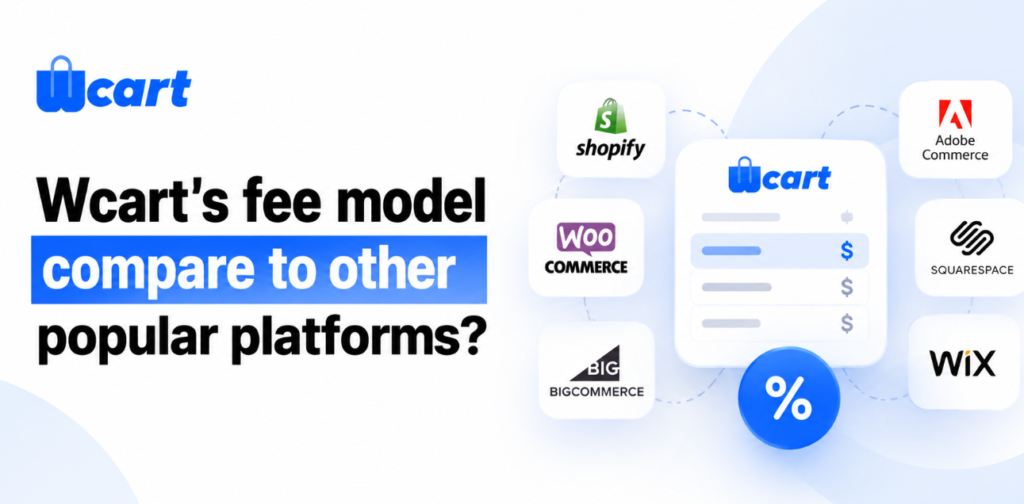
Wcart positions itself as a self‑hosted, white‑label solution that gives merchants direct access to any payment gateway of their choosing. This contrasts with platforms that embed their own processing layer and add a proprietary margin:
- Shopify and Wix bundle processing fees into a single rate that includes platform usage, which can be convenient but may be higher than a direct gateway connection.
- BigCommerce and Squarespace also provide integrated gateways but allow the option to connect external processors, giving merchants a middle ground.
- Adobe Commerce (Magento) is highly extensible, similar to Wcart, but often requires more development effort to achieve the same level of gateway flexibility.
- WooCommerce leverages the WordPress ecosystem, offering many plugins for gateways, yet the plugin ecosystem can introduce additional licensing costs.
By hosting the storefront on your own servers, Wcart eliminates any platform‑level transaction surcharge. Merchants pay only the fees imposed by the chosen gateway and any optional services they enable. This transparent cost structure aligns with businesses that prioritize control over pricing and data.
Read More : Payment On Wcart Guide
What steps can merchants take to monitor and control payment costs over time?
Ongoing vigilance is essential because fee structures can evolve, and new services may be introduced:
- Set up automated reporting – Use the gateway’s API to pull transaction data into a business intelligence tool for regular analysis.
- Schedule quarterly fee reviews – Compare actual costs against the projected model and adjust payment method mix if needed.
- Stay informed about regulatory changes – New rules around interchange fees or cross‑border surcharges can shift cost dynamics.
- Maintain open communication with the gateway account manager – Proactive dialogue can surface upcoming pricing updates before they hit your statements.
- Benchmark against peers – Participate in industry forums or merchant groups to gauge whether your fee structure remains competitive.
By treating payment costs as an ongoing KPI rather than a set‑and‑forget line item, merchants can react quickly to market shifts and keep expenses in check.
How do merchants account for fees when pricing their products?
Understanding the full fee picture enables smarter pricing strategies:
- Cost‑plus pricing – Add the average fee per sale to the product cost, then apply a desired margin.
- Value‑based pricing – If the product’s perceived value is high, merchants may absorb fees without affecting price.
- Tiered pricing – Offer discounts or bundles that increase average order value, diluting the impact of percentage fees.
- Dynamic pricing for international markets – Adjust prices to reflect higher cross‑border fees, ensuring margin consistency across regions.
By integrating fee calculations into the product pricing workflow, merchants avoid surprise margin erosion and maintain profitability.
How does the fee landscape differ for B2B versus B2C merchants?
Business‑to‑business transactions often involve larger order values, purchase orders, and net‑30 or net‑60 payment terms. Consequently:
- Percentage fees become less burdensome relative to the overall order size, making flat fees more noticeable.
- Invoice‑based payment methods (e.g., ACH, wire transfers) are more common, typically carrying lower processing costs but requiring additional reconciliation effort.
- Risk profiles differ, as B2B buyers may have established credit terms, reducing the need for aggressive fraud protection.
B2C merchants, especially those with high volumes of low‑ticket sales, feel the impact of flat fees more acutely and may prioritize gateways that minimize per‑transaction costs.
What resources can help merchants stay informed about fee changes?
- Gateway provider newsletters – Many processors send updates about pricing adjustments or new service offerings.
- Industry blogs and podcasts – Thought leaders often discuss emerging fee trends and best practices.
- Merchant forums – Communities on platforms like Reddit, specialized ecommerce groups, or Slack channels provide peer insights.
- Regulatory bulletins – Government agencies publish notices about changes to interchange fee regulations.
- Our own guide series – Refer to the Complete Guide to Accepting Payments for a broader view, and explore related posts such as How to Reduce Failed Payments and Card Declines in Checkout for practical tactics.
Keeping a habit of periodic learning ensures you won’t be caught off guard by fee shifts.
Save on Payment Gateway Fees with Wcart’s Headless Commerce Platform
Ready to take control of your payment gateway fees and keep more of your hard-earned revenue? Run your online store on Wcart’s headless commerce platform and enjoy lower transaction costs, greater flexibility, and a seamless shopping experience for your customers.

























Leave a Reply