
Quick Answer
Building an email list for ecommerce means turning site visitors into subscribers through a frictionless signup form, a clear incentive, and a strong welcome sequence, then keeping that list healthy through segmentation and regular cleaning. Email marketing returns an average of $36 for every $1 spent, and up to $72 in the US, making it the highest-ROI channel most stores have. A small, engaged list built the right way consistently outperforms a large one bought or scraped from somewhere else.
Key Takeaways
- Welcome emails hit an 83.6% average open rate, the highest of any automated email type, and outperform promotional emails by 320% in revenue. (Source: Ringly and Mailmend)
- Segmented email campaigns generate 760% more revenue than non-segmented sends. (Source: Ringly)
- Automated flows generate up to 30 times more revenue per recipient than one-off campaigns, despite making up just 2% of total email volume. (Source: Klaviyo via SHNO)
- Ecommerce pop-ups convert visitors into subscribers at an average of 2-5%, with top performers reaching 8-10% or higher. (Source: Hustler Marketing)
Your Instagram account can get restricted. Your ad account can get flagged. Your email list can’t be taken away from you, since you own the contact, not a platform. That ownership is exactly why list building deserves real strategy instead of a generic pop-up thrown on at the last minute.
Most stores get their first meaningful list built within 60 to 90 days of putting a real signup strategy in place, not overnight, but faster than most merchants expect once the incentive and placement are right. This guide walks through the full path: why list building matters, the core strategies that actually work, and how to keep the list healthy once you’ve built it.
What makes email list building a critical pillar for ecommerce success?
Email remains the most reliable channel for reaching shoppers directly. A social feed shuffles your content based on someone else’s algorithm. An inbox delivers your message exactly when you choose to send it.
From a strategic standpoint, email serves three distinct purposes:
- Retention – reminding past purchasers about complementary products or upcoming sales.
- Acquisition – turning site visitors into leads that can be nurtured toward a first purchase.
- Advocacy – encouraging happy customers to share referrals, reviews, and user‑generated content.
Stores running all four core lifecycle flows (welcome, abandoned cart, browse abandonment, and post-purchase) see dramatically more revenue per email than stores relying on newsletters alone. (Source: SHNO) That gap alone is why list building is worth treating as a real priority, not an afterthought bolted onto checkout.
Read more about how social commerce fuels cross‑channel sales.
How can you design a frictionless first‑signup experience?
The moment a visitor decides to give you their email is the most valuable micro‑interaction on your site. Any unnecessary step can cause drop‑off. Here are the ingredients of an optimal signup flow:
Lead with a clear value proposition
- Visitors need to understand what they’ll receive and why it matters. Whether it’s a discount code, early access to drops, or exclusive style tips, the benefit should be front‑and‑center. Avoid vague promises; specificity builds trust.
Keep the form short.
- An email address alone is usually enough. A first name adds light personalization, but phone numbers and birthdates belong in a later stage, not the first ask.
Trust Signals
- Display a brief privacy note reassuring shoppers that their data won’t be shared. Including recognizable security icons or a link to a detailed privacy policy can reduce anxiety.
Mobile‑First Design
- Given the high share of mobile traffic, ensure the signup form scales gracefully. Large tap targets, auto‑fill support, and a single‑column layout improve usability on small screens.
Placement Strategy
- Strategic locations such as a persistent header bar, exit‑intent popup, or a dedicated section on product pages capture attention without being intrusive. Testing different placements helps you discover what resonates with your audience.
Essential Email List Building Strategies
These are the core tactics worth running together, not picking one and calling it done.
- Pop-ups timed to intent, not to page load. A pop-up that fires the instant someone lands converts worse than one triggered by scroll depth, time on page, or exit intent.
- A real incentive, not a vague “join our newsletter” ask. Specificity (10% off, free shipping, early access) consistently outperforms generic sign-up prompts.
- Checkout opt-in, since someone already buying is your warmest possible lead, not just a cold visitor.
- A lead magnet tied to your product, like a style guide, sizing chart, or how-to content that only makes sense for someone who’s already interested.
- Referral-driven capture, where existing subscribers bring in new ones through a give-one-get-one style incentive.
- Content and SEO, which compounds slowly but keeps working without ongoing ad spend, unlike paid acquisition.
Which incentives most effectively motivate shoppers to share their email?
Incentives act as the catalyst that turns curiosity into action. While the exact offer will depend on your brand’s positioning, several categories consistently perform well across ecommerce verticals:
- Discounts or coupon codes – a modest percentage off the first order is a classic motivator.
- Free shipping thresholds – promising free delivery after a certain spend can encourage sign‑ups and larger carts.
- Exclusive content – style guides, how‑to videos, or behind‑the‑scenes looks appeal to shoppers seeking deeper brand connection.
- Early access or limited‑edition alerts – scarcity drives urgency, especially for fashion or tech releases.
- Loyalty points – integrating email capture with a points system creates a sense of ongoing reward.
11 Emails Every Ecommerce List Should Have
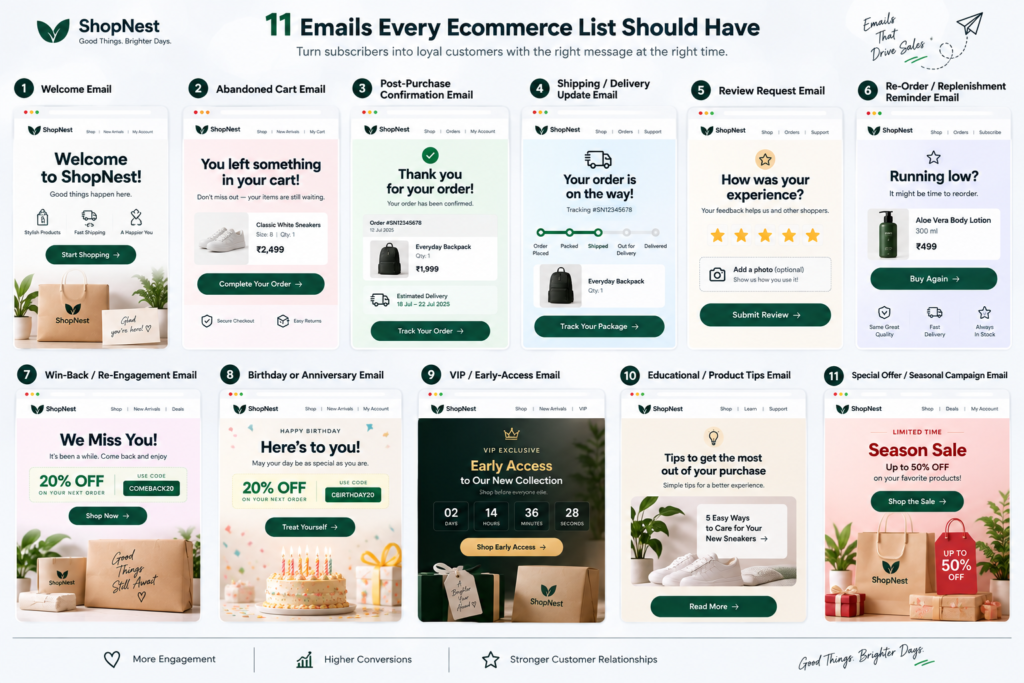
Beyond the welcome series, these are the email types worth building into your program. Each one below includes what it does, why it earns its place with real performance data, an example of what good copy looks like, and when to send it.
1. Welcome Email
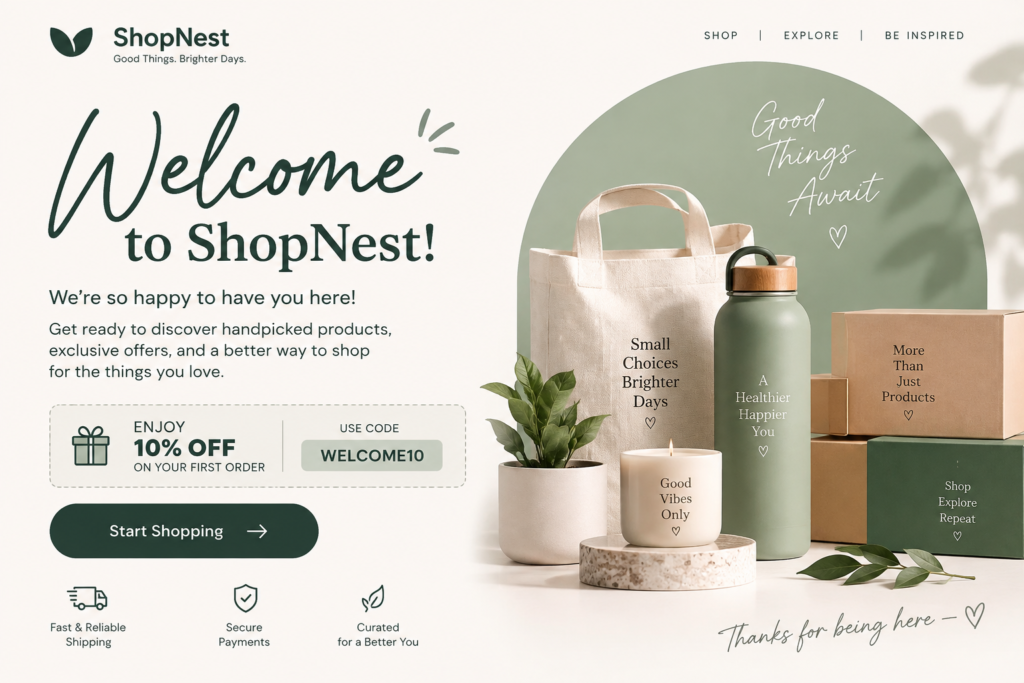
What it does: The very first message a new subscriber gets, delivered the moment they sign up. It confirms the signup, delivers the promised incentive, and sets the tone for everything that follows.
Why it matters: Welcome emails see open rates as high as 86-91% in some benchmark datasets and generate several times more revenue than a standard promotional send, since the subscriber is still actively engaged right after opting in. New subscribers are most receptive in the first 48 hours, which makes this one of the single most valuable emails in your entire program. (Source: ConvertCart)
Example subject line: “Welcome! Here’s your 15% off, [First Name]”
Timing: Sent immediately, within minutes of signup, while intent is at its peak.
2. Confirmation / Double Opt-In Email
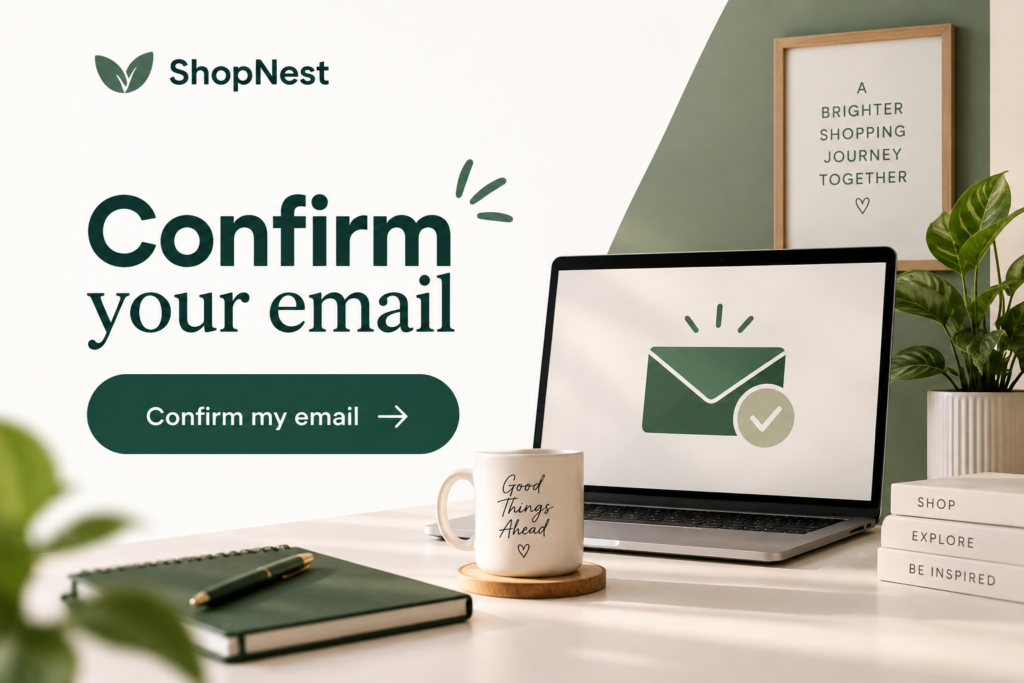
What it does: A short, functional email asking the new subscriber to confirm their email address before they’re added to your active list.
Why it matters: Double opt-in protects deliverability for every email that follows it, since it filters out mistyped addresses and bots before they can hurt your sender reputation. It’s a small, unglamorous step, but skipping it means every later email in this list performs worse than it should.
Example subject line: “Please confirm your email to get 15% off”
Timing: Immediately after signup, before the welcome email or incentive delivery.
3. Browse Abandonment Email
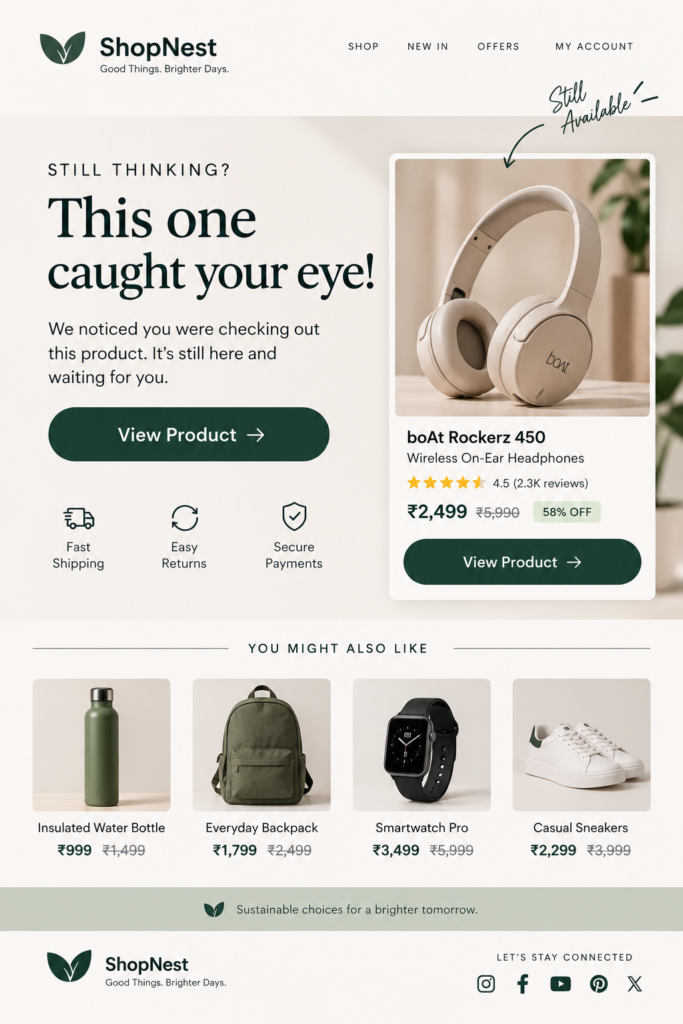
What it does: Targets a subscriber who viewed a specific product page but didn’t add it to cart or buy.
Why it matters: This flow catches interest a step earlier than cart abandonment. In one benchmark dataset, a browse abandonment flow targeting visitors who left without subscribing generated a 30.6% click rate on a modest send volume, showing real intent even without a completed cart. (Source: Mantas Digital)
Example subject line: “Still thinking about the [Product Name]?”
Timing: A few hours after the product view, if no purchase or cart addition follows.
4. Abandoned Cart Email
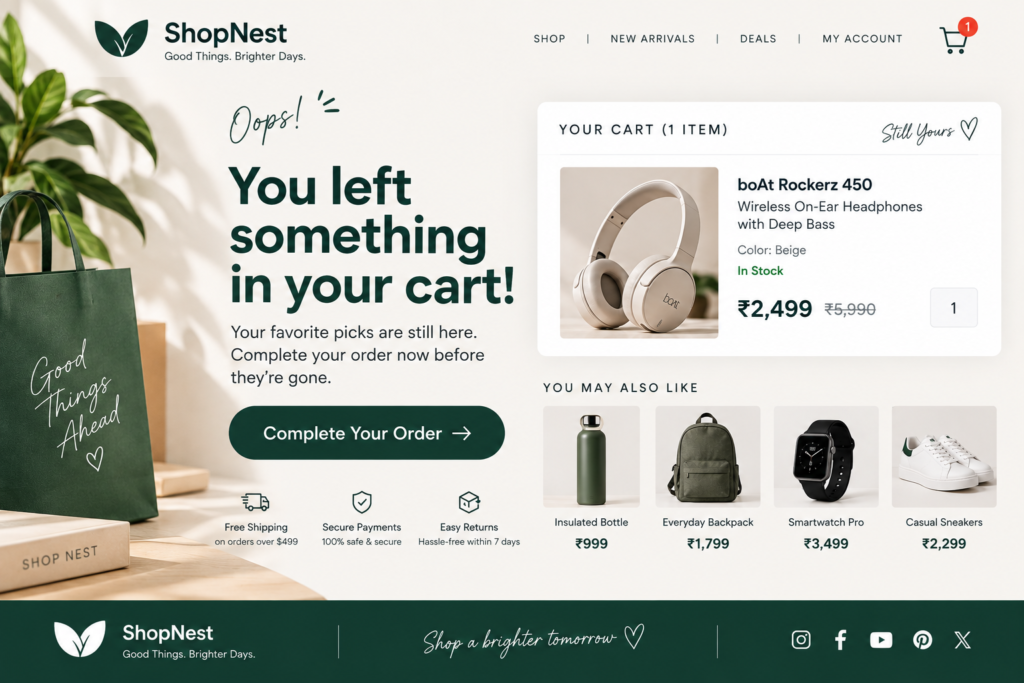
What it does: Reminds a shopper about items they added to cart but didn’t check out with, usually paired with a direct link back to their cart.
Why it matters: This is the highest-converting automated email most ecommerce stores send. Average conversion sits around 3.33%, with top performers reaching 7.69% to 10.7%, and average revenue per recipient around $3.65 to $5.81 depending on the dataset. A three-email sequence (roughly 1 hour, 24 hours, and 72 hours after abandonment) outperforms a single email by 60-70% in total recovered revenue. (Source: Geysera and Mantas Digital)
Example subject line: “You left something behind, [First Name]”
Timing: First email within 1 hour, then follow-ups at 24 and 72 hours.
5. Post-Purchase Confirmation Email
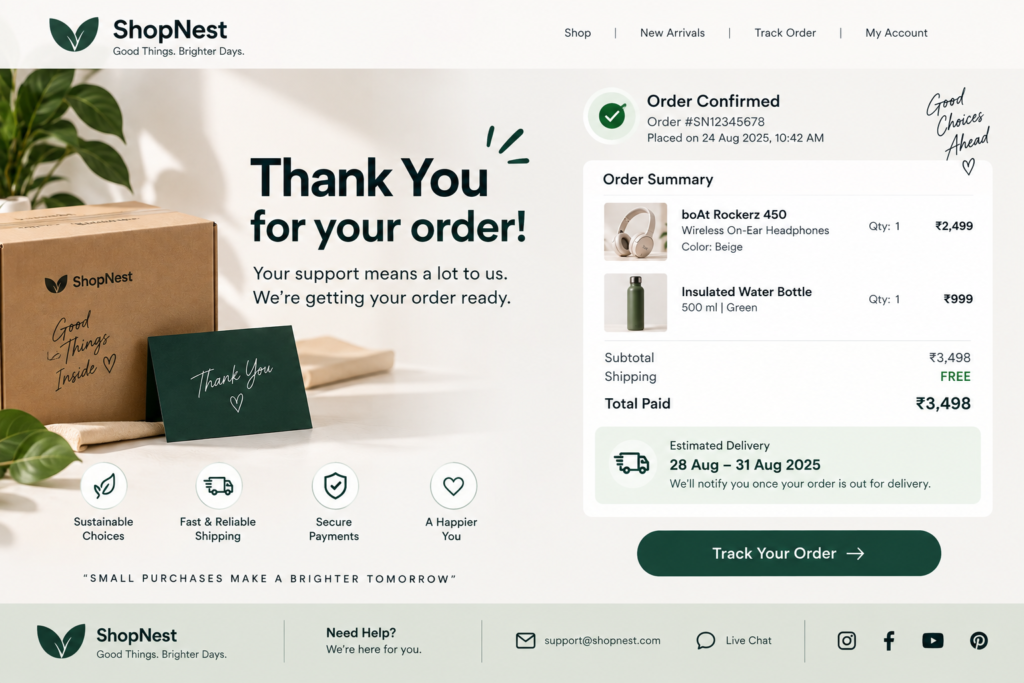
What it does: Confirms the order details right after checkout completes, and doubles as the first real trust-building touchpoint after money changes hands.
Why it matters: Post-purchase emails see open rates as much as 217% higher than standard promotional emails, and post-purchase flows overall convert at roughly 3.8%, about 3x higher than one-off promotions. (Source: Klaviyo via SearchLab)
Example subject line: “Your order is confirmed! Here’s what happens next”
Timing: Immediately after checkout.
6. Shipping / Delivery Update Email
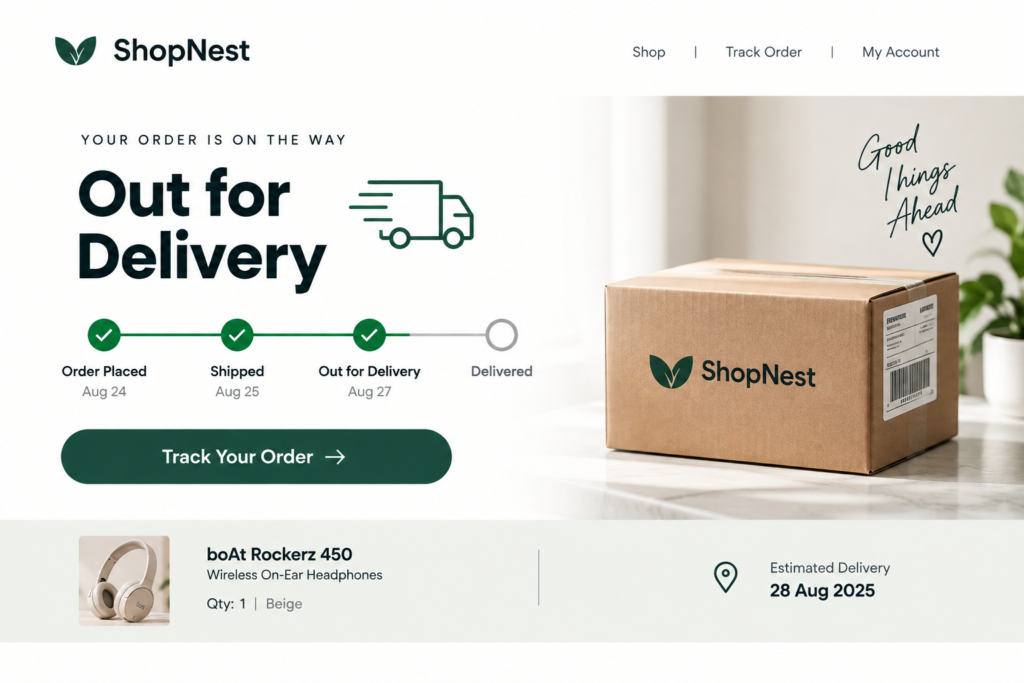
What it does: Notifies the customer when their order ships and when it’s out for delivery, usually with tracking information included.
Why it matters: Shipping confirmation emails post some of the highest open rates of any automated email type, reaching over 62% in some benchmark sets, since customers genuinely want this information and actively look for it. (Source: Omnisend)
Example subject line: “Your order is on its way!”
Timing: Triggered automatically at the moment of shipment, then again at delivery.
7. Review Request Email
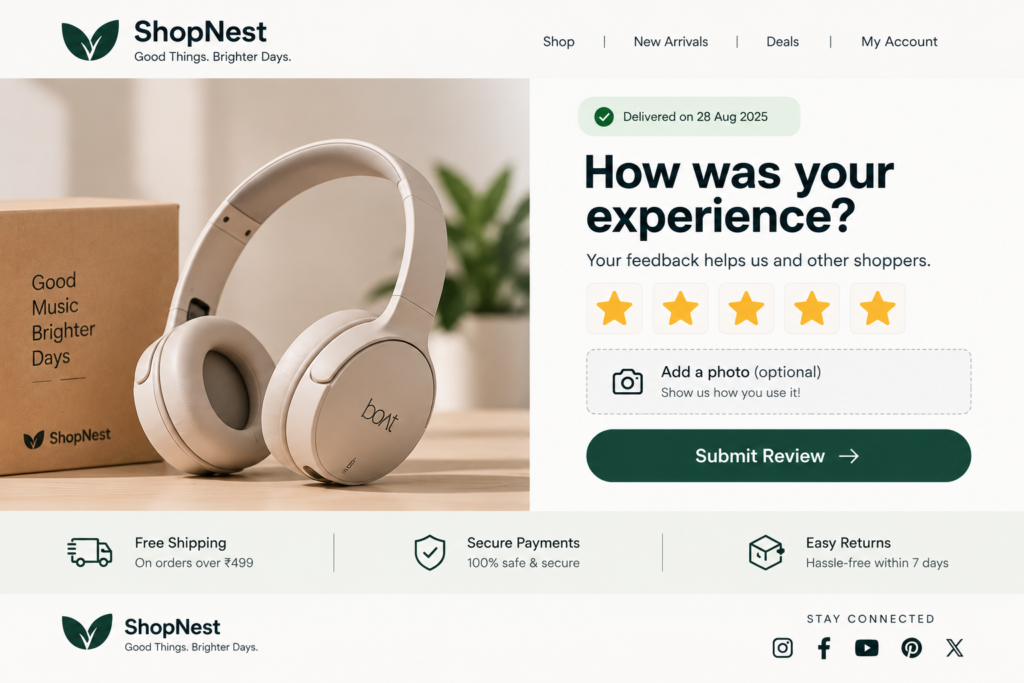
What it does: Asks the customer for a product review or photo a few days after their order arrives, while the experience is still fresh.
Why it matters: This flow is consistently one of the most underused in ecommerce email programs, despite feeding directly into the social proof that drives future conversions on product pages.
Example subject line: “How’s your [Product Name] working out?”
Timing: 3-7 days after estimated delivery, adjusted by product category.
8. Re-Order / Replenishment Reminder Email
What it does: For consumable products, this email reminds the customer to reorder right around the time they’re likely running low.
Why it matters: Post-purchase, replenishment, and win-back flows routinely outperform one-off promotional sends by 3-6x in revenue per send, since they’re triggered by genuine timing rather than a generic calendar date. (Source: ConvertCart)
Example subject line: “Running low on [Product Name]? Reorder in one click”
Timing: Based on typical product consumption cycle (for example, 25-30 days for a product that lasts about a month).
9. Win-Back / Re-Engagement Email
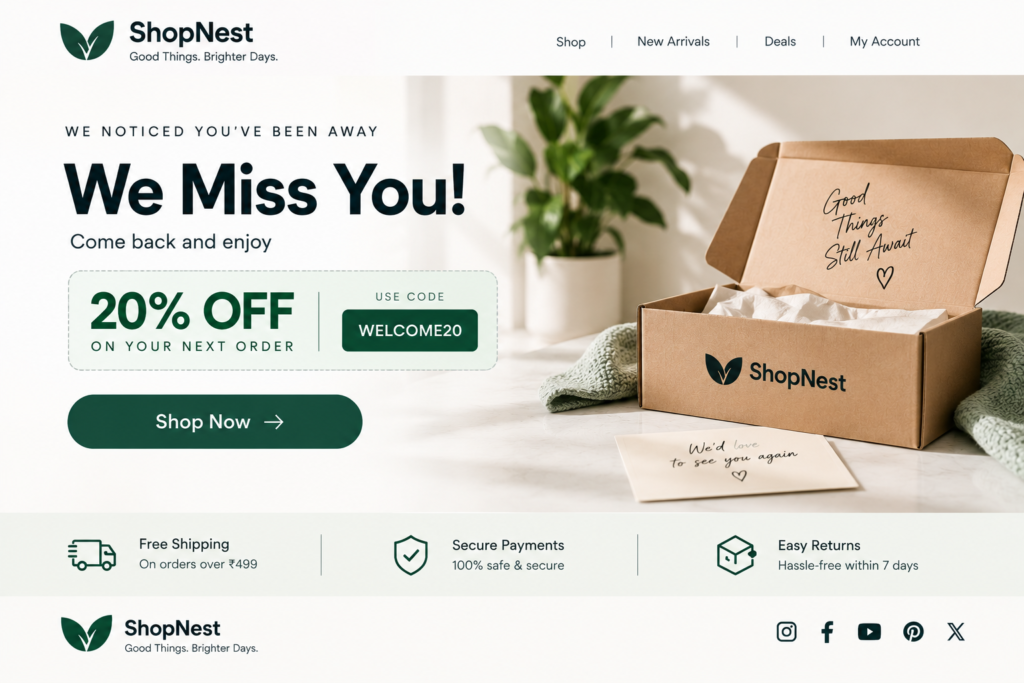
What it does: Targets subscribers who’ve gone quiet, typically 60-180 days without a purchase or email engagement, with the goal of reactivating them before they churn permanently.
Why it matters: Automated win-back sequences reactivate roughly 12-18% of lapsed customers, and reactivated addresses often deliver a 7:1 return, since recovering an existing customer costs 5-7x less than acquiring a new one. Segment-specific win-back content also achieves 28% higher open rates and 34% higher click-through rates than a single generic template sent to everyone. (Source: AI Advantage Agency and Mailmend)
Example subject line: “We miss you, [First Name] here’s 20% to come back”
Timing: Triggered after 60-180 days of inactivity, varying by typical purchase cycle.
10. Birthday or Anniversary Email
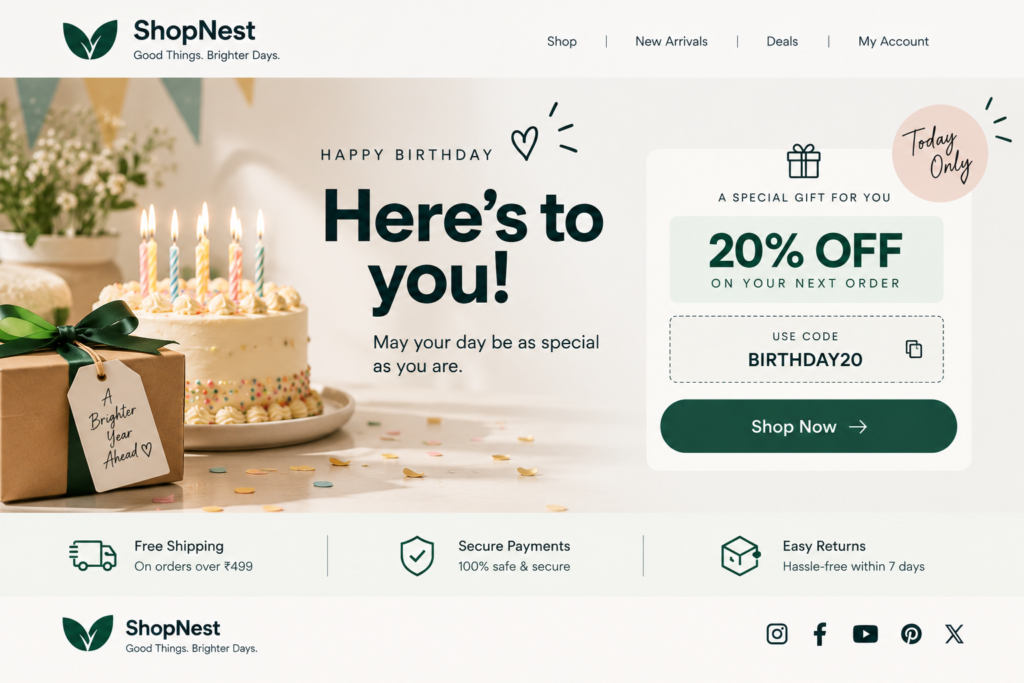
What it does: Celebrates a subscriber’s birthday or the anniversary of their first purchase with a small, personal offer.
Why it matters: Birthday emails generate 481% more transactions than standard promotional emails, with 342% higher revenue per email, making this one of the highest-return, lowest-effort emails in the entire list. (Source: Experian via SearchLab)
Example subject line: “Happy Birthday, [First Name]! A gift’s waiting inside”
Timing: Triggered automatically from the birthdate captured at signup or in the account profile.
11. VIP / Early-Access Email
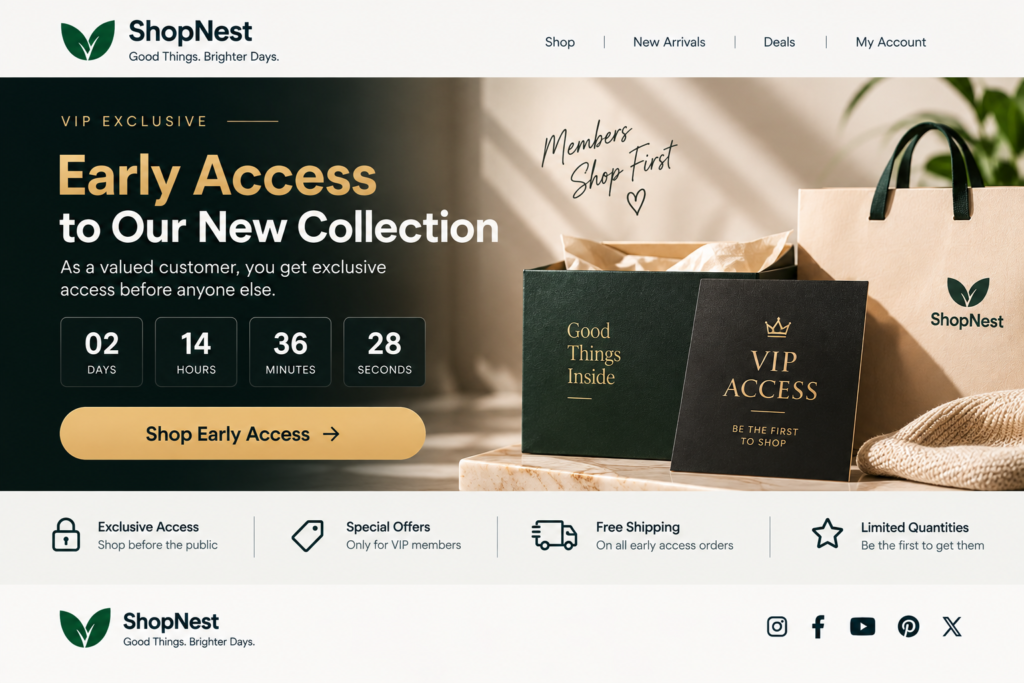
What it does: Rewards your most engaged or highest-spending segment with first access to new drops, sales, or limited inventory before the general list sees it.
Why it matters: Framing an offer as insider access rather than a plain discount consistently drives stronger engagement from a brand’s best customers, since it positions the message as a status signal rather than a generic promotion.
Example subject line: “You’re in, [First Name] — shop the new collection first”
Timing: Sent ahead of any public launch, restricted to a defined top-tier segment.
How can you maintain list health and protect deliverability over time?
Even a well‑grown list can suffer if you ignore hygiene. Email providers monitor engagement metrics, and a high rate of unopened messages can affect your sender reputation. Here are practices to keep the list vibrant:
- Regular re‑engagement campaigns – reach out to inactive subscribers with a special offer or a simple “We miss you” note. Those who remain silent after a few attempts can be moved to a “quiet” segment or removed.
- Clear unsubscribe paths – making it easy to opt out reduces frustration and prevents spam complaints.
- Bounce management – automatically suppress hard bounces (invalid addresses) and monitor soft bounces for patterns that may indicate temporary delivery issues.
- Preference centers – let subscribers choose the frequency and type of emails they receive. Empowered recipients are more likely to stay engaged.
Wcart’s integration capabilities allow you to sync bounce data and preference updates in real time, ensuring your ESP always works with the freshest information.
Which Email Service Providers Work Best for Ecommerce?
Because a headless platform separates the storefront from backend commerce logic, you’re free to connect any ESP with API access, rather than being locked into whatever your platform bundles.
| ESP | Known For | Best For |
| Klaviyo | Deep ecommerce data sync, strong segmentation | Stores prioritizing flow-level revenue tracking |
| Mailchimp | Familiar interface, wide template library | Merchants who want a low-learning-curve start |
| Sendinblue (Brevo) | Strong automation, built-in SMS channel | Stores combining email and SMS in one tool |
| ConvertKit | Visual automation builder | Creator-led brands and smaller catalog |
What Are the Advantages of Owning Your Email List vs. Platform Lock-In?
Owning your list means controlling the data, the send cadence, and your ability to switch providers without losing a single contact.
- Data portability – move contacts to a new ESP if you find a better fit, with no vendor holding your list hostage
- Custom compliance – tailor privacy policies and consent mechanisms to your specific market rather than a platform’s default
- Cost predictability – avoid per-send or per-contact fees that quietly erode margin as your list grows
This is the same ownership logic that runs through headless, white-label ecommerce generally: control now instead of convenience that costs more later.
How Do Privacy Regulations Shape Email List Building?
Regulations like GDPR and CCPA require clear consent and transparent data handling. This isn’t optional overhead, it’s baseline trust.
- Explicit opt-in – use unchecked boxes that require active confirmation, never pre-checked consent
- Accessible privacy policy – link to a clear page explaining how you store and use data
- Easy opt-out – a visible unsubscribe link on every single email, no exceptions
- Data minimization – collect only what you actually need for the stated purpose
What Common Mistakes Hurt Email List Growth?
Even experienced merchants fall into a handful of repeat traps:
- Over-promising the incentive – a discount too generous attracts bargain hunters who never become repeat customers
- Neglecting mobile optimization – broken signup forms on phones quietly lose a large share of potential subscribers
- Sending too many emails too soon – bombarding new signups triggers early unsubscribes
- Ignoring privacy regulations – skipping proper consent risks legal exposure and damages trust
- Buying or renting an email list – purchased lists produce poor deliverability, high complaint rates, and often violate your ESP’s terms of service outright, since the people on them never opted into hearing from you
- Relying solely on pop-ups – effective, but only as part of a broader strategy that includes inline forms, checkout opt-ins, and exit-intent offers
Build a Loyal Customer Base with Wcart’s Headless Commerce Platform
Ready to take your email list building to the next level and grow your online store? Start building a loyal customer base today with Wcart’s headless commerce platform, designed to help you capture more signups and convert subscribers into repeat customers. Get started with Wcart’s headless commerce platform

























Leave a Reply